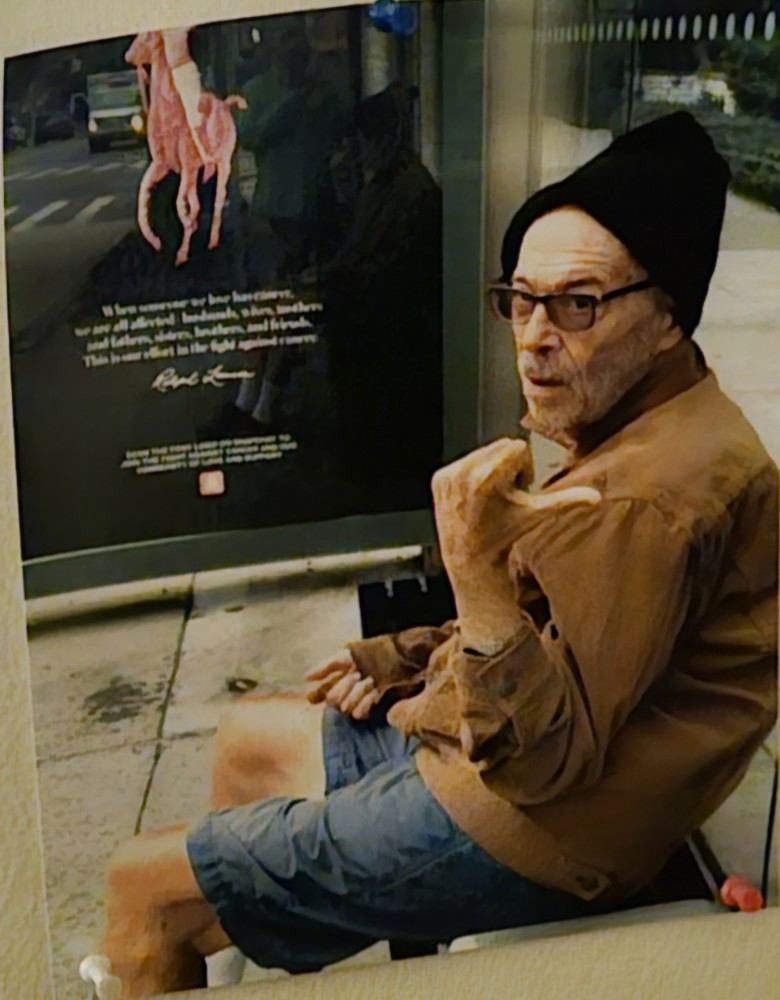
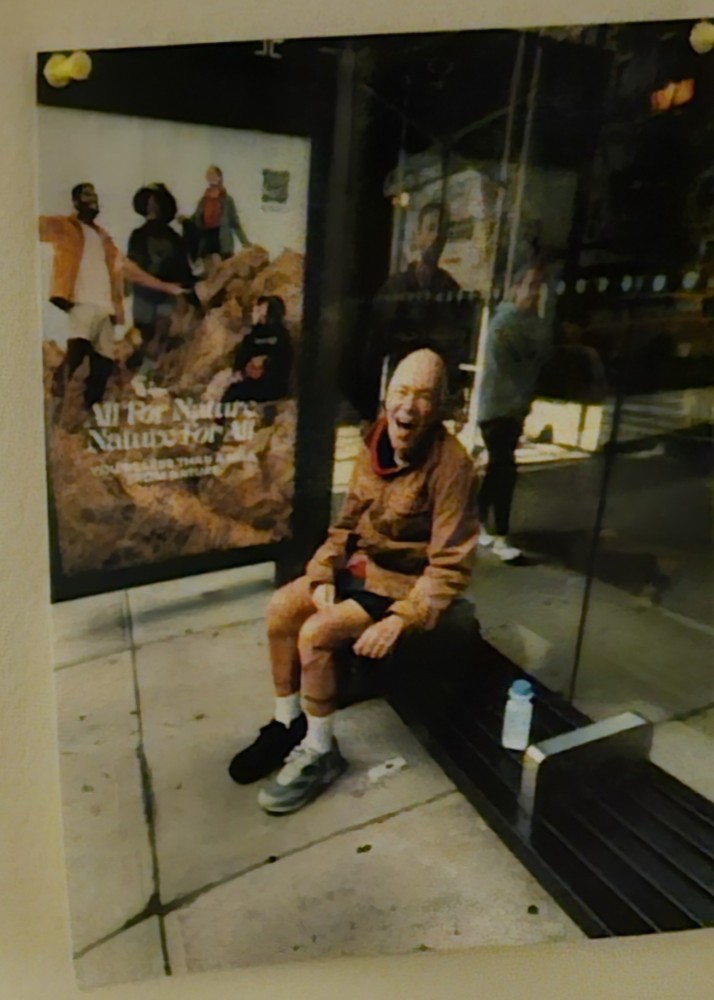
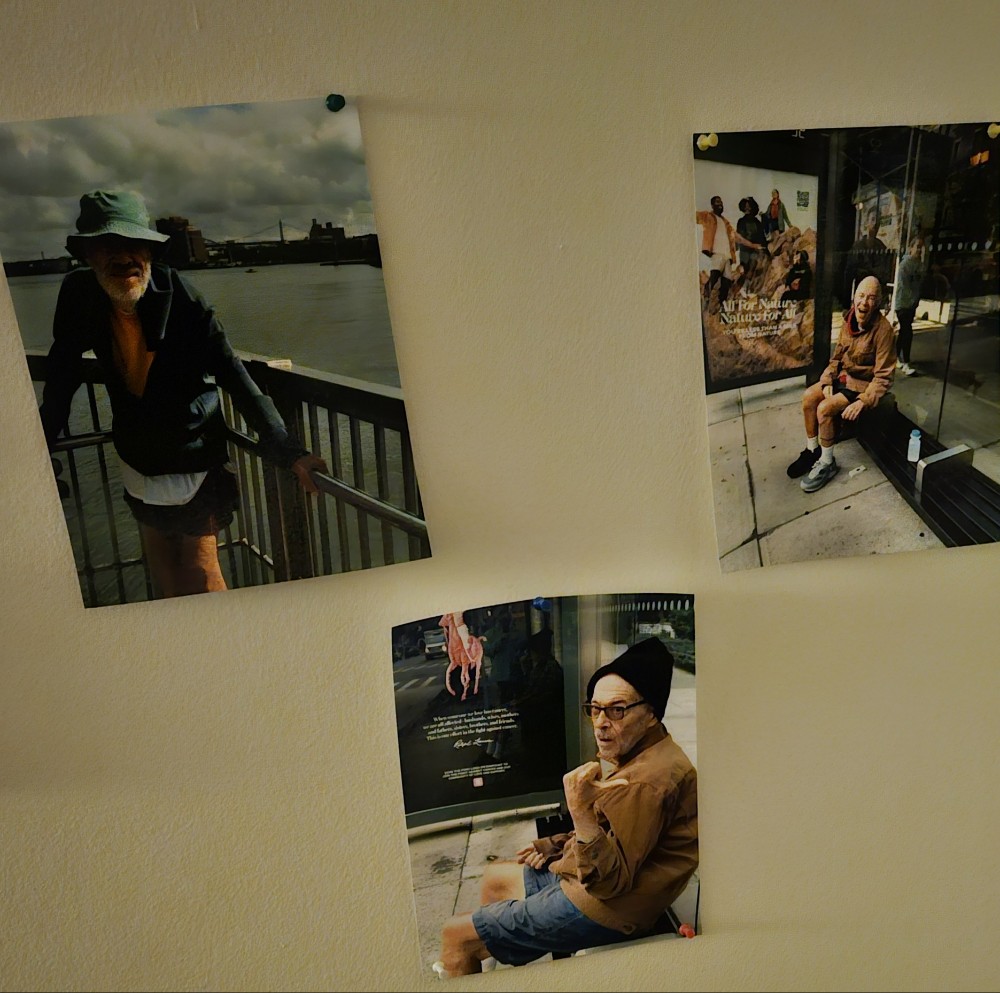
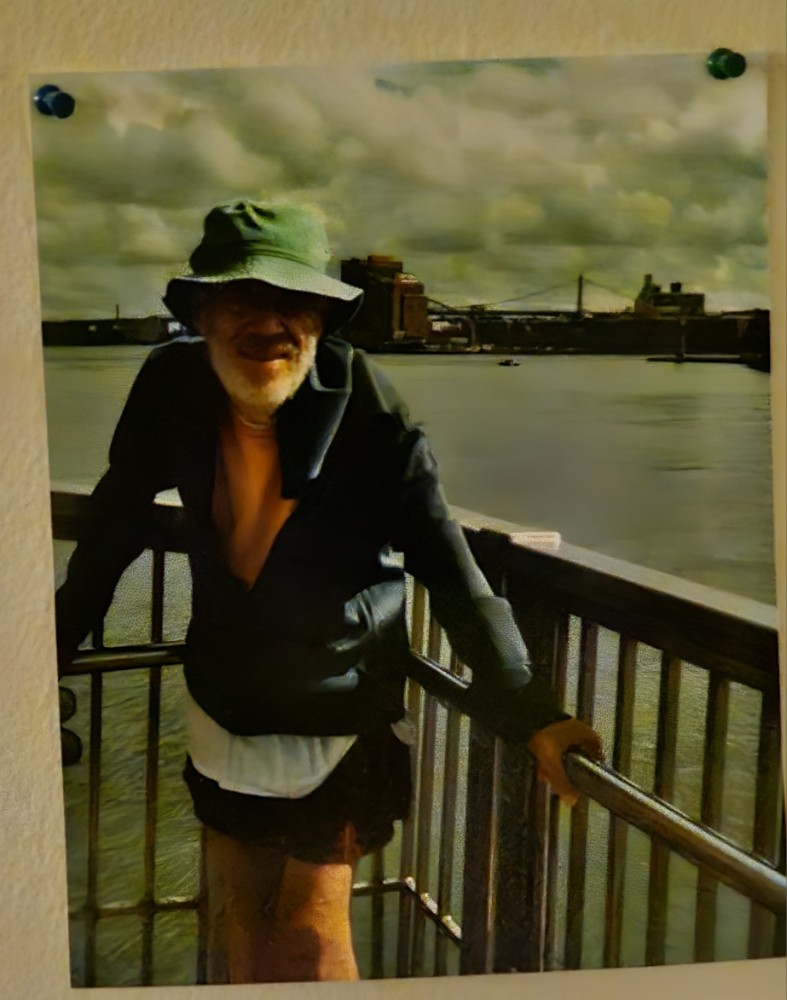
The theater

We were regulars on Broadway, off, off-off. We attended dance and jazz performances. We went to pop concerts and some opera.

When I string that out like that, I wonder how we found the time.

As he approached the beginnings of his dementia, sitting through a ballet or staying for a show became a challenge.

We had tickets for Hamilton and, at the last minute, Burt bailed. He told me he couldn’t sit that long. Knowing that I had been so much looking forward to seeing this musical, Burt had made a plan.

He and I went out for the traditional pre-theater bite; we walked to the theater and as we got on line to enter, he told me he was selling his ticket. “You go, you really want to see it,” he said. It was too long, he said. “See you at home.” He knew how this matinee would unfold.

After that, for a while, when I got press tickets, he told me to take a friend. I did. I was uncomfortable going without him.

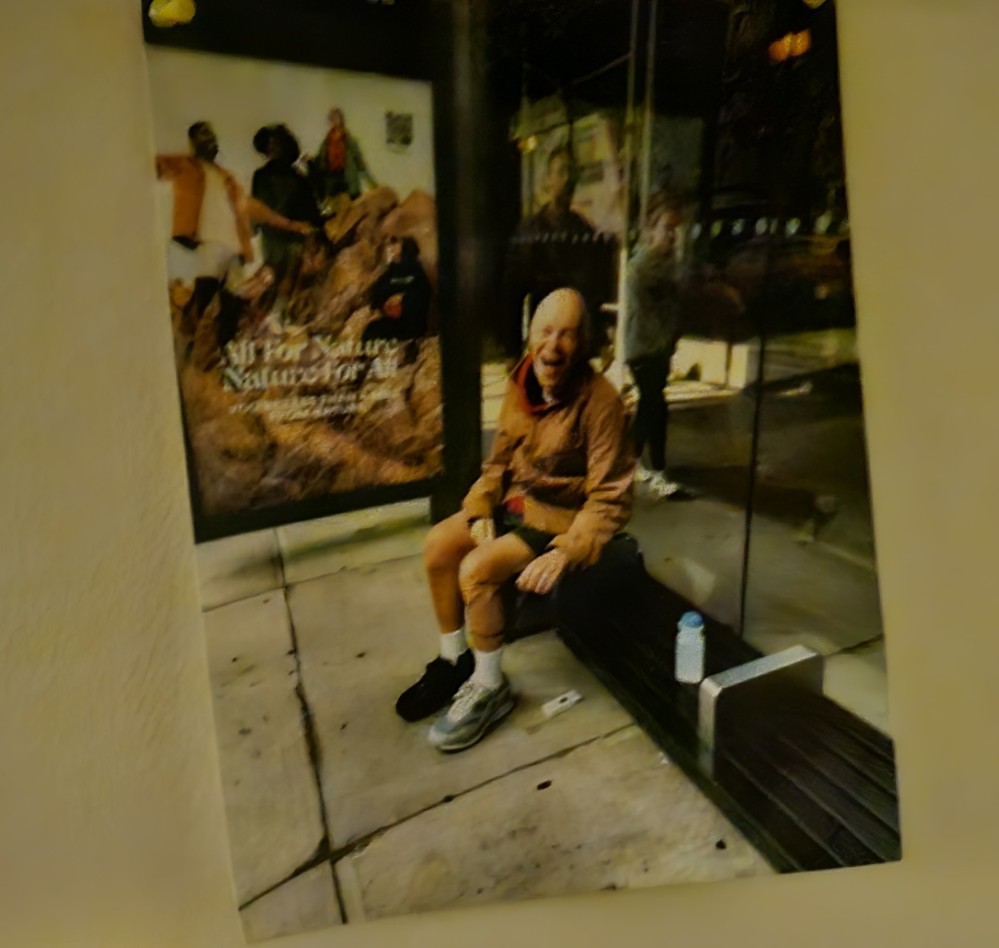
One of the few times after this that he did join me was for A Doll’s House, Part 2. He worried about getting to the bathroom; we were relieved that it was an intermissionless 75 minutes. Our seats were one in off the aisle; I think this concerned him. That was in May 2017. Wow.

The long before had some prelude to what our life would become. It always does. My advice to anyone caregiving now who’s inclined to fret over when and oh my how could I have missed the signs: life is like that, you knew when you needed to know. I look upon that show in 2017 with Burt as a highlight of our before.

There were many highlights in that long before [and many during the years of our life with dementia] but A Doll’s House, Part 2 was a special moment. We went to the theater together. For the last time. The curtain fell and rose on a different life. Together.

Burt has left the theater – is that the Elvis line, or was it building– but now, when I go to see a performance, I carry the memories of lots of other shows we saw together. He’ll be in the theater with me in the spirit of curious anticipation we always shared before the curtain went up.

The long before

Burt was well for a much longer time than he was ill.

That is obvious as I write it, but it only just occured to me.

The last 5 years have been that intense. So engrossing that I almost forgot.

Almost.

There was a long, happy before. The before celebrates Burt and me; it celebrates us.

Here’s how it went

Here’s what happened. First, Burt seemed listless. That was unusual for him. I was out at the gym a lot and he was at home a lot.

He had fallen and cut his cheek badly a year earlier. He had had a bout with never-explained double vision. That was a couple of years before. And on one day in an incident we laughed off, also a few years prior, he got lost as he emerged from Central Park.

Listless and lonely as he was, it seemed that Burt was still okay. True but then came the pandemic and I was home with him. Now, I noticed odd behaviors. He was our tv guy and one day he could not figure out how to use the FIOS interchange. I had stepped out to a store (masked of course). He had been on the phone with a very patient tech the whole hour I was out. He was still listless and lonely although I was at home with him.

Not so long after these behaviors started rolling along, they took on a stranger turn. Burt couldn’t find me although I was standing next to him. On occasion, I had to go look for myself. Sometimes he would call our friend S so she could tell him that she thinks she heard my voice over the phone. “Tamara’s at home with you,” she would say. My being missing and never there was often a theme over the next nearly five years. That makes me sad for him.

He started imagining small people in our kitchen. They annoyed him because they were free-loading. Their use of our electricity was his peculiar and particular concern. The hallucinations were an annoyance but not a threat to Burt.

He developed an extreme case of Capgras, which means in his case that he had alternative wives. 13 by my count. Technically, Capgras is imposter syndrome, but Burt accepted each of his Tamaras (all of us shared the name) at face value. I only realized that it worried him when he asked our lawyer if he was in danger of arrest for bigamy. Burt met each new Tamara, probably because of my preceived absence, asking me who I was as I served lunch. I blamed myself for introducing him to so many women named Tamara, although I didn’t tell him  to flirt or get married.

The diagnosis was sidelined by a suspicion that Burt had multiple myeloma. We tested for that first. Then we had idiotic diagnoses of his cognitive impairment like his then primary suggesting it was anxiety. “Burt’s always been anxious,” was the excuse. Our friend M. suspected LBD. We switched primary care doctors. №2 offered schizophrenia on the grounds that it was treatable and Lewy Body was not.

Finally, we had an appointment with a well-respected neurologist at Mt. Sinai. Burt resisted going for fear the doctor would operate on his brain. Several calls to clarify followed including one with a helpful Alzheimer’s Association 24-hour hotline operator. We saw the doctor, whom Burt did not like, and his Nurse Practitioner, whom he adored.

Lewy brought forth the flirt in Burt and he continued a path of flirtatious exchanges with health care providers almost to the end.

Meds were miracles for us. donepezil, [aricept] a drug which had been developed for Alzheimer’s, was more effective for LBD. It was.

After some resistance, Burt let the medication serve him. He reported that it made him feel clearer.

Initially, I had decided if he didn’t want to pop a pill, and if it wasn’t going to cure his dementia, it was up to him. We were so glad to have donepezil help us.

We weren’t so lucky with seroquel. It was introduced to combat aggression and agitation. In this phase, it made Burt sleepy but he was still aggressive. It was easier for me to get out of the way because the seroquel slowed him down but we stopped using it except as a sleep aid.

He “outgrew” the aggressive stage which was our good fortune. Not everyone with Lewy does. It’s also true that not everyone with Lewy gets combative.

Eventually, he also outgrew the medications. Donepezil wasn’t working for him during the final slide. Last December, we took him off it. We had cutback on blood pressure pills as orthostatic hypotension seemed to kick in. He basically no longer had the  high blood pressure that had always plagued him

In the meantime, we had three maybe three and a half years in which Burt was diminished but functioning. He’d had a fall after I got Covid and was sure he had it too. A long stint in rehab followed. Incontinence was a 50- 50 proposition after that, but he could walk with his Neuro UStep Walker.

He was social. He enjoyed his PT and OT. He chose to hang out in our lobby so he could see the neighbors.

There were little losses and declines but we were chugging along. Sleep, a problem from early on when he felt 3a.m. and 3p.m. were silly constructs, became an issue again. We tweaked it until he mostly got enough sleep.

At the end, even before the last 4 days, he was sleeping a lot. There was a big decline from mid October and then a little more. And he was bedbound. And those last four days he didn’t eat because he just slept. He was  breathing hard and each intake was loud.

He didn’t hold our hands as he used to in that strong grip.He was reaching with his hands for the way out, searching.

I am so relieved for him that he found it. Our short/long journey ended with peace. He passed with dignity.

He gave me the privilege of caring for him. I learned how much I loved him through this journey. I might have learned that anyway and I wish I could have learned it any other way.

Nonetheless, I am grateful to have been there with him. All the years before. All the time during. And now.

Unsolicited

If you are a caregiver, I am going to give you some advice.

Remind yourself that you love your person with dementia. Love is complicated. Caring is love. Holding love makes the journey easier.

Applaud yourself for the care, patience and [yes] love you are giving. Applaud yourself for the compassion you are living.

Care for yourself, too. Spend time with friends. Get your hair done. Go to the gym.

Respect your reality. Your pwd might be living with delusions and hallucinations. There is no arguing but you can hold onto your sense of humor. Don’t go down the rabbit hole.

Take care of yourself. See your doctor. Keep your appointments with the PT.

Pursue your interests. There may be time concerns, but read a book. Keep a journal. Visit a museum. See a movie.

Forgive yourself. I know you will feel guilty from time to time. Be aware that you can do nothing wrong. Everything you do you do with care, patience and love.

Applaud yourself.

Planning

Have I told you that my party plans for May 3rd have proven to be healing?

The choice of venue is close and that pleases me.

A present from our friend S

On my way home from a site visit, I said, smiling and speaking to myself alone Burt will be so surprised.

Preparing to throw a celebration of his life is a happy activity. It feels good.

The first surprise party that I had thrown for Burt was in 1994 for his 55th birthday. It was truly a surprise, despite our running into one of Burt’s friends at the coat check.

We treated this encounter as a coincidence. Joe just happened to be at Elaine’s, we said. And he was genuinely surprised when all the other friends greeted him inside the private room.

One of the surprises of Lewy was that Burt caught on to the fact that I was throwing him a party for his 84th. People arrived to the apartment and the cat was out of the bag. He was thrilled.

A year later, for his 85th, he again caught onto the ruse.

He whispered to me: I know what you’re doing. That was accusatory. So, he knew I had thrown him another surprise party and he was not pleased.

This time, he was distant and a bit annoyed.  No wonder, given that he had been in a continuing decline over the previous several months. I knew that he might not react with the same spirit of the 84th.

On this occasion, he was listless and he didn’t connect with his well-wishers.

I regret none of that. The 85th birthday party, as I now know, would be his last. I am glad I celebrated it for him.

Last day

The Medical Examiner failed to notify my police detail to release Burt’s body.

This was an hours long oversight which involved not just waves of paramedics but lasted through three shifts of cops.

We asked the first of them if R, Burt’s aide, could go home but they and he lingered at home. I called in to his doctor so she could get hold of the M.E. before the end of her shift. Still no notification.

Burt and I were left with one very young policeman [I know, I know, at my age, they all look like teenagers].

On the phone my dear friend S. and I shared our perplexity over the delay.

It was her call to the M.E. that got the go-ahead. S. told me he was very apologetic and said I could finally put in the call to the funeral parlor. Within seconds, my young police officer got the ping on his phone as well.

The crew of EMTs first on the scene had pronounced at 11:29. At 5:30ish, I finally called the funeral service to come take Burt’s body. They closes at 6, so Burt was going to a mortuary in New Jersey for an overnight stay. At 7:30, two men arrived came to carry him away.

It had been a long sad day but he looked like he was at peace the whole time.

Lying

In the universe of dementia caregivers, there is often a need to practice therapeutic lying.

I have been a natural practitioner.

The fibs were for the best. They were in place to protect, shield, and guide a quality of life for Burt.

The things that mattered in our life were that Burt felt and was safe and secure. Often, I needed to lie to make that happen so I could focus on care, patience, and love.

All that lying has made me an honest person. My genuine self, my essential self became more caring, patient, and loving during my journey with Burt. What could be more honest than that?

Sixth stage

When you’re caring for a person with dementia, you get to repeat the five stages of grief over and over.

While your spouse is playing out his Groundhog Day, repeatedly wondering what time it is, you’re stuck in denial anger bargaining depression acceptance over and over.

It’s not just sorrow (and surprise) as a new loss inevitably appears, you get to relive the whole process of grieving.

By the time your loved one passes, you’ve mourned a myriad of griefs. And who knows what losses they’ve mourned.

All that is to say, there is another ambiguity to mix with your grief when your loved one dies. Relief.

Grief for a surviving spouse is all those stages of sad mourning plus relief.

There is relief not only for the sufferer, but also for you (me), the caregiver.

It’s the acceptance that they’ve been gone, lost to you for a long while. This final loss is an end to caregiving, not to caring. And it’s a relief, for each of you, for both of you.

Grieving is a process. It’s gradual. It has its own ebb and flow, and it takes work.

Endings

What experiences in life helped you grow the most?

It felt odd sharing news of Burt’s death in an email or text. It was odd having that news to share.

He lived large and well right up to his last few days. Even during 4, nearly 5 years with dementia he found pleasure in connecting with people, and delight in making as many connections as possible.

His world shrank dramatically in the last days as he seemed to physically shrink and as he struggled sleeping and breathing but no longer connecting.

On Tuesday morning, he’d had enough and was ready to go. His final journey was over in just four days.

The chances are that I will continue to write about Burt’s struggles as I heal from my loss of him. Heal is the wrong word and so is reel to be honest, although reeling is a sensation I feel.

It hurts but it’s not a pain you want to cure. It will dull on its own and I will rejoice at my good fortune just because I knew him. It was a privilege that I could hold onto him as long as I did.

Then, as the grieving fades, I’ll have memories of that good fortune and my privilege to have loved him and to have been loved by him.

I learned that compassion and love can live with greater intensity next to loss and fear.

He showed me how to face fear and soldier on. I had knowledge about Lewy Body because I had researched his dementia; he was facing the unknown.

I learned what bravery was from Burt and gained strength from his bravery along our journey together.

His story

There’s a lot of serendipity afloat at this end of our journey.

I get glints from the universe that all provide points of light from Burt’s life.

Or maybe, my experiences spur my memories.

Memories are giving me context to our history, mine and Burt’s.

I knew his background, I think, because Burt was always a story teller. In his illness, during most of the five years of dementia, he was famously a talker.

It was in the first 30 years of our marriage that I gathered so much of Burt’s history.

I heard stories of childhood [in Brooklyn] and youth [Brooklyn and the Catskills].

I knew his relatives though I rarely saw them. I knew his former wife and his children as they grew up. I met his dad even though he had died long before Burt and I met.

I was introduced to his career and the co-workers who disparaged or encouraged his success. He worked hard at his work and he loved it.

He spoke of the therapist he loved and admired; this is the man who advised him to go see The Music Man. I too was grateful for his contribution to Burt’s evolution.

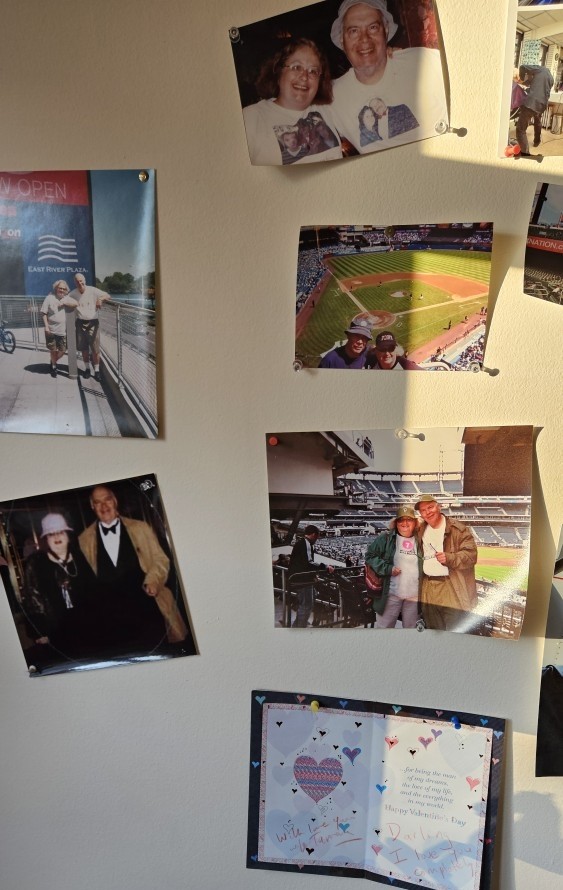
Our life together, Burt’s and mine, centered heavily on our love of entertainments. The theater, jazz concerts, even opera were destinations. We enjoyed attendance at restaurants and ballet performances.

Like his maternal grandfather, Burt was a walker. He quoted a podiatrist who identified his feet as “your transport”. On our first date, Burt and I meandered for hours, walking from a meet on West 21st Street, over midtown. We stopped for dinner on 51st and 1st and proceeded up the avenue. Burt walked me home, all the way to 72nd at the East River.

That would soon be our home. We lived there until the summer of 2012. Our last years together were in this new building Burt picked for us. It was near yet so far from our first home.

Here, Burt made himself familiar and friendly. This last place we lived together was truly Burt’s home. I am so happy that he could breathe his last at home, a place of comfort and love.

Design a site like this with WordPress.com
Get started