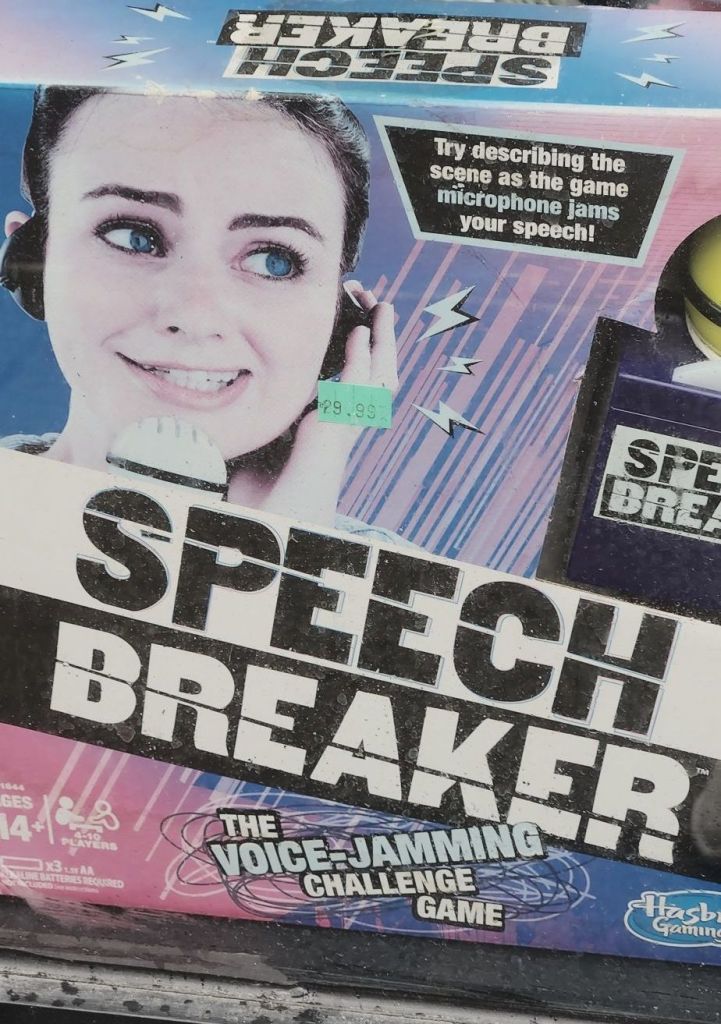
Some of our conversations feel like this “Challenge Game.”
Burt is still a difficult man.
The diagnosis didn’t change that. He had quirks that irked when he was healthy.
Let’s be honest, if you’re married, then your spouse has an annoying habit or two.
His illness had me step back a little. It put my annoyance in perspective.
The anxiety he’d lived with all his life was now also a symptom of his dementia.
Quirks had to be met with kindness.
His disease has robbed him of so much.
He no longer possesses the cognitive capacity to make sound decisions nor the agency to act on his own.
He has to accept direction from me.
He hates being bossed. He wants to be in charge.
His abilities no longer meet his ambitions.
Burt may be difficult, but he is also affectionate. He aims to be helpful. Burt wants to be protective of those he loves.
My job has come to be the protector.
There is a unique and uniquely helpful support group offered by New York alz.org.
I have been participating in this wonderful writers group this past couple of months.
Each session, we are guided by helpful prompts to explore our experiences in the caregiving journey.
We then take some 15 to 20 minutes to write it all down. The focus sheds light on the gamut of feelings encountered as we care for a loved one.
It’s not surprising how much those emotions pivot to the positive.
It’s nice when Burt gets the gist of my writing about him. When it contains the promise of my love as in the poem I created for him the other night, he’s a happy audience.
So much of what I say is distorted on its way to meet him that it can be a frustration to communicate.
The mishearing is a dementia thing, but it can rankle. Good thing I truly love him.
What is the biggest challenge you will face in the next six months?
Staying positive and appreciating the opportunities that caregiving offers is the biggest challenge.
It’s too easy to find the hards in the journey. Focusing on those makes it just a little harder.
Looking at the love that binds us together as we live in the nightmare of this dementia eases everything.
So, what is there to keep me looking at the bright side?
I am so grateful when Burt shows his appreciation. It’s a beacon of light in our tunnel to have him thank me. It’s even more gratifying to exchange “I love you’s.”
Laughing together is a very special experience. We find the silly in odd moments. It’s a blessing.
Little inconsequential arguments can feel like our old normal. It’s true that any disagreement has to be temperd; Lewy doesn’t like to be contradicted. We can still have a mild “betcha you’re wrong” conversation.
It’s wonderful seeing how resilient Burt can be. His strengths make it easier for my guy – the one who never gives up – to enjoy his life.
I am grateful.
What advice would you give to your teenage self?
Don’t get old is advice he’s meted out. Another favorite is don’t get dementia.
Burt would definitely suggest those bits to his teenage self and yours.
Life remains an enigma. We don’t know where we’re going or by what means we’ll get there. “Don’t get old” seems a tad short-sighted in that context, but we get the sentiment.
When I blog about Burt’s Lewy, I am not sure that I am being respectful of his dignity. I don’t know how he would respond if he knew I was sharing his worst moments as well as his best.
I share much of our life experiences in the spirit of caring and love with which I live my life with him.
Alzheimer’s is an orderly dementia. It progresses in stages. There is a pattern as its awful symptoms afflict your loved one over time.
No dementia is easy. They are each unique.
Lewy Body is unpredictable.
Symptoms come and go.
You and your person can be plunged into troubling situations one day, only to have a better week the next.
Your sweet spouse is wracked with confusion or anger or anxiety. Or all three.
This track of thought came to me during a webinar by Jim Taylor of Voices of Alzheimer’s. Jim spoke of the partnership he and his wife Geri had as she struggled through the early stages of an Alzheimer’s diagnosis.
Burt plunged into dementia with delusions, hallucinations, and other behavioral manifestations. Some of this was ameliorated by medicines.
His symptoms did not encourage me to try to work in tandem on planning. It all felt very much like the disruptive emergency it was.
Today, it might be a good day. His confusion and cognitive impairment make even simple plans hard.
When your loved one has dementia, you are living a disease that is built for two.
Symptoms come and go.
And just as a reminder, see The Gift.
His hand is so much bigger than mine. I feel protected holding his hand, and yet I know it’s my job to protect him.
When he was first diagnosed he denied the diagnosis. I thought if only he knew it would be so much easier. I could justify the decisions I had to make, explain the things he was losing.
Since he is now aware of this awful disease, lamenting it as he explains it to neighbors and friends, I am aware that it is not easier.
He still doesn’t understand his losses. It’s heartbreaking to see him worry over the effects of a “brain disease.”
Knowledge in this case is grossly overrated.
In the beginning, just before we got his diagnosis, I would describe our life in view of literature.
The comparison to Ionesco fed my worldly aspirations. Rhinoceros also kind of described where Capgras was leading us.
Of course, Groundhog Day also fit the bill when repetition was a regimen.
An attempt at absurdist wit was a welcome diversion. Lewy is an awful disease, which causes our pwd to act absurdly.
It brings an unwelcome chaos into our daily lives. Sorting it out any way we can feels necessary.
Once the diagnosis was securely in place, I slowly allowed it to sync with our reality. I no longer describe our life in fictional terms.
I still sometimes preface a report on our experiences with “you can’t make this stuff up.”
The facts are often really stranger.
Have a WordPress.com account? Log in now.

