Burt died at home. I’m glad I was able to take care of him at home for most of his struggle with LBD.
Burt died at home, but I was not there at his moment of passing. Burt passed sometime between the moment I left home to walk to the gym and the ten minutes later that his aide, our wonderful aide texted me to come back.
I believe, but I don’t accept, that he waited for me to go so he could go. I had been hovering; I knew he was actively dying. I believe I knew.
Burt had been silently reaching, hands outstretched. This was day 4 of this seeking. I think I needed to leave him to find his way. On this day, he did.
Monday was marked as the six months anniversary of his death, February 25th.
On Monday morning at 11:29 it was six months since Burt found his path out of the journey, out of his struggle. I am happy for him.
We like to think that we’re logical creatures but our minds belie this hope. Logic is buried in a web of emotions.
Burt, it seemed, wasn’t aware that I went with him to the park on our weekend outings. I noticed this when I recapped the Sunday. We wentto the pickleball court, I said. Burt asked me, Where were you?At the pickleball court, I said with you. “Why didn’t you come and say hello,” Burt retorted.
It’s sad and explains why he was often restless when we sat by the water, or near the courts.
He was looking for his wife. She wasn’t by his side, holding his hand, talking to him. He didn’t know where she’d gone. I feel his loneliness as I write this.
His not knowing where I was… I have internalized the guilt of that abandonment.
I remember too how cute he was, like a lost little boy, when he wondered why I wasn’t with him. I recall that my heart ached for him in that moment.
I also acknowledge that it was funny, not the trick of the mind that said, you’re on your own to Burt, but the way he asked. Sad and funny.
I know that all I could do is be there with him. I couldn’t do more than accompany him on his journey. I was the sidekick, he was the hero. It was his story to tell, yet I am doing the telling.
I have been chronicling our journey all along. I was there. I know that. From the beginning, he was looking for me. Early on, we were standing in the lobby together when he asked our neighbors if they’d seen Tamara.
At the recommendation of a friend, I started reading [aka, listeningto] Geraldine Brooks’ Memorial Days. [I am rewarded for my new audio gal habit by listening to the author herself.]
All those asides are beside the point.
Brooks’ says early on that she did not grieve fully for her husband because society has devalued grieving.
That is my paraphrase. We no longer wear widow’s weeds, or black for a year, or any of those outward signs of mourning.
It does not mean we don’t mourn properly or deeply.
There is no such thing. The loss of your spouse does not allow you to forego mourning. Grief is a peculiar experience and tailored to us each individually.
Another friend has gifted me her thoughtful screed on the subject, Griefcraft.
In mourning, we often ignore the messages our bodies give.
What resonates with me in this short manual is its suggestions on how to interpret those messages and let them guide us.
It has encouraged me to let my body and mind incorporate my grief.
It’s another lesson in mindfulness I have had to learn.
I took the evenings off this past week to dwell more deeply with my grief. Not going out after 4 or so helped me focus.
To contact Mel about Griefcraft, email directly to melgutierrez13@gmail.com or ask me for a copy.
When that diagnosis of dementia comes, it’s natural to wonder how the future will look. Dementia is unpredictable, LBD perhaps a tad more so then Alzheimers, but all dementias are unpredictable.
It’s hard to never be sure what’s in store for us. The uncertainty can be very disorienting for the caregiver.
I also imagine that in early stages, if your p.w.d. is aware, s/he is also wondering what’s next.
This journey is hard; anxiety will not serve you well. There is a lot of planning required, of course, but the day to day care calls for staying in the moment. I know that’s easier said then done.
Mindfulness, to whatever extent you can, will be a helpful practice for you.
It will ease the journey for you, and ultimately for your loved one as well. Caregiving for a person with dementia is challenging enough.
Anticipating what to expect is just going to cause you extra upset.
You can’t control, or know, what’s next. Living in the now will be so much better for you overall. As my mother might have said, “no need to buy trouble.”
Focus on the present. Leave room for the joy that I guarantee you’ll find in your journey.
The cost of taking care of a loved one with dementia is high. The American healthcare system is unlikely to be much help.
Long term care insurance might provide the bandaid to expenses. I don’t know the cost to benefits analysis of buying this insurance; I didn’t have it.
When your person gets ill, you will need aides to help with care. I have said that I considered having companion care for Burt – from the get-go – existential. You have to take care not only with your person, but of yourself.
Home health care is a major cost for you when your person has dementia.
In our case, had Burt lived, his care would have been covered by Medicaid. We were going to get 24 hour aides, and hospice was also coming to help with his care.
I was advised to see an elder care attorney and set up a financial plan as early in the journey as is possible. I advise you to do so as well.
Your state is likely to have a group of eldercare lawyers; NYS’s bar association has a list, for ex.
My resources page offers links to associations that will help guide you early in your journey. Please ask about elder lawyers when you consult.
I am adding a new resource I just heard about, Hilarity for Charity which also offers stipends to caregivers, and information.
See if there is a social worker in your neurologist’s office. Find support groups. Talk to people (offline) you meet in the groups.
As Burt’s dementia proceeded, I noticed aspects of his character I had not noticed or paid attention to while he was well.
These were not new; it was what he’d always had to offer. I just hadn’t noticed or paid attention to them before.
His illness put me more in tune with him. Honestly, I was kind of studying him for clues to what was going on with him and how to react.
I knew that Burt wasn’t macho, for instance, but I hadn’t realized how much I liked that about him.
He had always had a sentimental streak. I hadn’t valued it when he had been healthy. I tend to be matter of fact and this effusiveness was strange to me.
Burt cared about me and that’s what came off as mushy. It was sincere and heartfelt; it was a lovely loving trait.
That sentimental side was not reserved just for me. He showed concern about all the people he liked.
He wanted to take care of others. I guess you would say he was protective. I realized when he got sick how much he had taken care of me. And how much I missed that.
There was also some evidence that sweet was not a word easily associated with my guy.
He was sentimental but maybe a tad brusque. Despite his difficult behaviors, in dementia, actually he was sweet.
Let me get mushy at this point. I loved Burt with every fiber of my being. That love sustained me as things got tough and Lewy Body took its toll.
As time passed, I saw that he was curious, always wanting to know exactly how everything worked. When he’d been well, I found the questioning a bit annoying.
He always had good instincts both about people and situations. When he became ill, and was losing his faculties, I could still rely on some of his intuitions to guide me.
I appreciatedhim more as we traveled our journey. I think it was because I took more time to understand what he was all about. I focused on him in a way I would never have focused on well Burt.
I miss Burt intensely and I am also grateful for our journey. It was in the years we spent with dementia that I learned so much: about Burt, about myself, about love.
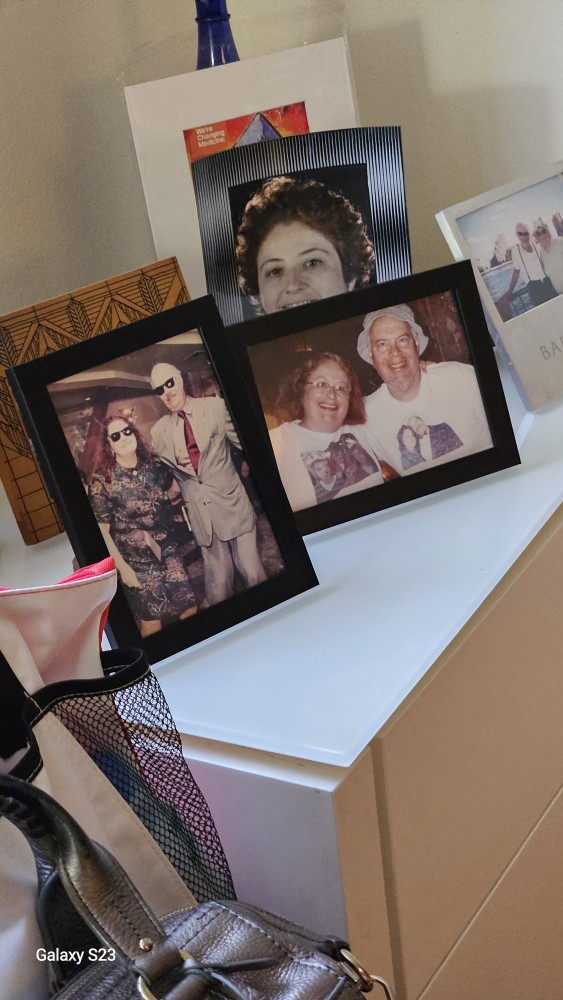
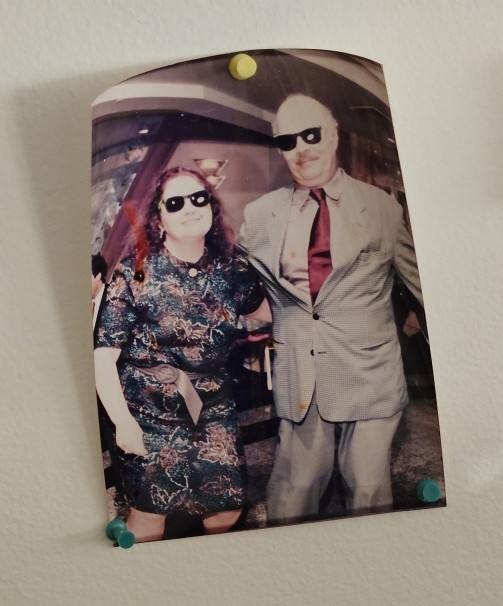
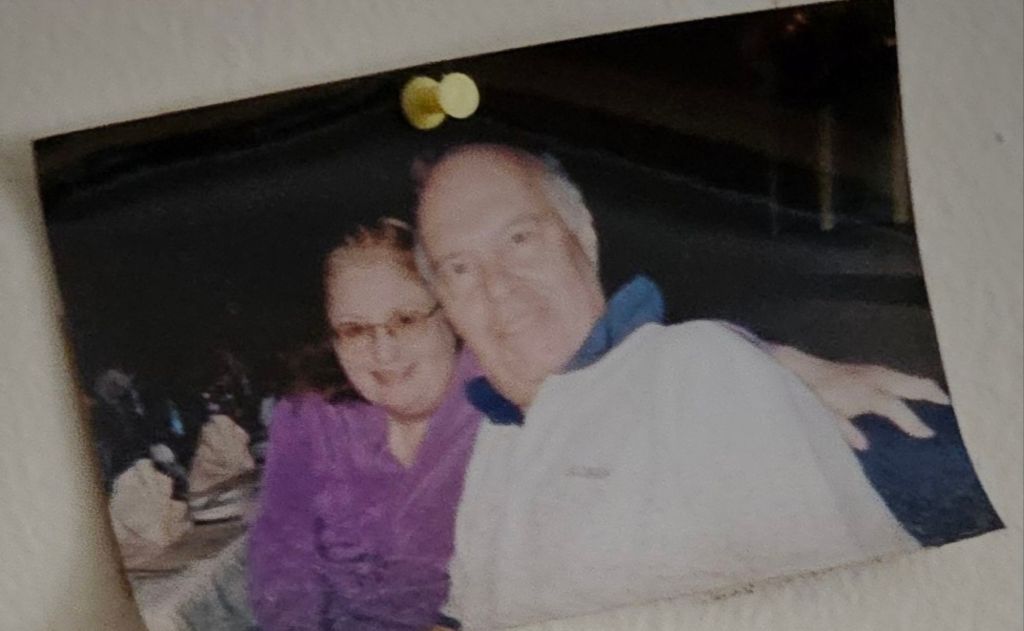
Here’s the story of the picture [L] with the Blues Brothers vibe; I’ve shared this at length with A. who was curious about this photo in my pictorial. It’s a memory from the 2nd year that Burt and I were together.
We were invited to party for Judith E’s birthday–who was married to Jim M, a guy I worked with when I taught at the East Harlem Block Schools. We were expected to dress in costume. Instead, we took our own clothes and donned dark glasses. A. asked “Is that cheating? 😂”
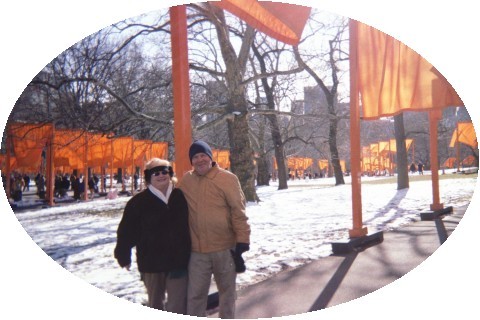
The Gates reappeared this past winter, courtesy of augmented reality, and as a tribute to the original.
When the artists Jean-Claude and Christo first hung them 20 years ago, we made a point of walking the Park.
The Gates were an event we did not want to miss. As it was a time-limited installation, so we were constrained to 16 days in February 2005.
We had a lot of fun, even though we were puzzled for a meaning.
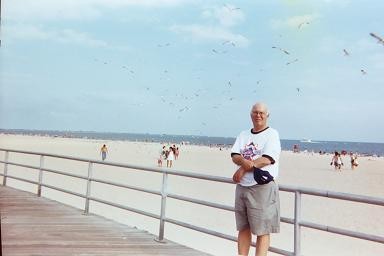
Coney Island has so much to offer the day tripper; over the years we spent a few days each summer on the boardwalk.
There were arcades where we played a variety of games. Burt was particularly fond of the Bean Bag Toss.
It seemed like we got tickets by the yard so we could play to our hearts’ content.
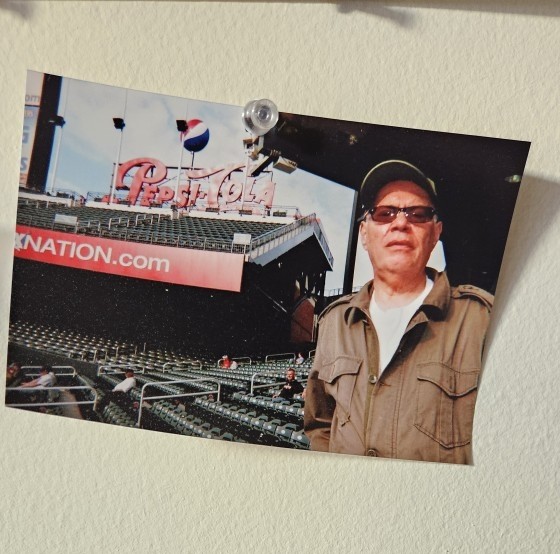
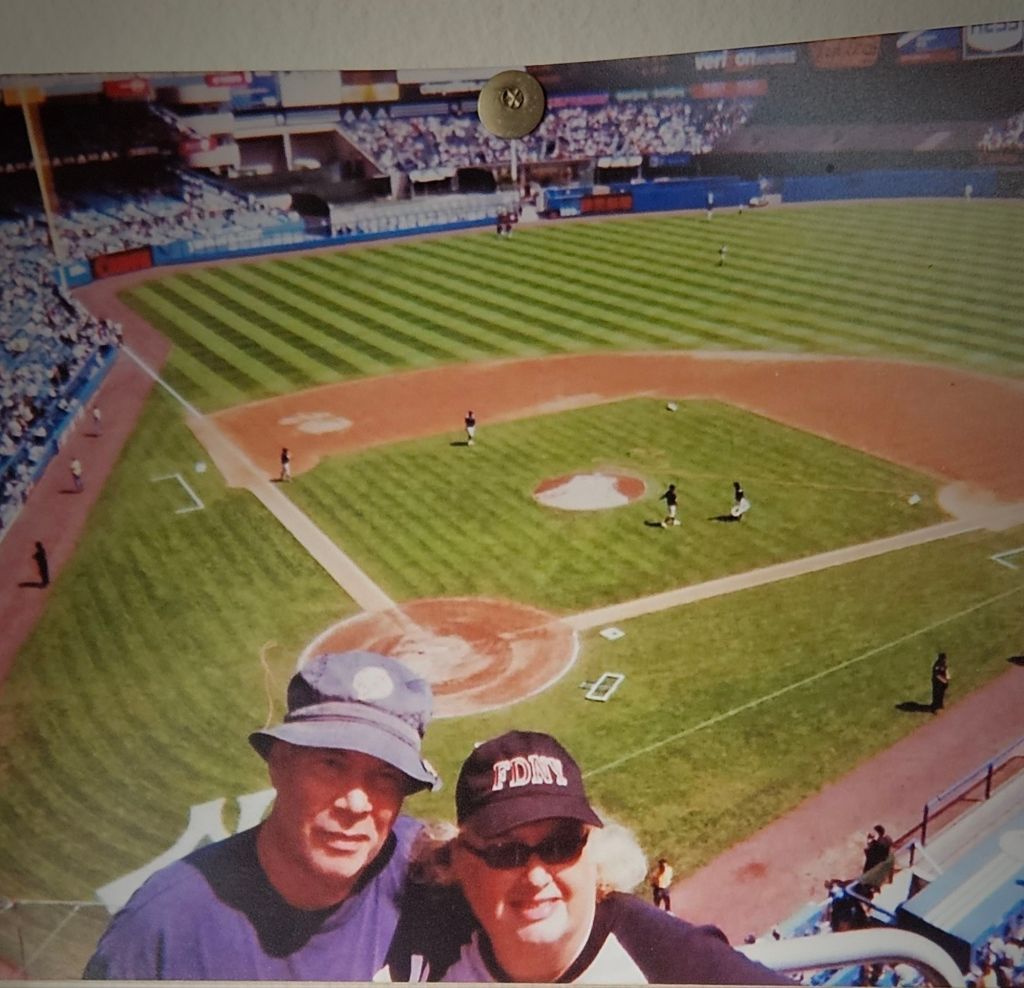
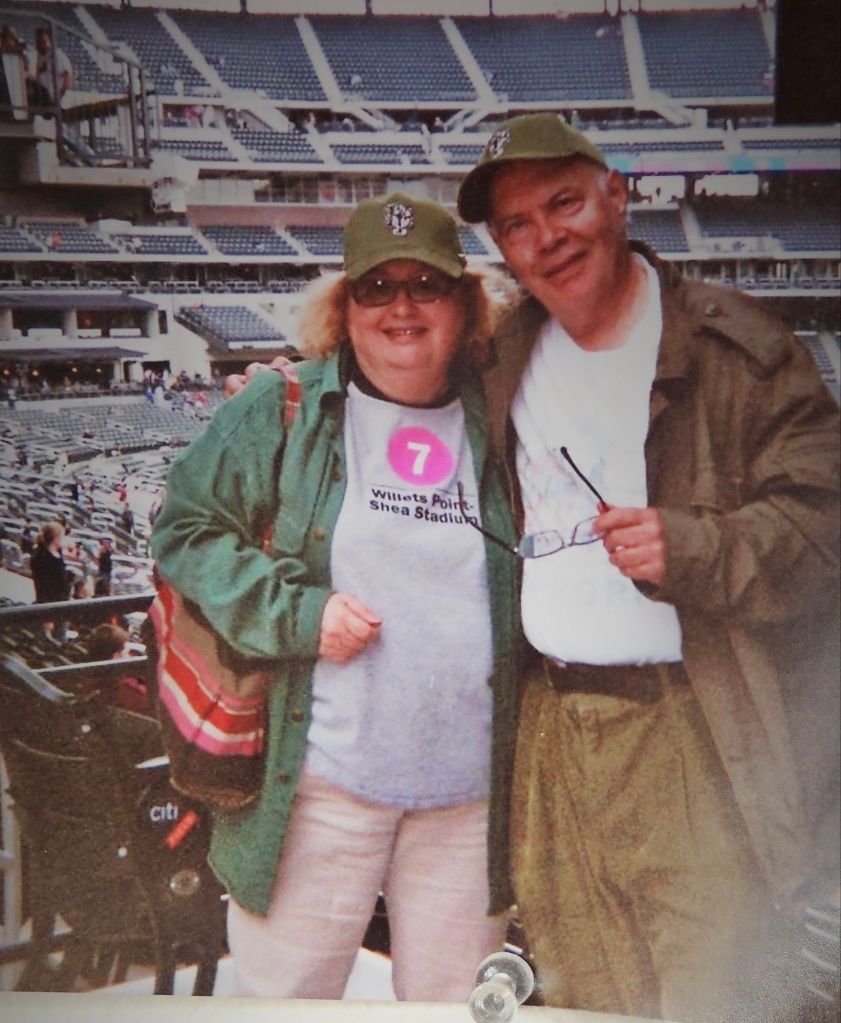
On the occasion of this photo, we headed from Brooklyn to Queens to watch a Mets game.
Burt and I always were goers before his dementia stopped us in our tracks.
Lately, my lament has been that we should have done more during his decline. Gone to dinner, taken more walks.
In part, this is a wish, that if we did more, we could’ve made more memories.
I’ve mentioned his expressed desire to attend the ballet. I also mentioned that I had wanted to take him and knew it could not be.
I think that desire had to do with how good it felt for him to share the experience. We got a lot of joy from the dance we saw.
We saw a lot of the ballet. When each performance ended, Burt would make his plan to head to the box office to buy tickets for another series of ballets.
Ballet, theater and baseball were our regular entertainments. We went to concerts and to Coney Island. These are the memories we made from before. There are many.
In truth, I know that Burt and I did as much as we could after he became ill. My wish for more also has to do with how much I miss him. He couldn’t have done much more. And what we did do, now stands out as happy moments.
We went to a French cafe for latte and madeleines after a trip for flu shots. That was with his first aide. We all sat outside.
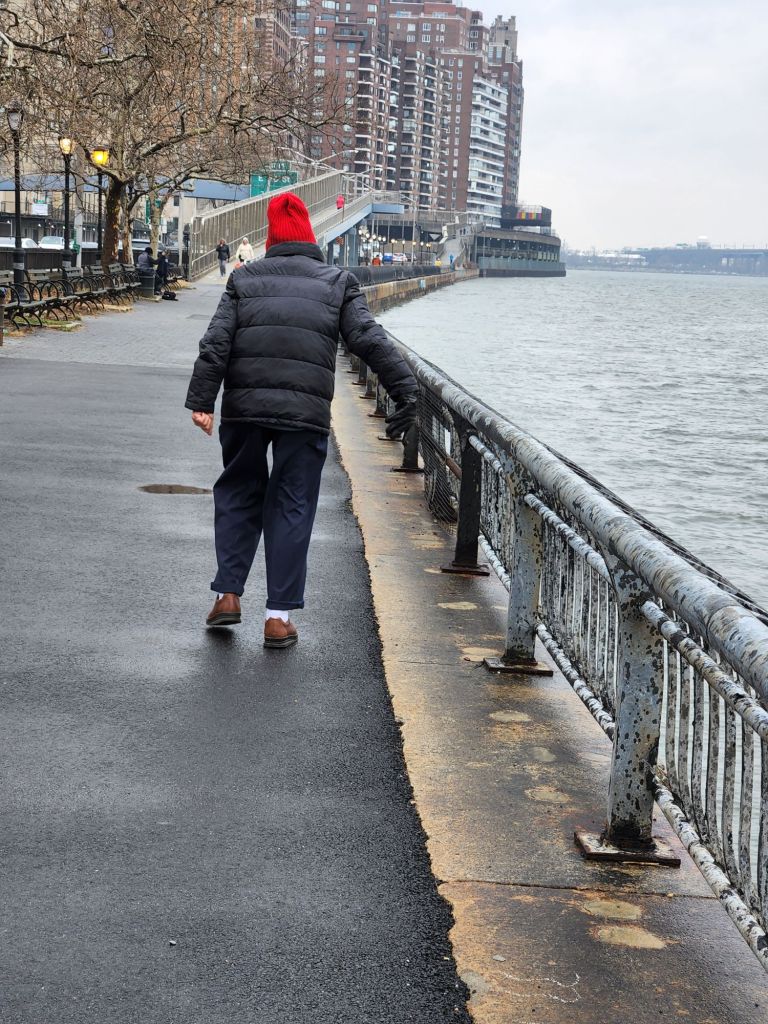
The second year of his illness, he delighted in taking his aide to lunch at the Italian Village. He always went for walks with an aide; it pleased me to see them in deep conversation as they came home over the river ramp.
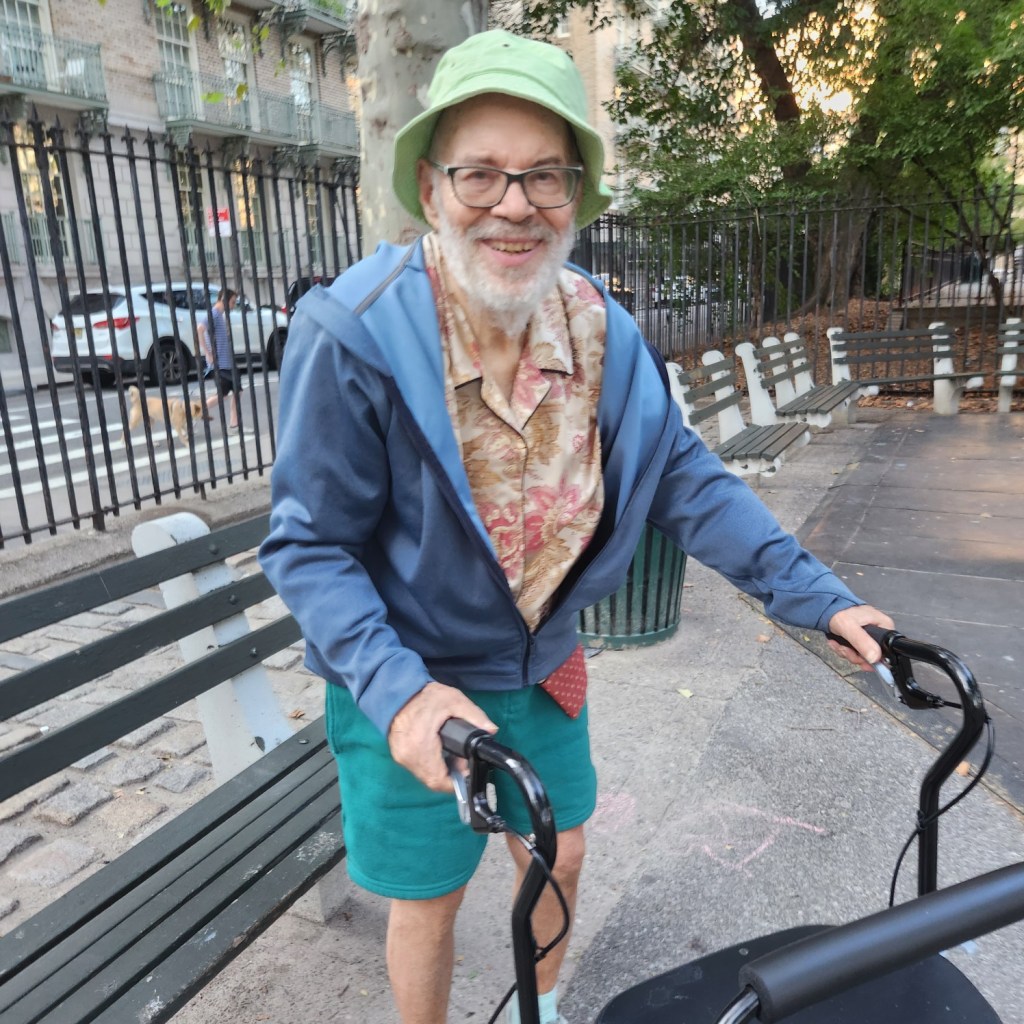
While he was in rehab after a fall, either he and an aide, or he and I would go to the activities room afternoons for movies or live entertainment. He stayed in rehab for a long time. I needed him to be mobile when he came home and he was diligent about his physical therapy. Until I hired an aide for a short shift, I visited all day with him. Once home, he had to use a walker but we could still go out.
For his 84th birthday, I threw him a surprise party. That’s always a fingers-crossed eventuality, but he loved it. So much so, that he wanted to take me out the next day. He walked a long couple of avenues for our date.
His party went so well that Burt also insisted I throw myself a surprise birthday party. I did and he enjoyed seeing friends again.
Those parties were highlights for us. His 85th was harder; he was not as social as he’d been.
Of course, I don’t regret having people over to fěte him.
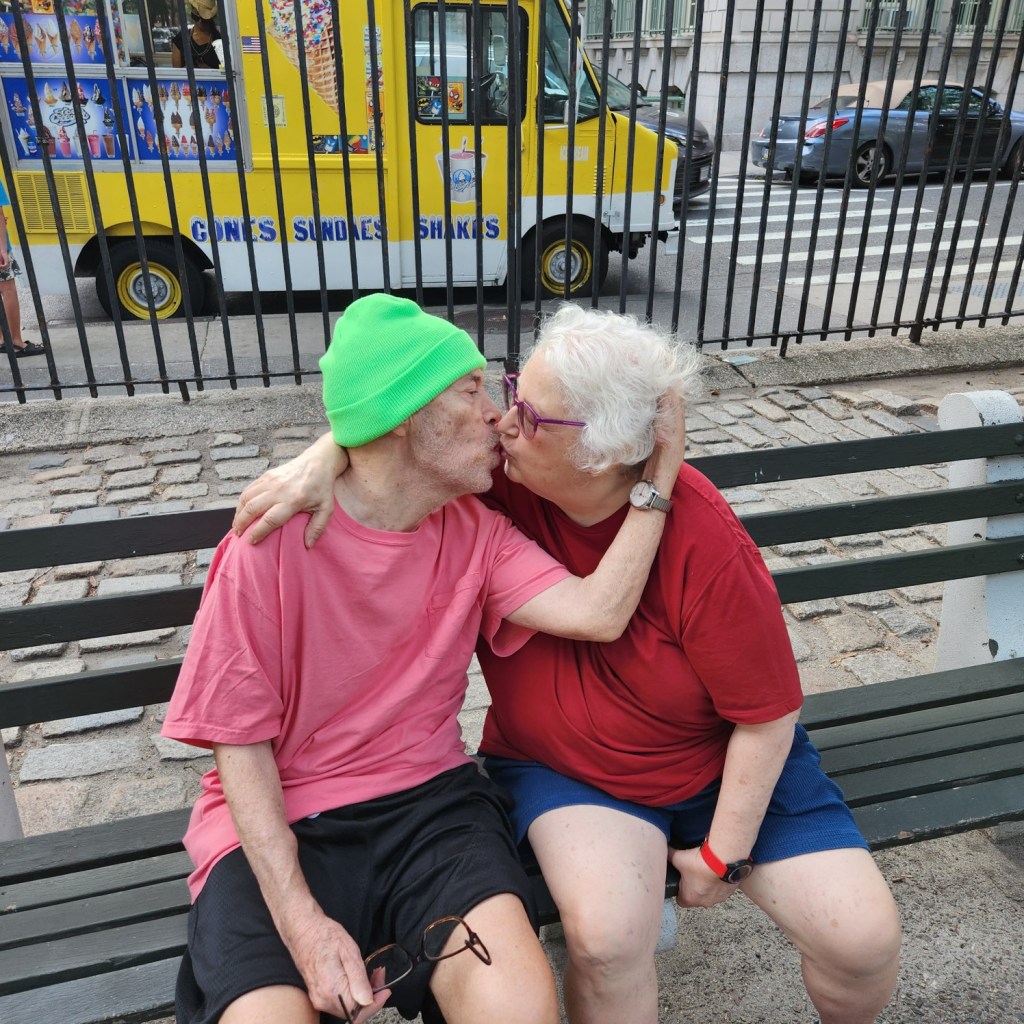
It was just that the final decline had begun that October. Our last outing to get ice cream was the Sunday after that 85th birthday party on November 10th. We ran into one of our friends and Burt had a chat with her. Nice.
I regret that the next weekend, when he couldn’t get out of bed to go out with me, I responded with anger as if this was a willful resolve.
It became clear, even to me, that he couldn’t isn’t he wouldn’t.
It was sad but Burt and I didn’t go on our weekend outings after this; sadder still, he was now bedbound.
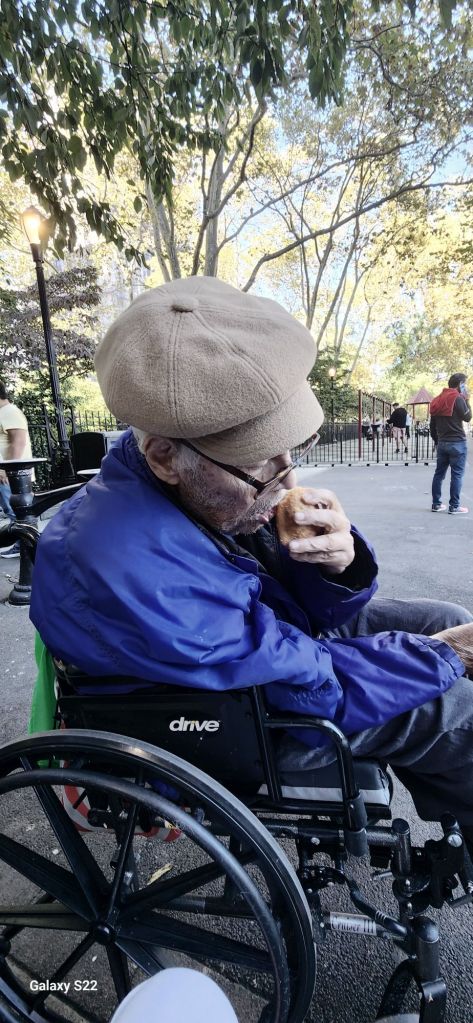
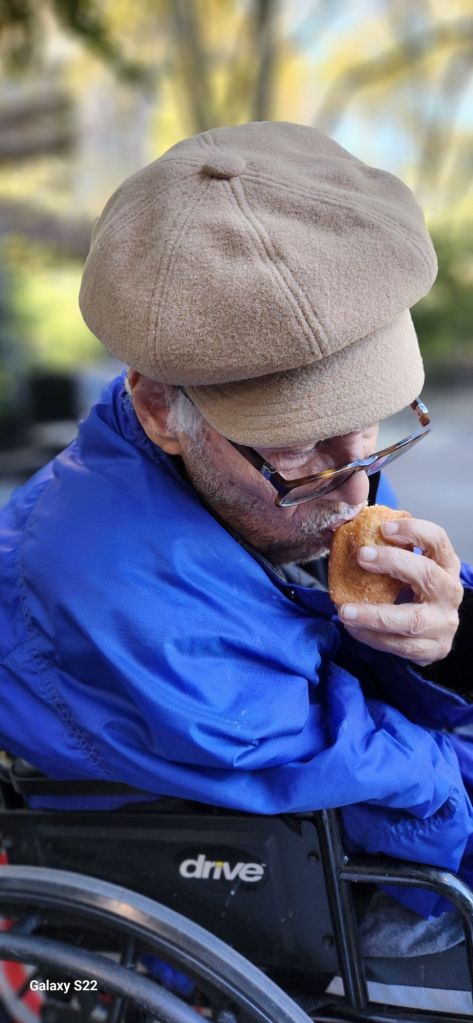
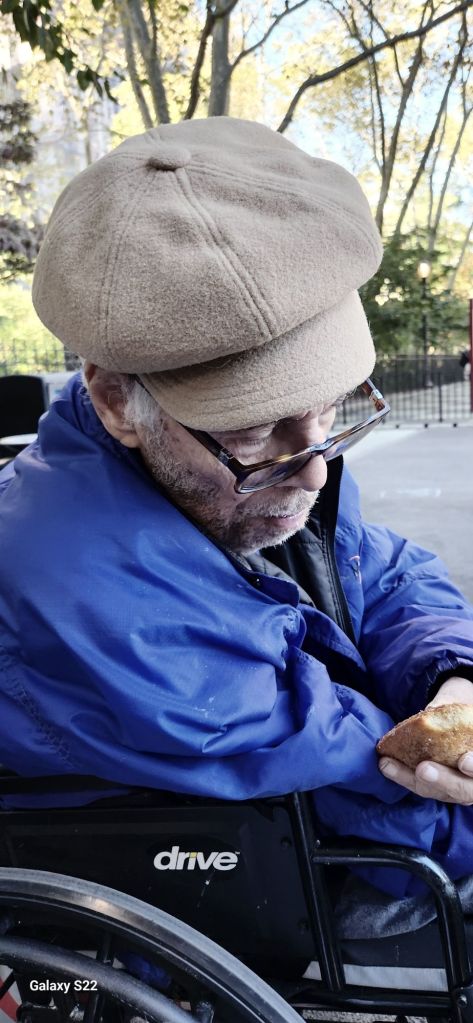
The outings on Saturdays and Sundays, to the river or the park, were my attempt to keep up our quality of life.
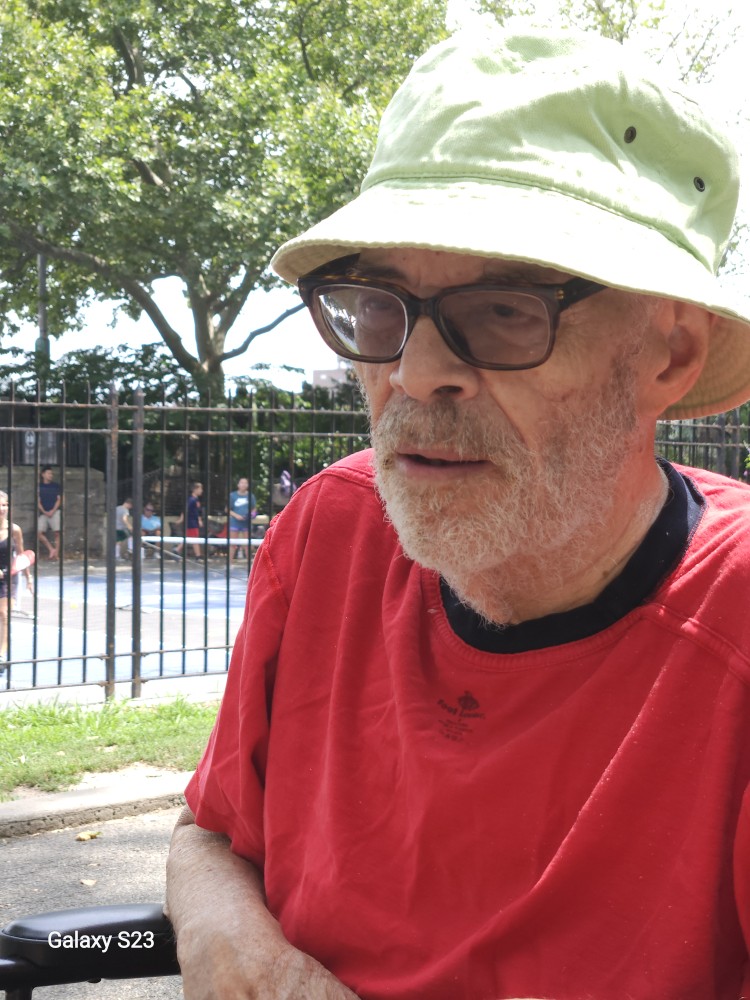
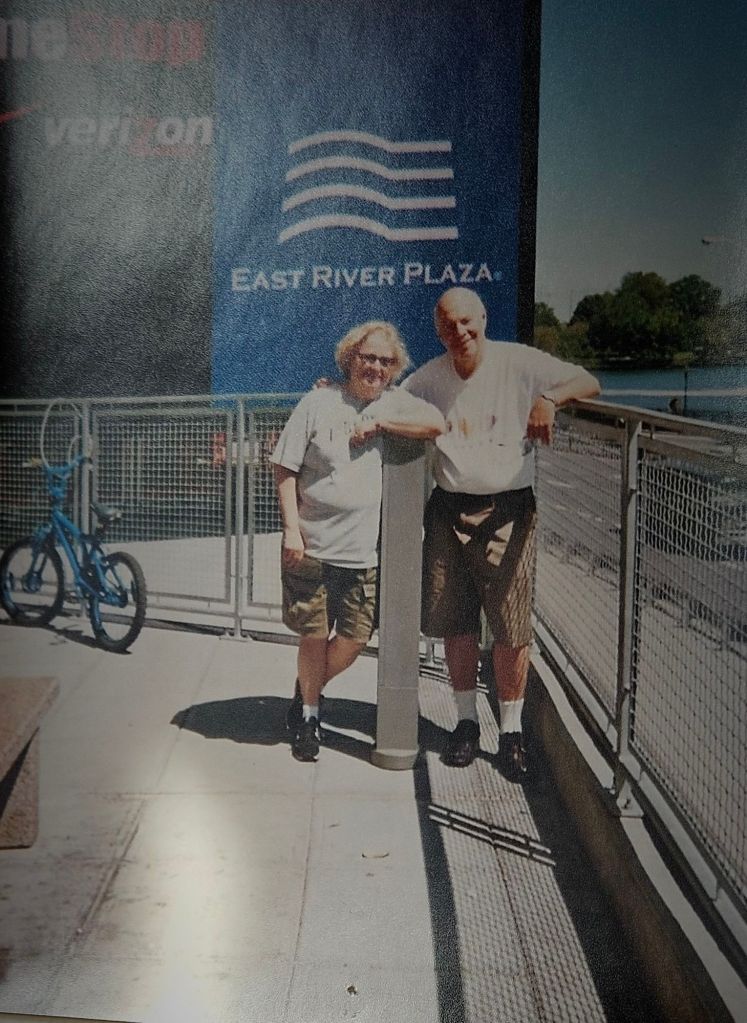
Some of our happiest moments from before were sitting together on the East River Esplanade with an eye on the water. Now, I was not sure that Burt knew I was there with him in the park. He was confused, and one day when I recapped the day on a Sunday evening, I said “We went to the pickleball court,” and he asked me why I didn’t say hello to him. More sadness, but it was good being outside and fresh air is always a good thing.
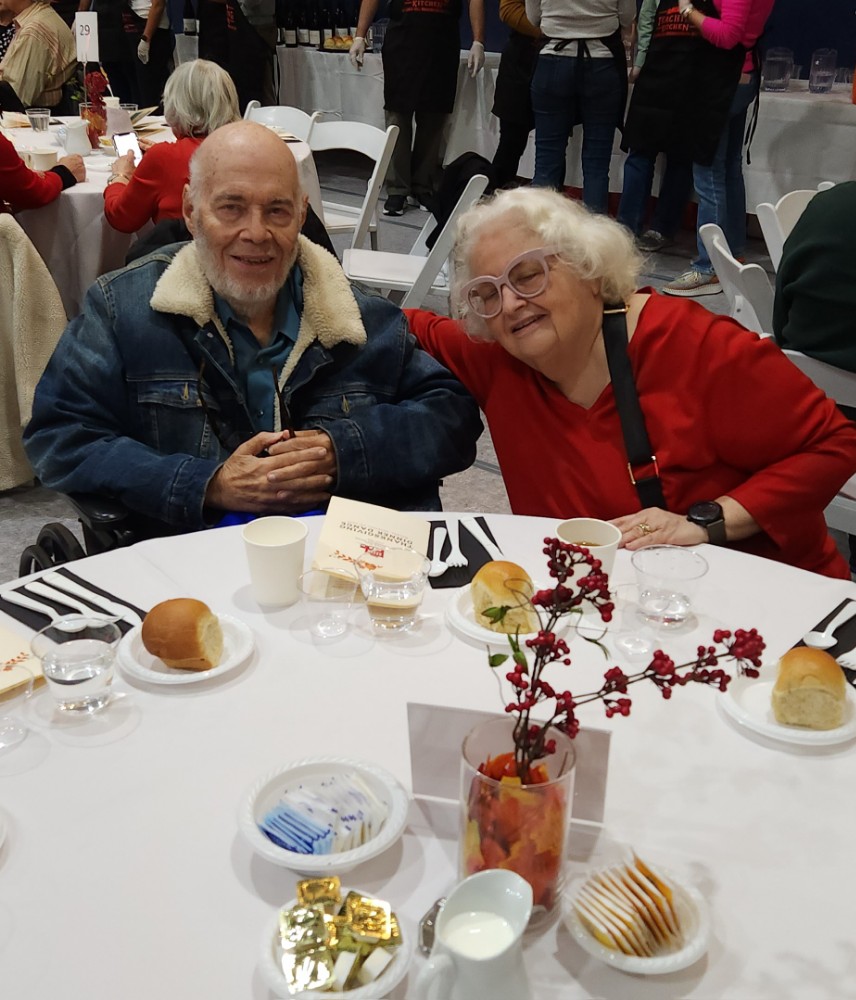
A Thanksgiving dinner at our community center 2 years before is another happy memory. There was a lot of hubbub and many strangers, but the staff made him feel special. He also ate the meal at a time when he wasn’t eating much.
We spent a few more afternoons at caregiver appreciations at LHNH with mixed success.
LHNH at Thanksgiving 2023
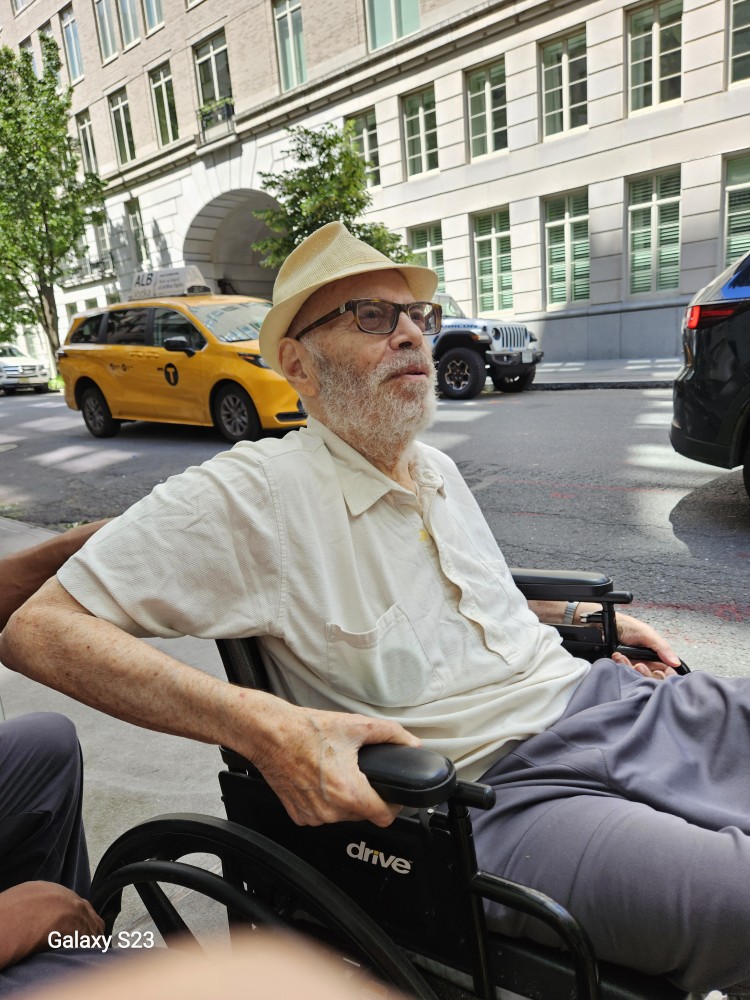
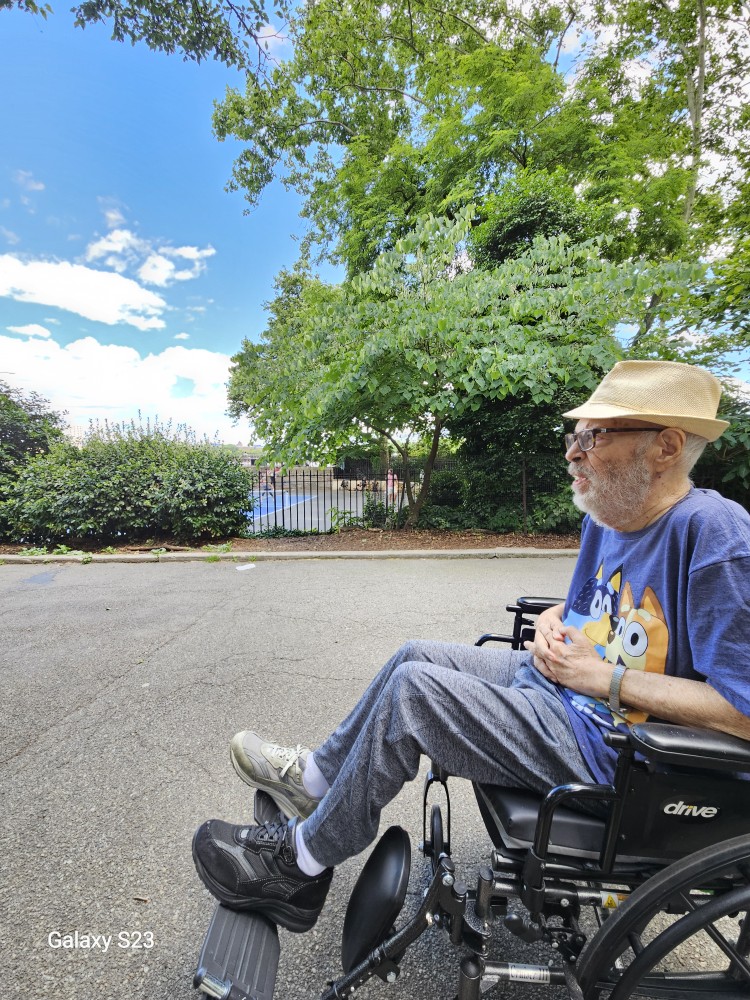
I count visits to Burt’s doctors as good outings as well. Burt really enjoyed seeing all his care team. His GCP, his orthopedist, his neurologist are all nearby at WCM or HSS. I hired a service to help with wheeling him there. He loved the guys who drove his wheelchair, too.
Getting him ready and out the door was a challenge. Burt also did not like sitting in waiting rooms but he would usually chat with the fellow who pushed him to the appointment.
Sometimes, he’d make a fuss of outrage at being kept waiting. Once in the exam room, he was convivial. He was happy meeting new nurses or techs. He loved his doctors.
On the way home, we sometimes stopped for ice cream. Making it an occasion.
Making it an occasion was a way of elevating our every day.
He elevated our every day, by turning a doctor’s appointment into an occasion, taking pleasure in greeting the folks he met, having fun, asking the medical folks questions about his condition.
Burt’s capacity to enjoy, to take joy, was a gift. To me.