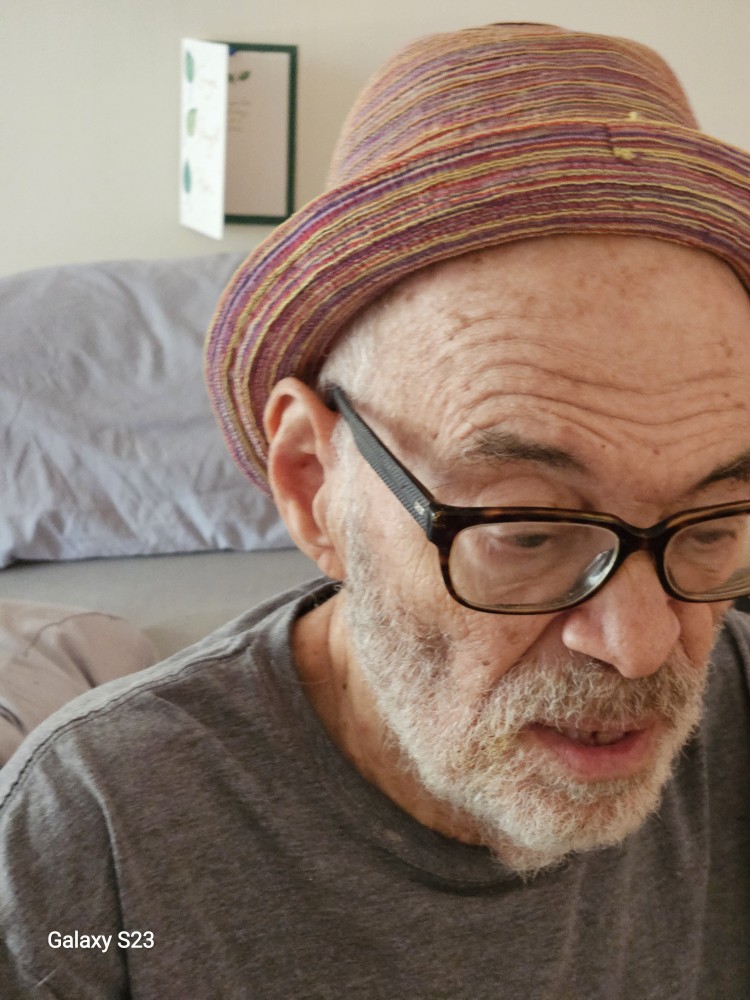
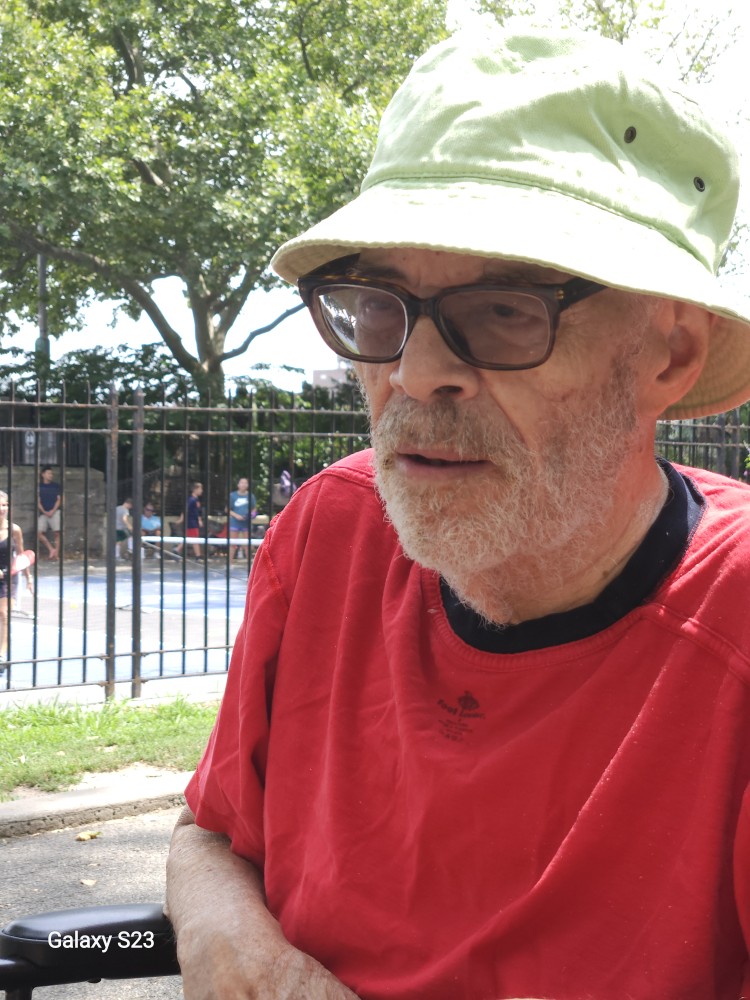
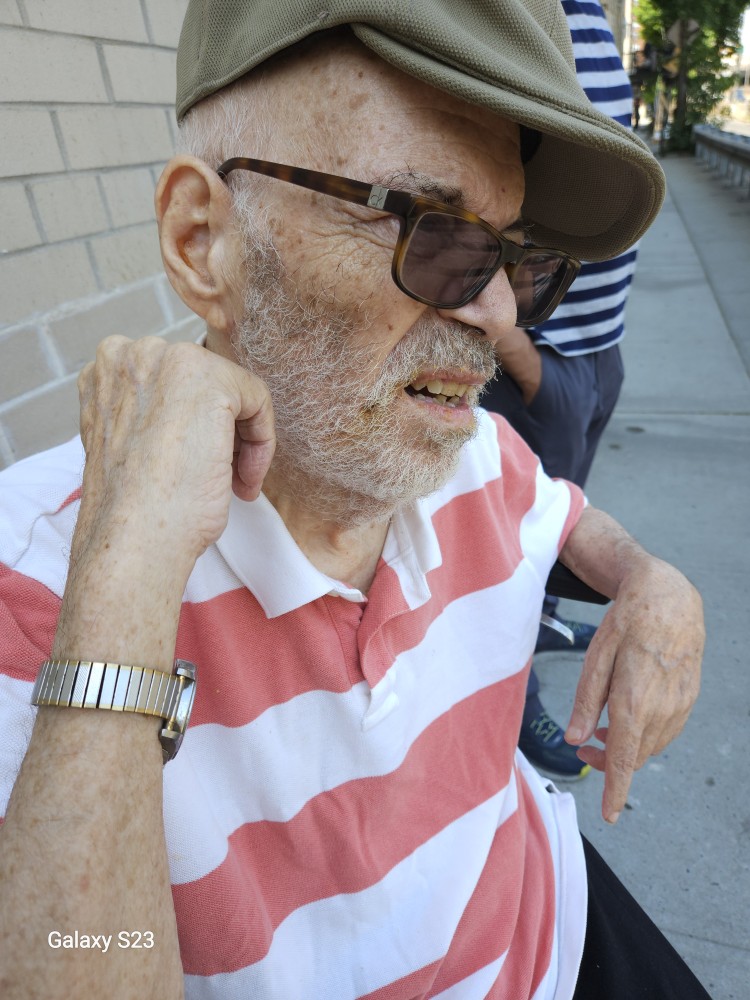
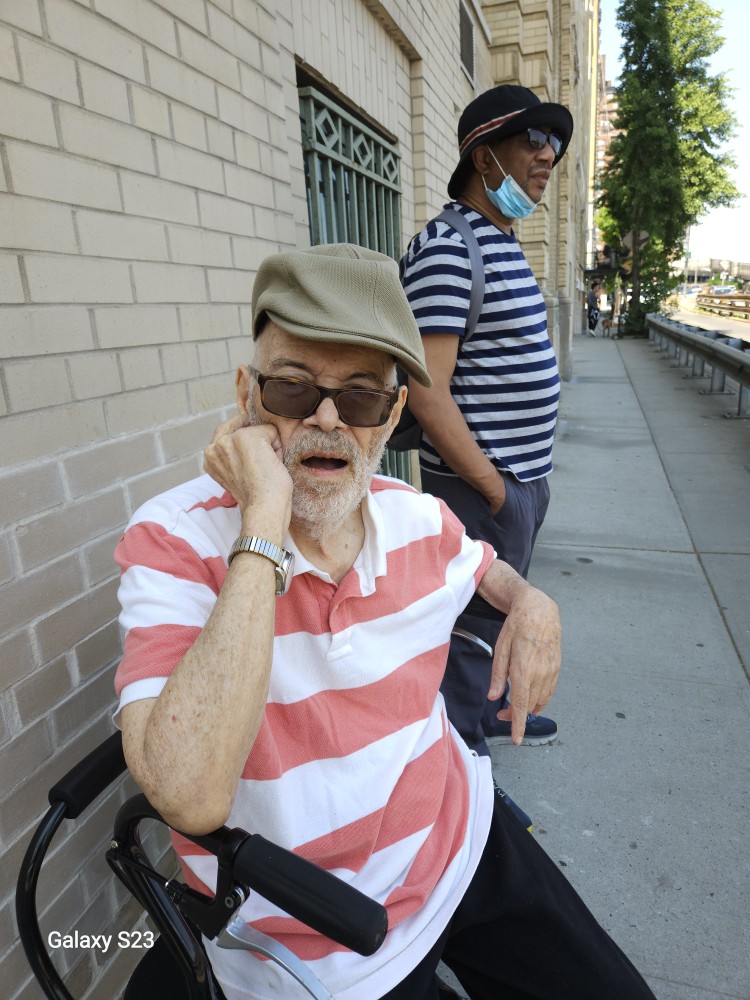
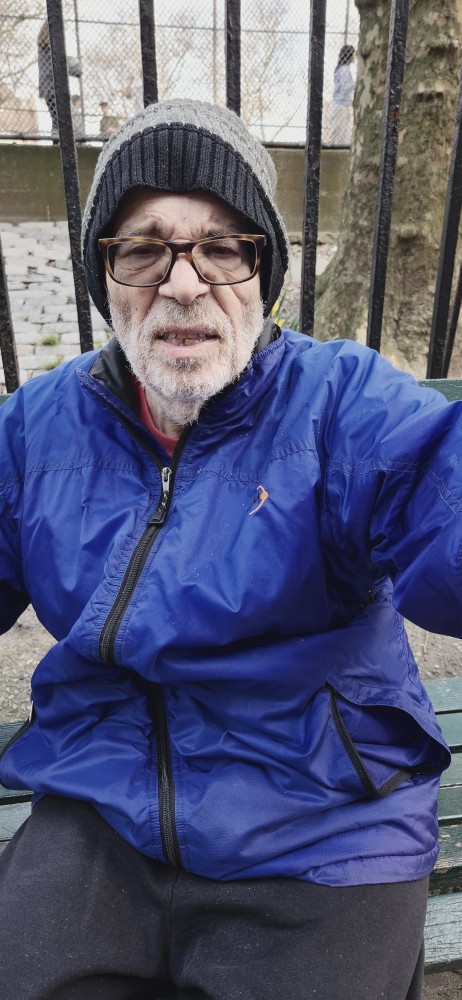
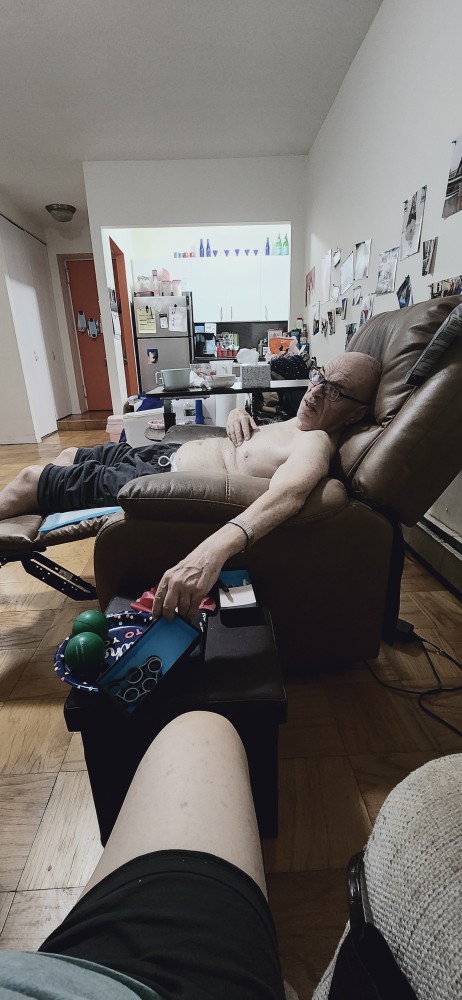
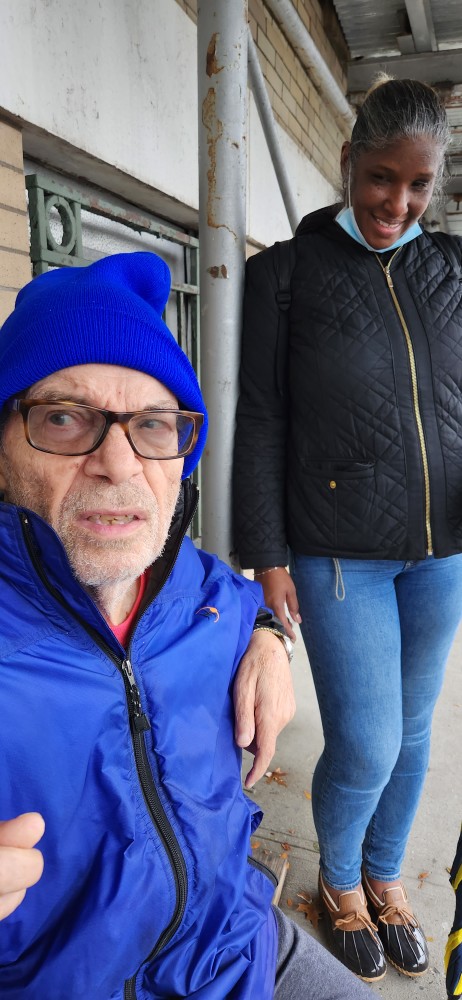
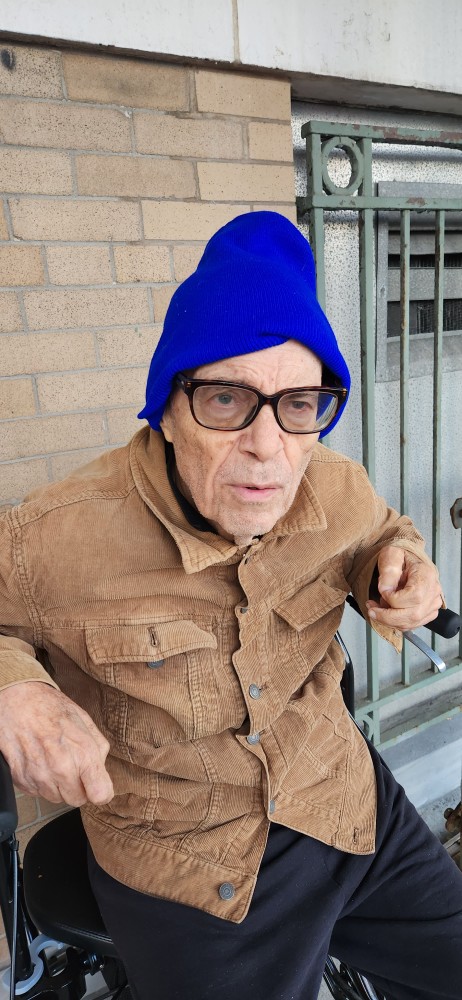
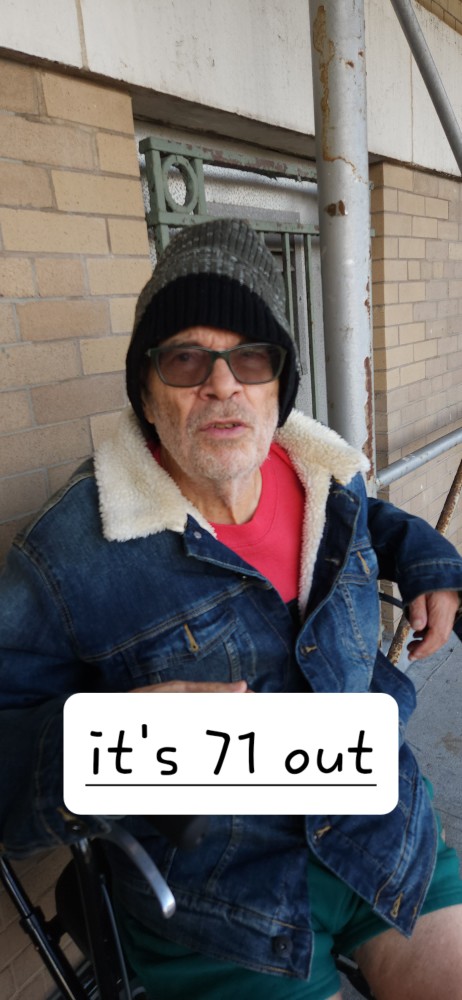
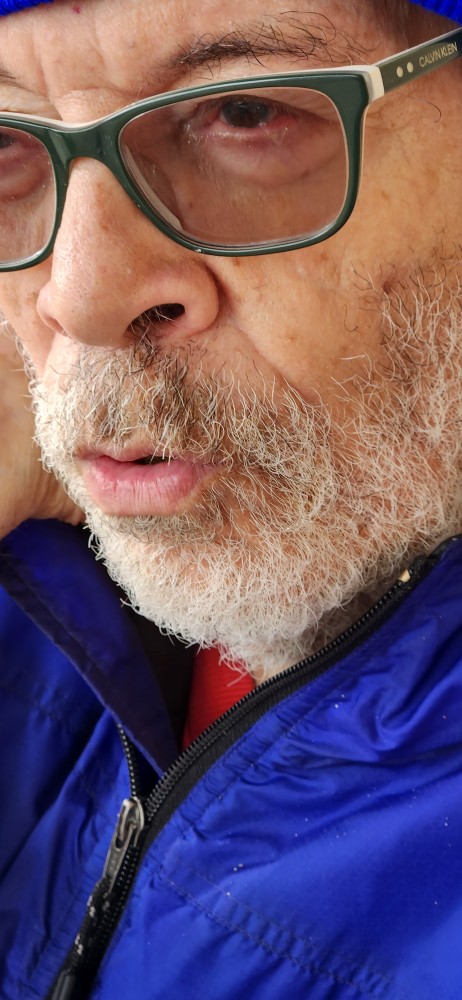
Last day

The Medical Examiner failed to notify my police detail to release Burt’s body.

This was an hours long oversight which involved not just waves of paramedics but lasted through three shifts of cops.

We asked the first of them if R, Burt’s aide, could go home but they and he lingered at home. I called in to his doctor so she could get hold of the M.E. before the end of her shift. Still no notification.
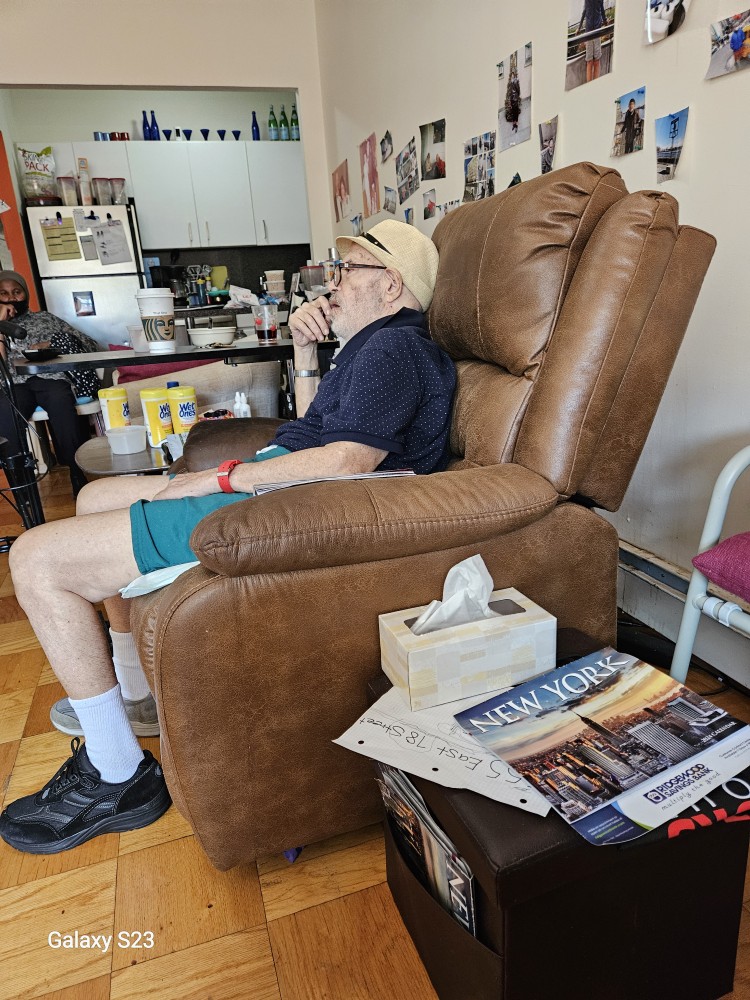
Burt and I were left with one very young policeman [I know, I know, at my age, they all look like teenagers].
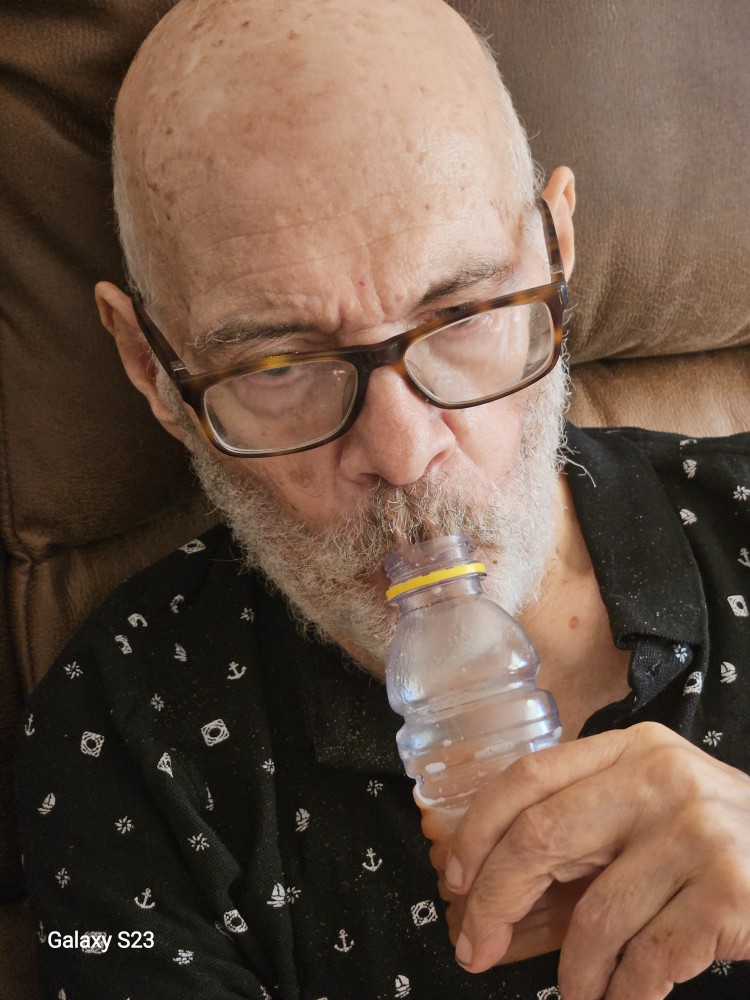
On the phone my dear friend S. and I shared our perplexity over the delay.

It was her call to the M.E. that got the go-ahead. S. told me he was very apologetic and said I could finally put in the call to the funeral parlor. Within seconds, my young police officer got the ping on his phone as well.

The crew of EMTs first on the scene had pronounced at 11:29. At 5:30ish, I finally called the funeral service to come take Burt’s body. They closes at 6, so Burt was going to a mortuary in New Jersey for an overnight stay. At 7:30, two men arrived came to carry him away.

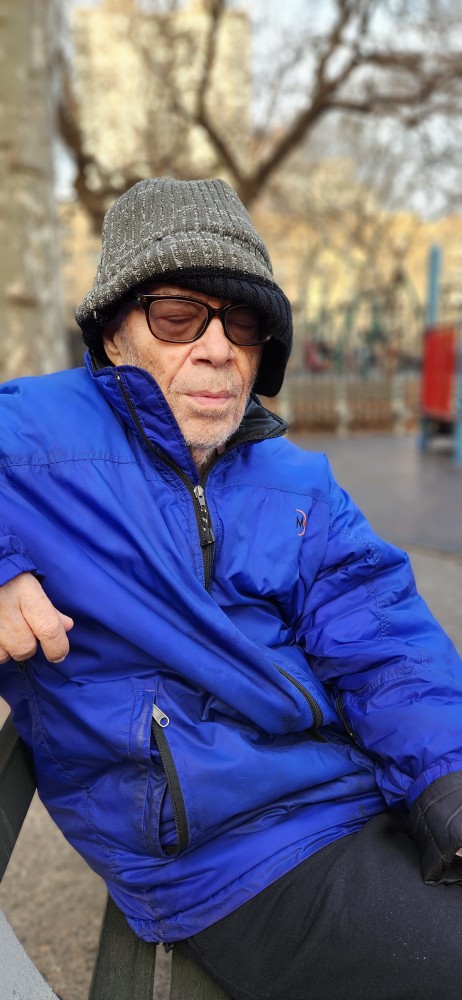
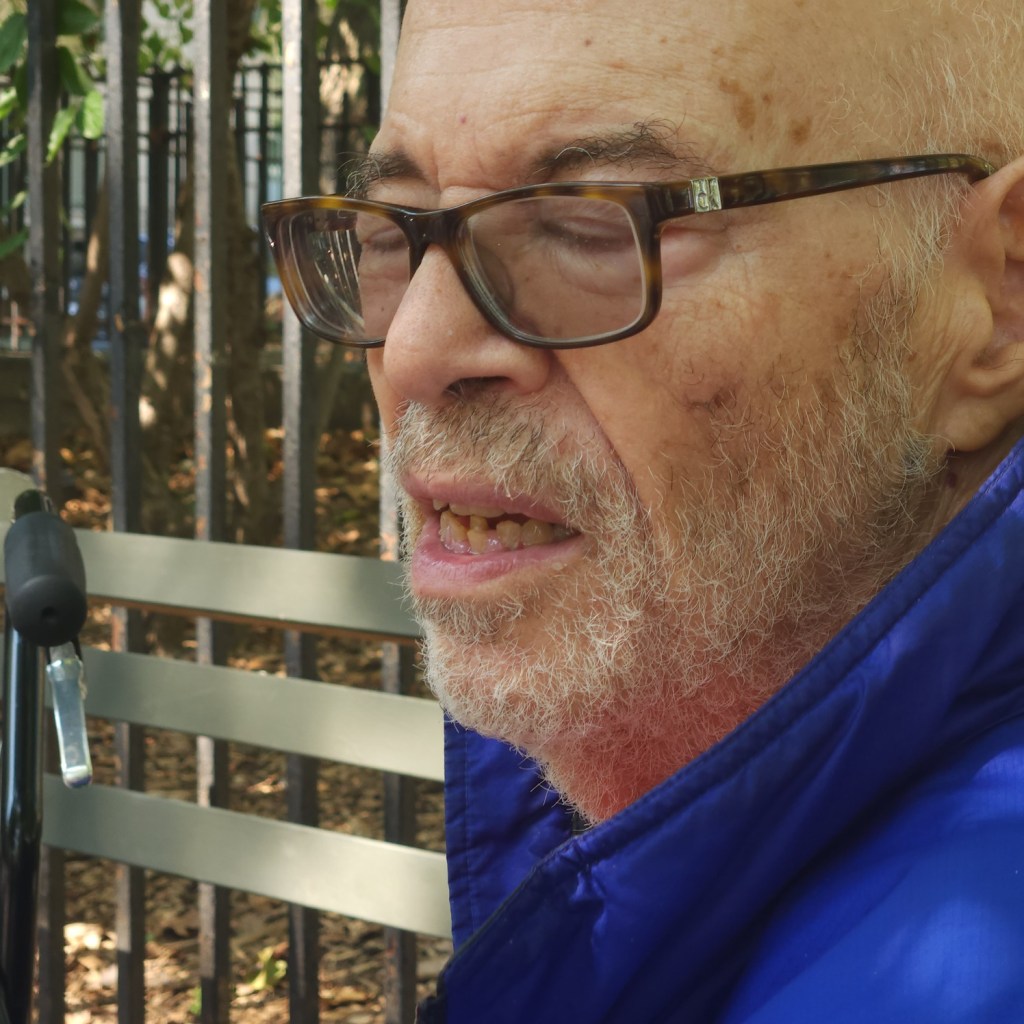
It had been a long sad day but he looked like he was at peace the whole time.

Lying

In the universe of dementia caregivers, there is often a need to practice therapeutic lying.

I have been a natural practitioner.

The fibs were for the best. They were in place to protect, shield, and guide a quality of life for Burt.

The things that mattered in our life were that Burt felt and was safe and secure. Often, I needed to lie to make that happen so I could focus on care, patience, and love.

All that lying has made me an honest person. My genuine self, my essential self became more caring, patient, and loving during my journey with Burt. What could be more honest than that?
Sixth stage

When you’re caring for a person with dementia, you get to repeat the five stages of grief over and over.

While your spouse is playing out his Groundhog Day, repeatedly wondering what time it is, you’re stuck in denial anger bargaining depression acceptance over and over.

It’s not just sorrow (and surprise) as a new loss inevitably appears, you get to relive the whole process of grieving.

By the time your loved one passes, you’ve mourned a myriad of griefs. And who knows what losses they’ve mourned.

All that is to say, there is another ambiguity to mix with your grief when your loved one dies. Relief.

Grief for a surviving spouse is all those stages of sad mourning plus relief.

There is relief not only for the sufferer, but also for you (me), the caregiver.

It’s the acceptance that they’ve been gone, lost to you for a long while. This final loss is an end to caregiving, not to caring. And it’s a relief, for each of you, for both of you.

Grieving is a process. It’s gradual. It has its own ebb and flow, and it takes work.

Endings

What experiences in life helped you grow the most?

It felt odd sharing news of Burt’s death in an email or text. It was odd having that news to share.

He lived large and well right up to his last few days. Even during 4, nearly 5 years with dementia he found pleasure in connecting with people, and delight in making as many connections as possible.

His world shrank dramatically in the last days as he seemed to physically shrink and as he struggled sleeping and breathing but no longer connecting.

On Tuesday morning, he’d had enough and was ready to go. His final journey was over in just four days.

The chances are that I will continue to write about Burt’s struggles as I heal from my loss of him. Heal is the wrong word and so is reel to be honest, although reeling is a sensation I feel.

It hurts but it’s not a pain you want to cure. It will dull on its own and I will rejoice at my good fortune just because I knew him. It was a privilege that I could hold onto him as long as I did.

Then, as the grieving fades, I’ll have memories of that good fortune and my privilege to have loved him and to have been loved by him.

I learned that compassion and love can live with greater intensity next to loss and fear.

He showed me how to face fear and soldier on. I had knowledge about Lewy Body because I had researched his dementia; he was facing the unknown.

I learned what bravery was from Burt and gained strength from his bravery along our journey together.

His story

There’s a lot of serendipity afloat at this end of our journey.

I get glints from the universe that all provide points of light from Burt’s life.

Or maybe, my experiences spur my memories.

Memories are giving me context to our history, mine and Burt’s.

I knew his background, I think, because Burt was always a story teller. In his illness, during most of the five years of dementia, he was famously a talker.

It was in the first 30 years of our marriage that I gathered so much of Burt’s history.

I heard stories of childhood [in Brooklyn] and youth [Brooklyn and the Catskills].

I knew his relatives though I rarely saw them. I knew his former wife and his children as they grew up. I met his dad even though he had died long before Burt and I met.

I was introduced to his career and the co-workers who disparaged or encouraged his success. He worked hard at his work and he loved it.

He spoke of the therapist he loved and admired; this is the man who advised him to go see The Music Man. I too was grateful for his contribution to Burt’s evolution.

Our life together, Burt’s and mine, centered heavily on our love of entertainments. The theater, jazz concerts, even opera were destinations. We enjoyed attendance at restaurants and ballet performances.

Like his maternal grandfather, Burt was a walker. He quoted a podiatrist who identified his feet as “your transport”. On our first date, Burt and I meandered for hours, walking from a meet on West 21st Street, over midtown. We stopped for dinner on 51st and 1st and proceeded up the avenue. Burt walked me home, all the way to 72nd at the East River.

That would soon be our home. We lived there until the summer of 2012. Our last years together were in this new building Burt picked for us. It was near yet so far from our first home.

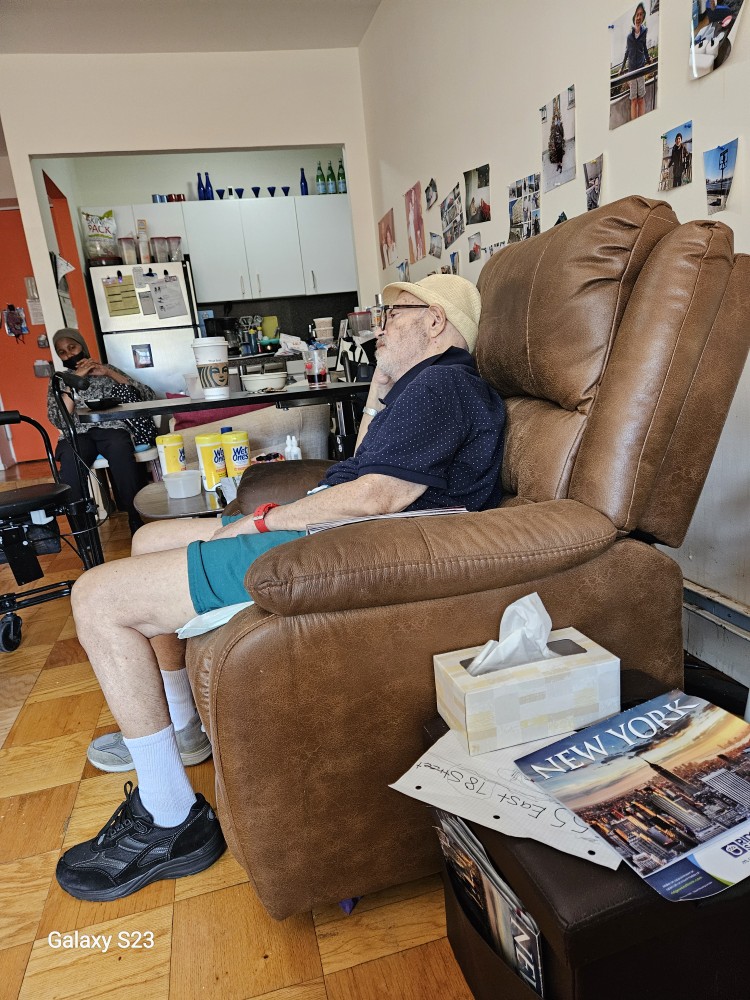
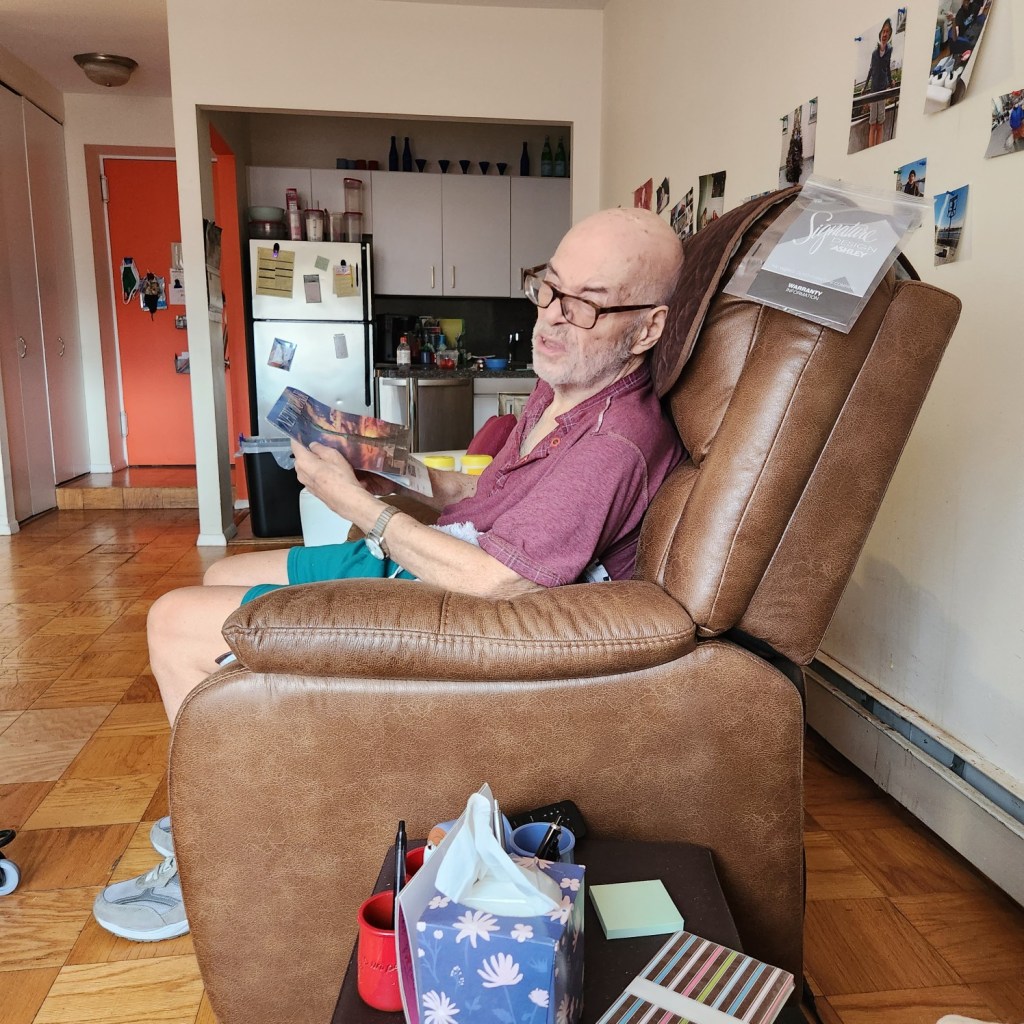
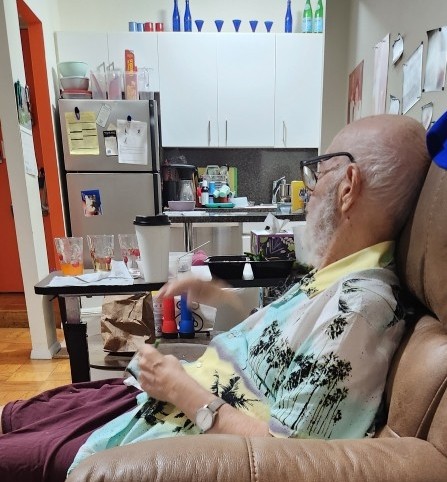
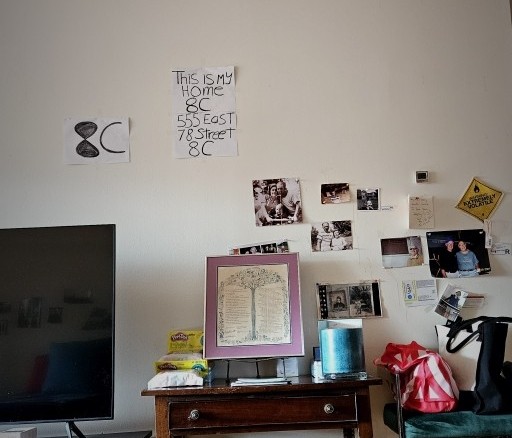
Here, Burt made himself familiar and friendly. This last place we lived together was truly Burt’s home. I am so happy that he could breathe his last at home, a place of comfort and love.

Connect the dots

Every conversation…. no, it’s not the conversation. It is I. I am the one who pulls memories out of every and all conversation. I connect to something I hear so I can probe my memories of Burt more deeply. I seek a deeper remembrance.

He’s connected to everything I hear and everything I speak of or do or see. I guess that connects me to Burt in these moments of grieving.

Tell me of your daughter’s bat mitzvah, and I remember that Burt read in Hebrew at a Seder we attended. I was surprised and impressed. Burt went through a bar mitzvah, of course; his mother would have seen to that. I first went to a synagogue while in college when a friend took me to Yom Kippur services; so, yeah, I didn’t get a bat mitzvah. Or any religious training.

I remember that Burt spoke Yiddish so he could communicate with his grandfather. [The Hebrew, he learned studying for his bar mitzvah]. His mother’s father lived with them. He had 6 children and sometimes would stay with his youngest daughter as well.

Both grandfathers were named Max. The maternal lived to the end of his 90s. By then, I guess Burt had married. This grandfather had been a Mason, a bricklayer. Burt told me he was always very active, walking every day, but retired by the time Burt knew him. He had come to America through Ellis Island.

One of Burt’s daughters and I had found the record of their entry. Burt’s mom was 4 when her family arrived. She, too, lived a long life; we buried her from the nursing home she chose for her last years at 98.

Burt’s dad had died at 68. Three of the men on the paternal side each died at that young an age. It always struck me as strange because they suffered different causes of death.

Burt’s father had a heart attack. His uncle, a serious gastro-intestinal issue. His grandfather, the other Max, died of an aneurysm while swimming. My mother, coincidentally, was 68 when she died.

Burt was 85. He broke the pattern of the men in his family, a pattern of just three. He didn’t match his maternal longevity, but her sisters and brothers didn’t live to 98, 99, either. I mean to say, it wasn’t a pattern, a heredity. I know my mother-in-law didn’t suffer dementia as her son surely did. Each generation was unique in its way.

Burt and I were both only children. Burt has four children. I have none, but count his two daughters as my own. There are estranged and strained relations with the sons.

One of the gifts of our marriage, my first and his second, were our friendship with the eldest son’s 3 girls. This was while they were little and into early teenhood.

We enjoyed time with them for many years, and the rift saddened us. I am glad we had those early years with the little girls. Sorry that Burt and I never met their children.

I can say that, technically, Burt was a great grandfather.

Burt was just 8 when his grandfather on his dad’s side died. This Max had a farm in Patchogue. He had been a haberdasher, but Burt only knew him as a farmer. He was proud that they had planted cucumbers together.

There was the children’s story about the man who sold hats piled on his head. I had mentioned it to the grandchildren when we spoke of their father’s family. I should have found the book to read to them. I didn’t, but I guess it wasn’t my heritage to pass along. Their grandfather’s father had been a cab driver.

He drove six days a week. Burt adored him. On Saturdays, his father would stop at home, bearing breakfast and tickets. On Sundays, they would go to a ballgame together. “Don’t tell mom about the hot dogs” became a tiny little joke that Burt and I made from his memories of Sunday with dad.

Tickets were a lifelong joy to Burt. We were sure that he liked buying tickets better than going to the show. As I have reminisced before, he too came home with tickets. Lots of them. And we did go to many many shows. And ballgames.

We all talk of being busy, but while we are in the midst of that busyness, I am not sure we know what keeps us so busy. Looking back, as I am, it begins to come clear. We always had a lot to do. Gives me so many digressions to treasure!

Grieving, as I told a friend this morning, as I just discovered today, is a process.

Community

My friend and neighbor D was one of those who watched over us.

Another neighbor has been urging me to get a dog. She thinks a small dog would be best. She, as people do, really loves her dog. Burt had been fearful around dogs, and I think she took it a little personally when he overreacted to her sweet pooch.

For a while, Burt, uncomfortable in the presence of dogs, would propose we get one. He said he wanted a small fluffy white one like the one his cousin Oscar had.

I had a dog growing up. Mine was a German Shepherd who barked at every other dog and dragged me to the supermarket. When we met, Burt and I, I lived with a cat. Her stupid pet trick was jumping from the floor onto my shoulder. Burt was impressed.

Burt was leery of all animals, but he came to be quite fond of Sophie. This despite the fact that she scratched him once. Sophie was actually named for Sofia Loren due to her ability to be dramatic and sultry.

[Speaking of Sofia Loren, we once, in one of those NY moments, crossed paths with her. It was on Madison Avenue, and we were walking home from a show. She took a carpeted walkway to the doors of Ralph Lauren. We were obliged to stand behind the ropes with other spectators. Celebrity encounters were a Burt favorite.] Back to our story….

In our chosen building, there were many encounters with dogs to be had. Burt did not always handle them with grace. He hated friction even as he courted confrontation, so he would  turn on the charm. Extra hellos and other greetings would be his to mete out to offended dog owners.

My friend and our neighbor told me he was a wonderful man, despite Burt’s run-ins with her beloved Golden.

Burt loved people. They usually sensed that and returned the favor. Now as I walk around our balliwick, I reap the benefits of that mutual admiration. Offers of anything we can do and affirmations of Burt meet me in our lobby, up the block, and around the corner. I say to him, as people do to their loved ones after they pass, thank you for these gifts.

Glad you asked

Sorry to have this answer

Describe a phase in life that was difficult to say goodbye to.

Marriage isn’t rightly described as a phase. Some are soon ended. Others last from highschool sweetheart on, til.

Ours started in midlife and ended with Burt’s death. Nearly 33 years married and almost 35 together.

Maybe, like his mother, I’ll keep counting each year going forward as another year in my marriage.

In some ways it will be. When the ache of loss is gone, I will have the memory of our life together.

Routines

It occurs to me that in the five long five short years during which Burt suffered at the hands of Lewy, we lived a lifetime of routines.

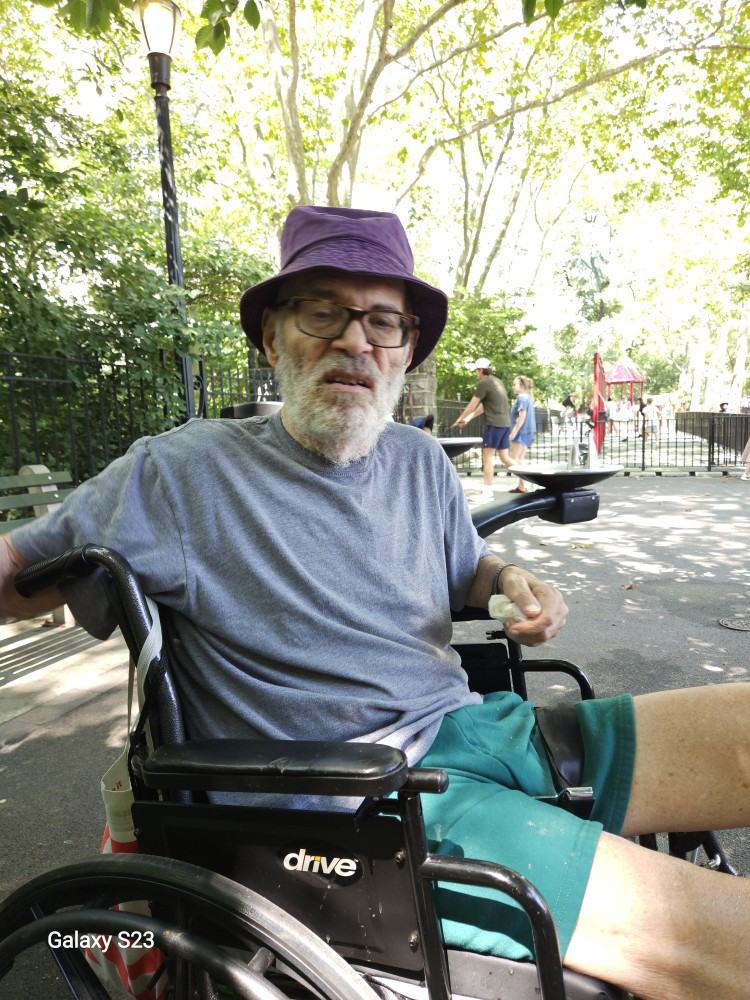
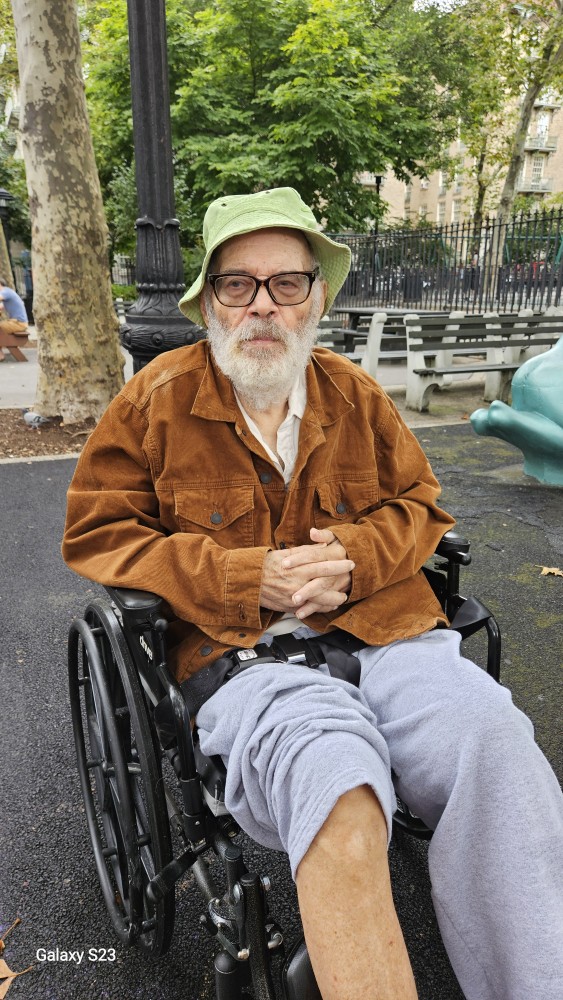
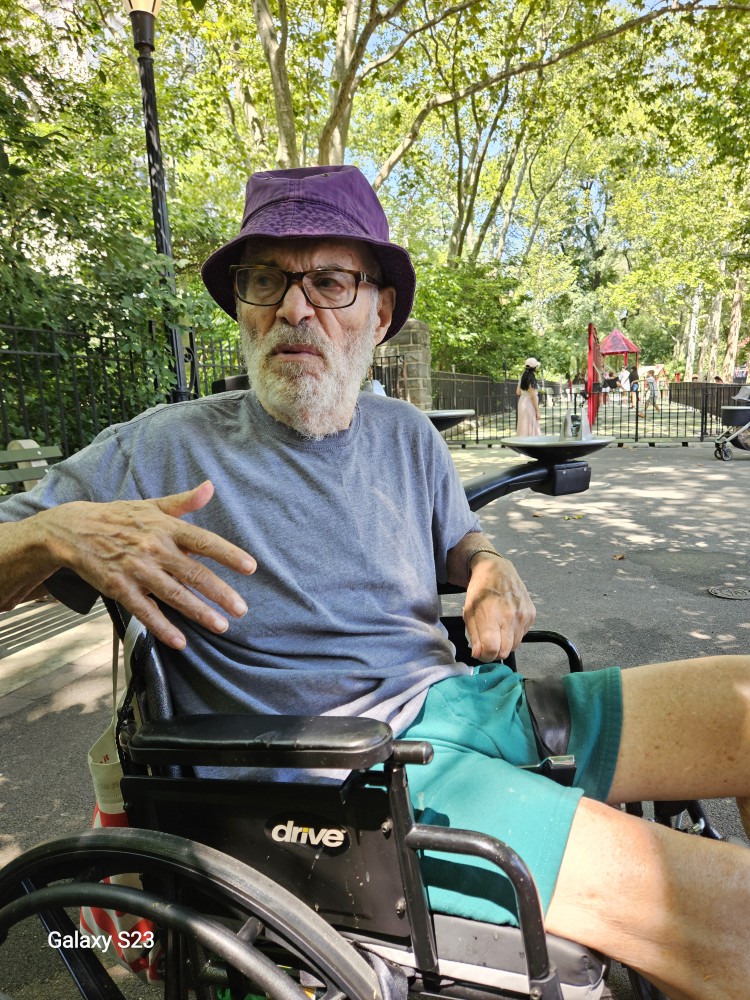
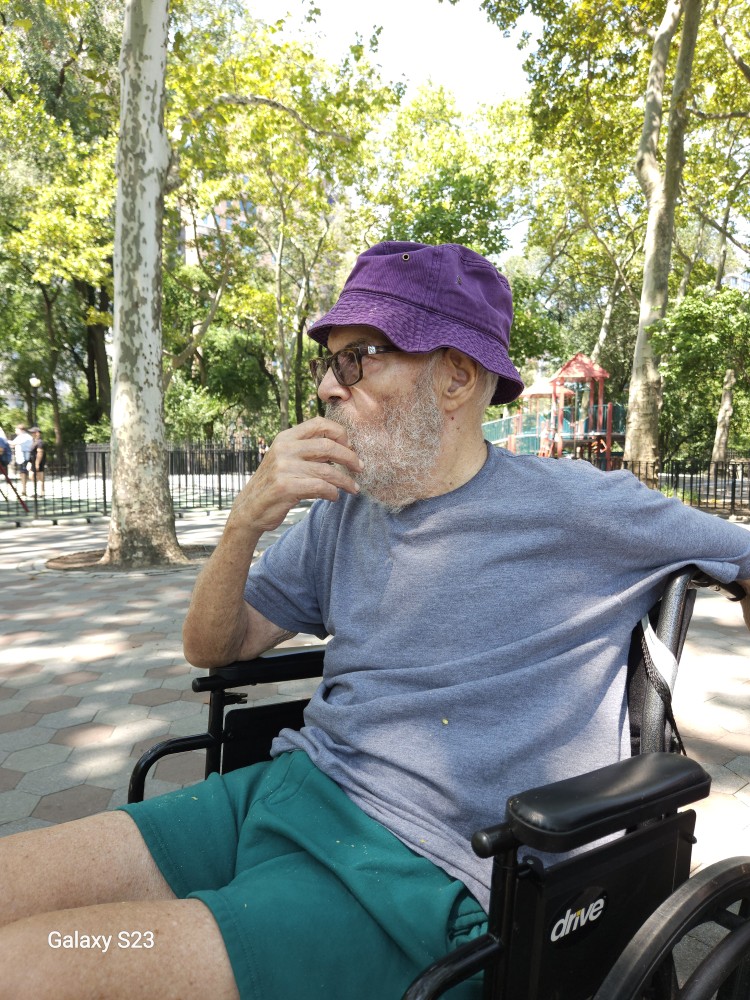
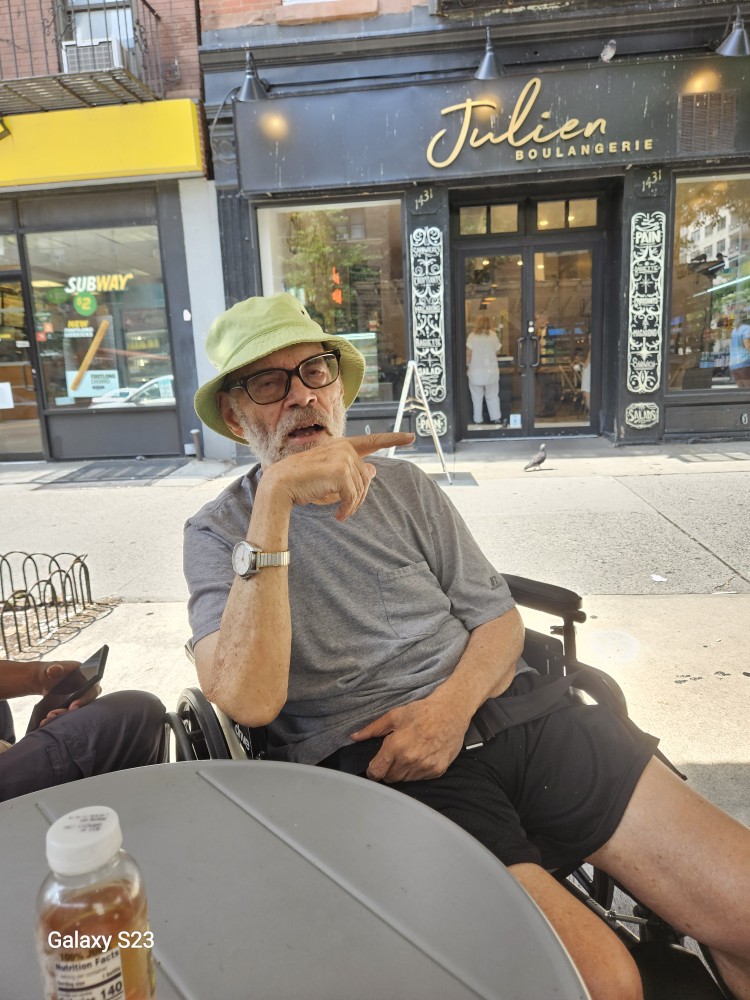
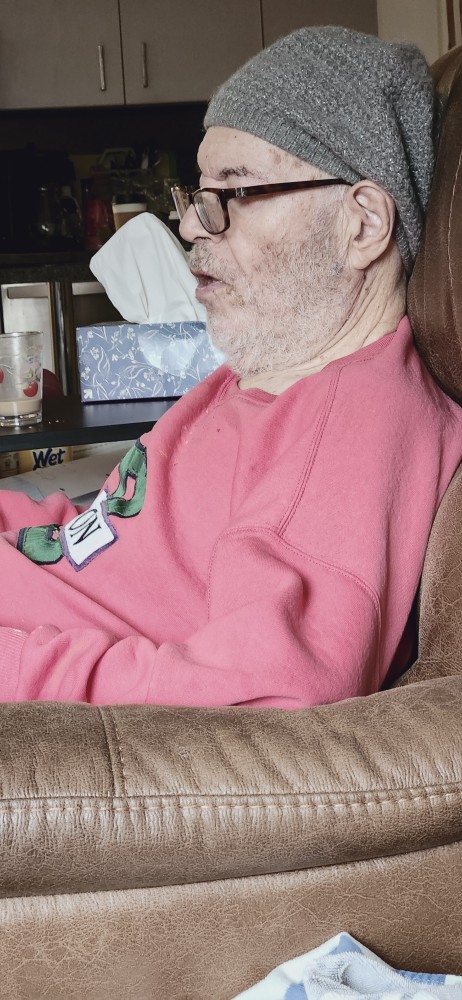
We watched Lawrence Welk every week. We had television dates. For a while we went to the park all the time. We had a weekend outing every Saturday and Sunday for a few months before the end.

The physical therapist came and Burt loved his OT. We invited visitors.

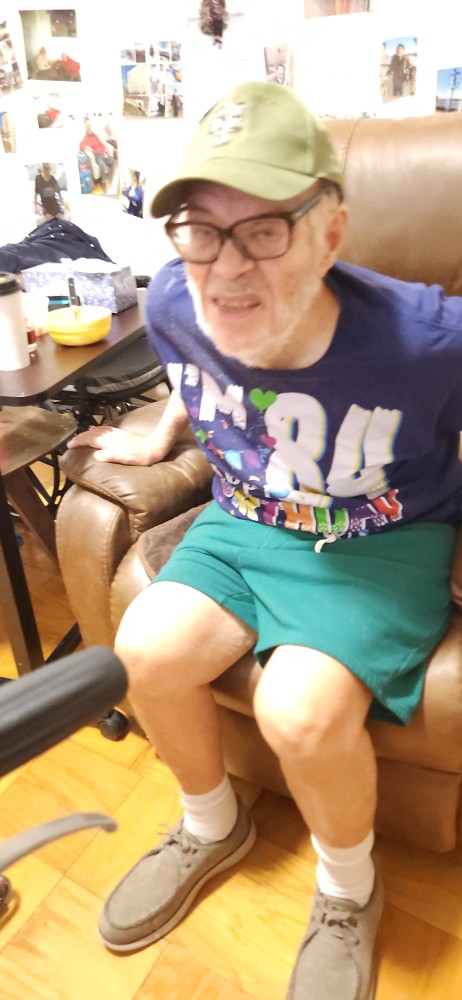
While in rehab, he “discovered” the afternoon entertainments. After that, we never missed even if BINGO wasn’t that much fun for him.

I always brought him something from my outings. His first aide noted that to him when I came home. I used to bring treats to the rehab facility too. Not so much lately as the little gifts didn’t register with Burt anymore.

I started playing YouTube music videos over the last months.

He went through several rounds of sleep difficulties. He wasn’t eating. He was eating but it was only cakes and cookies, lemon meringue tarts and Madeleines to be precise.

I think I made an occasion of each phase.

One big event for Burt was a Thanksgiving dinner at LHNH. He praised it for months after. He came with to LHNH Caregiver Appreciation Days a couple of times.

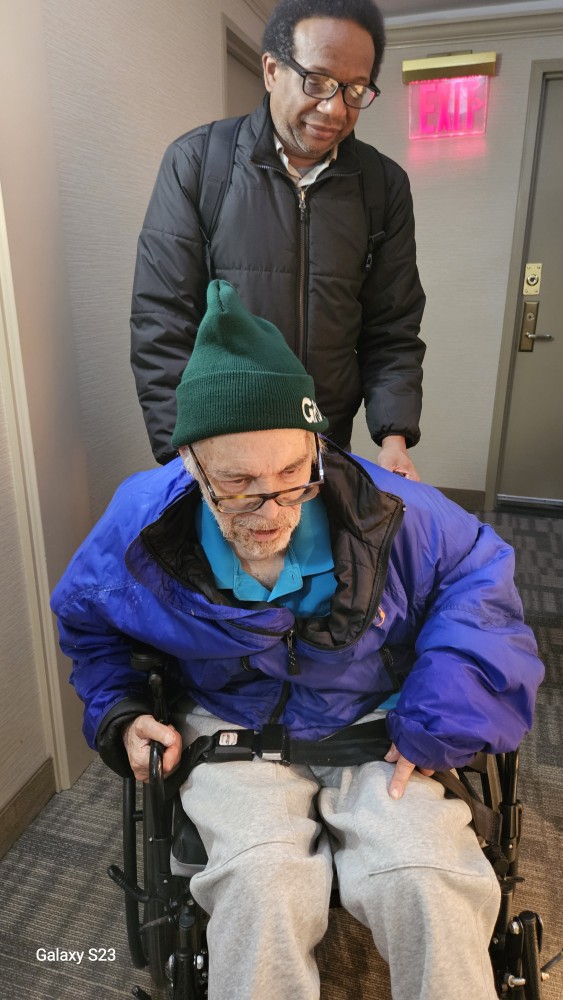
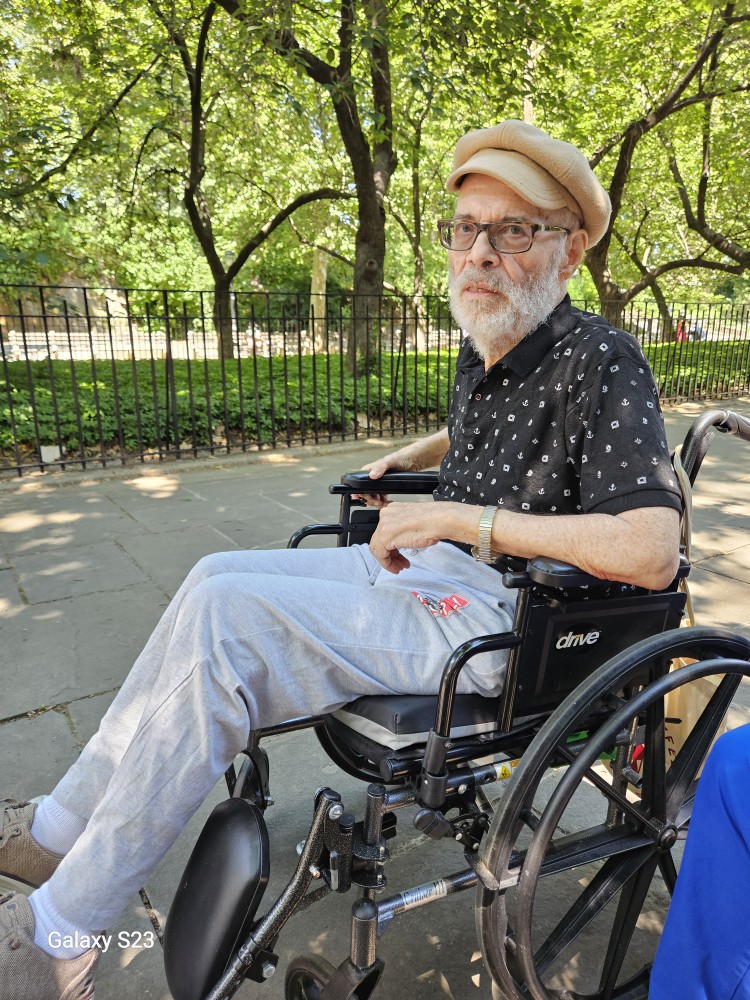
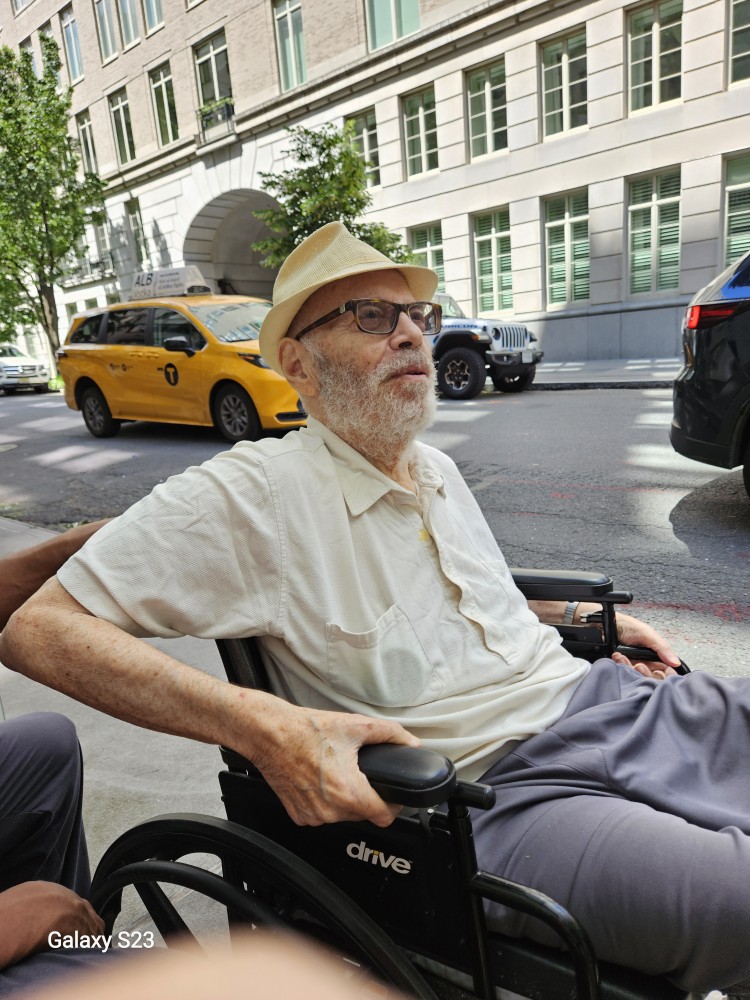
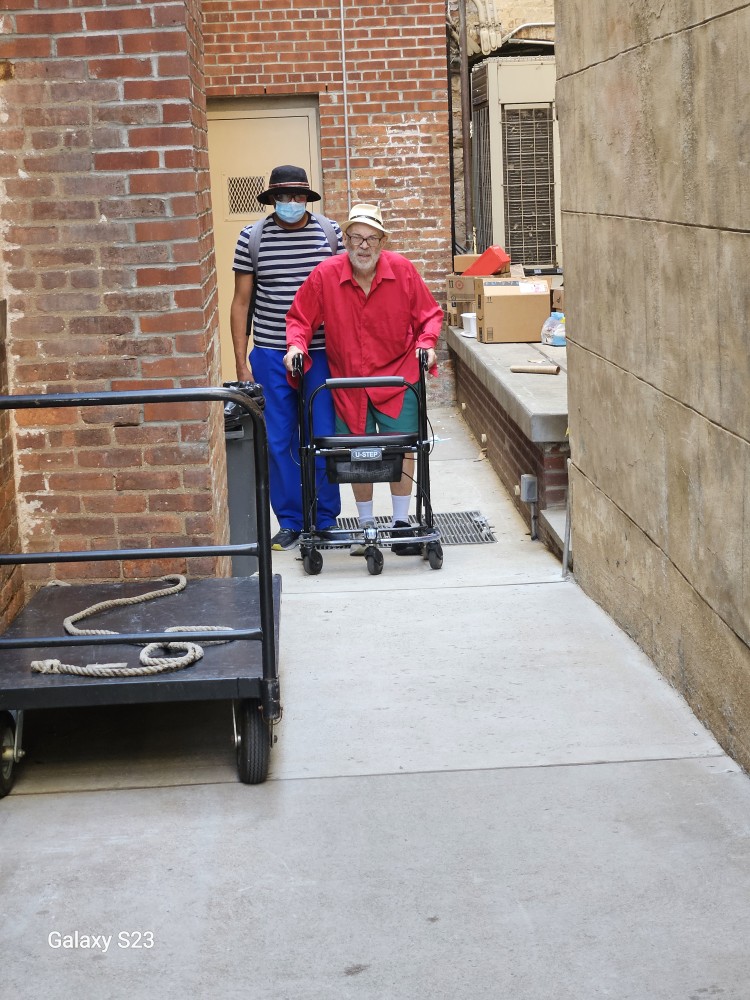
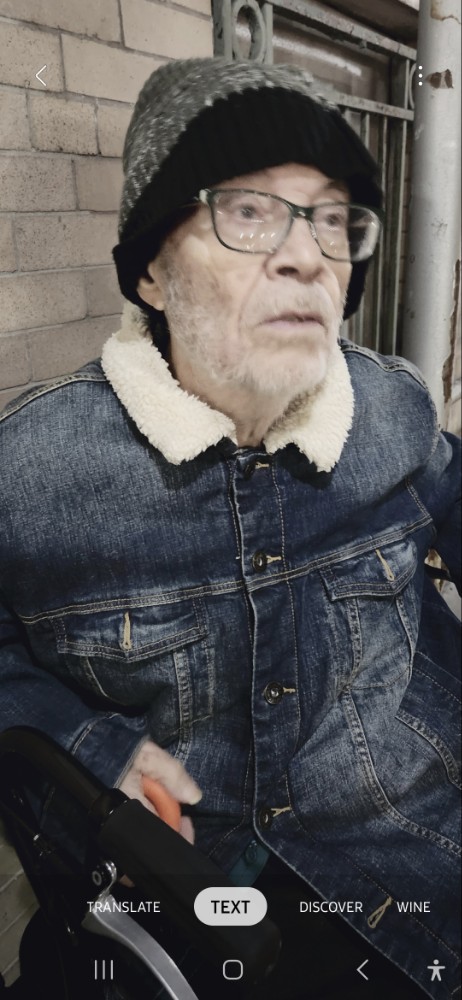
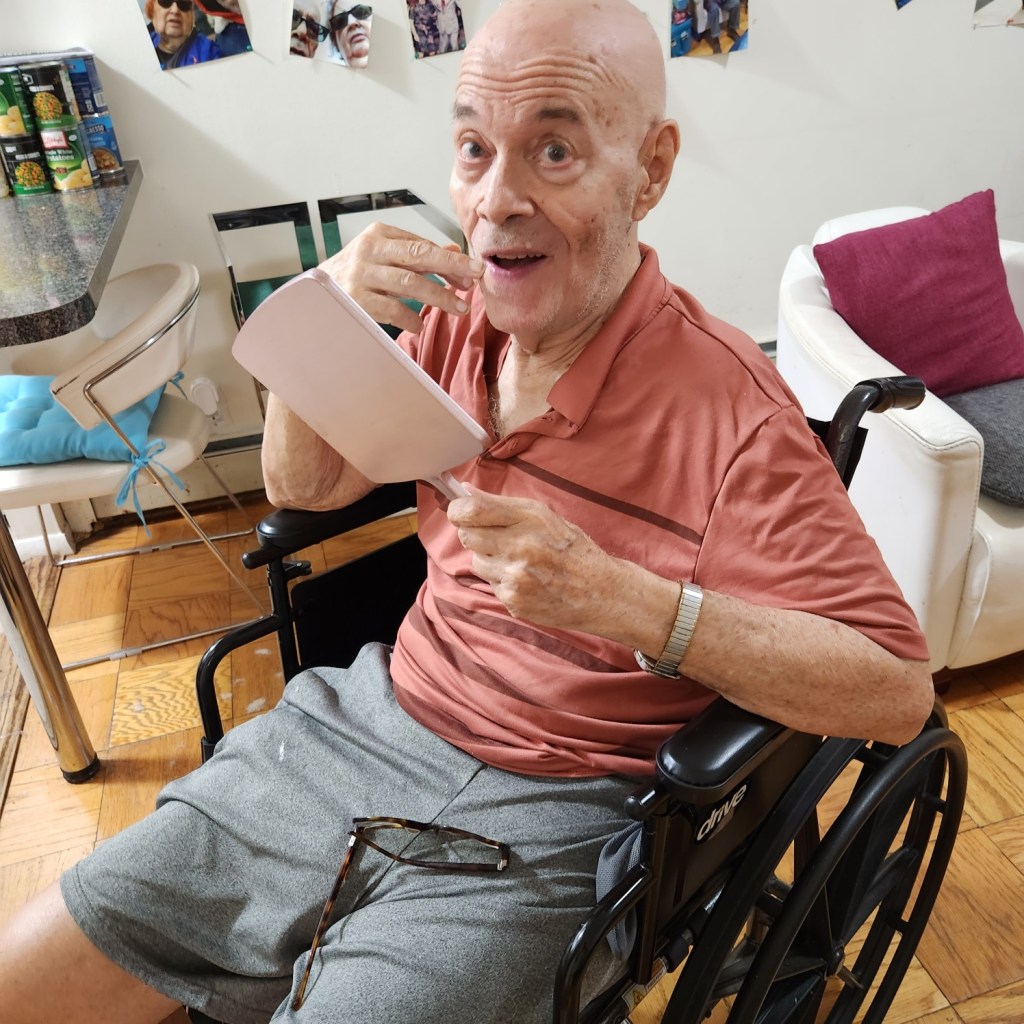
We had a wheelchair escort guy go with us to doctor’s appointments. Walking would be too much for Burt and John was a big help to me and a treat for Burt.

Esplanade

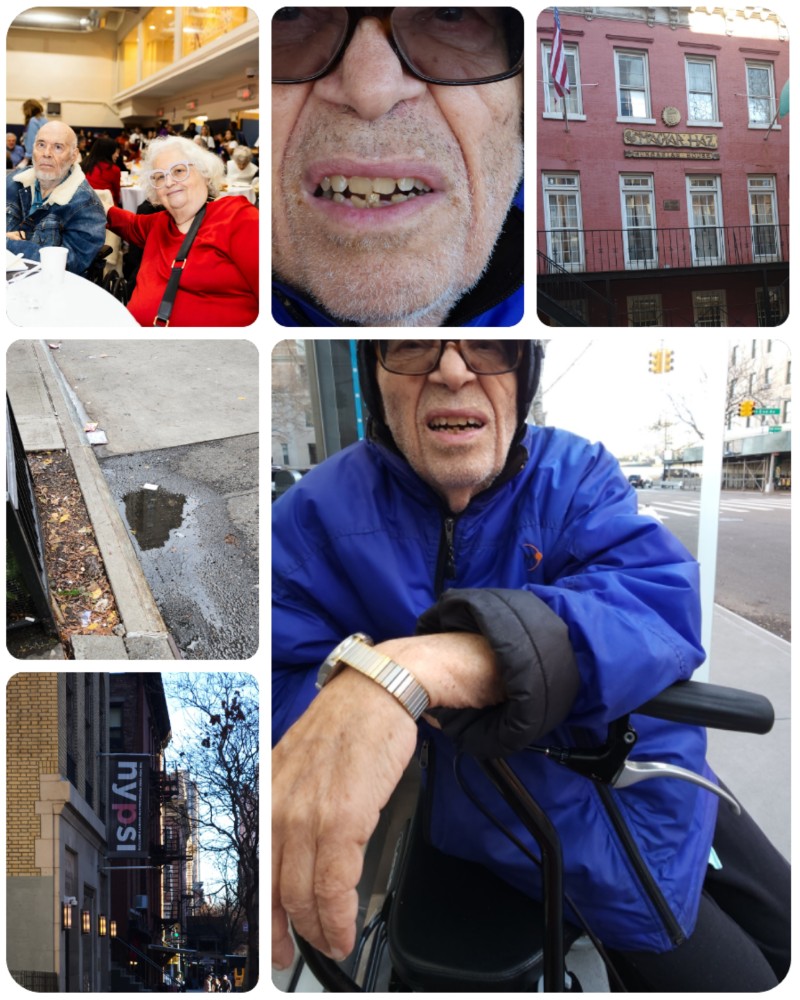
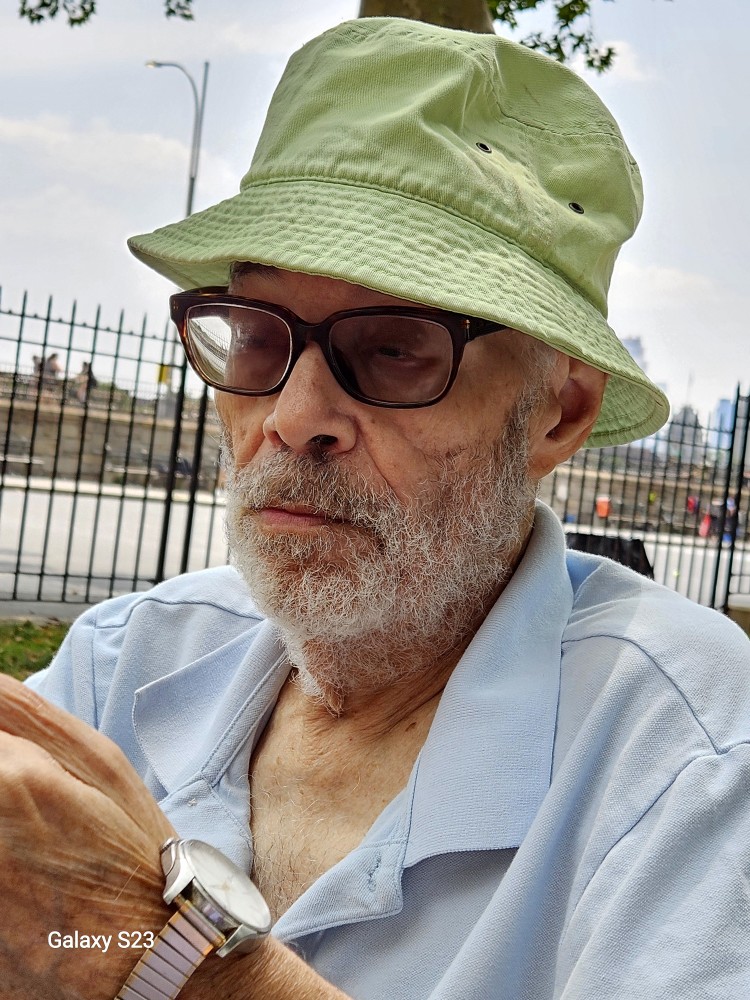
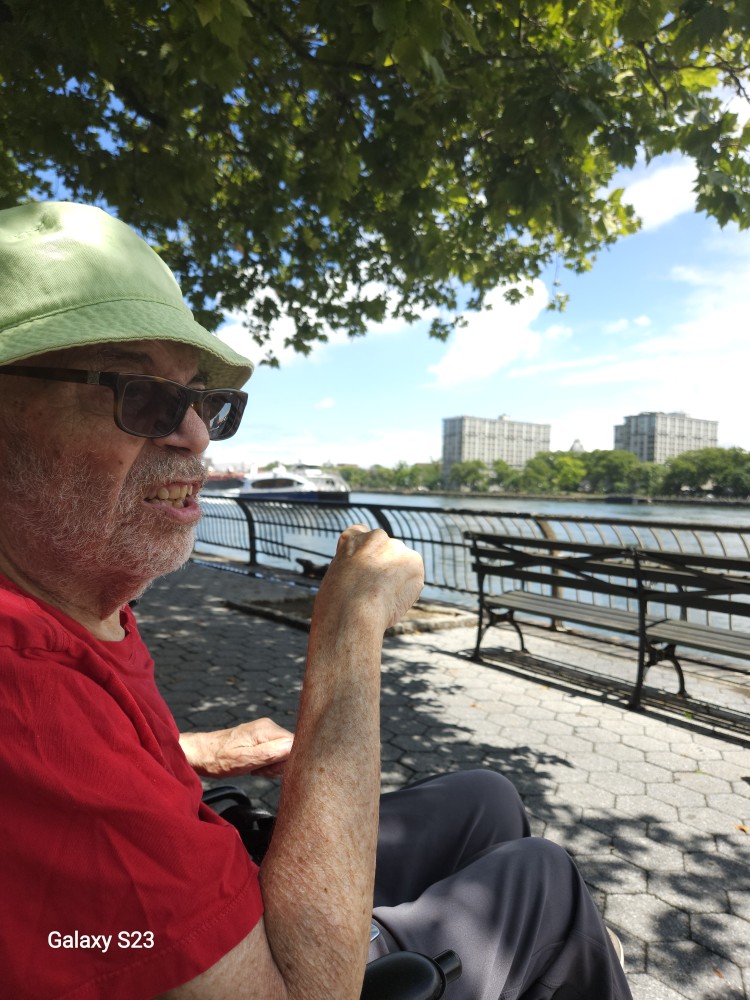
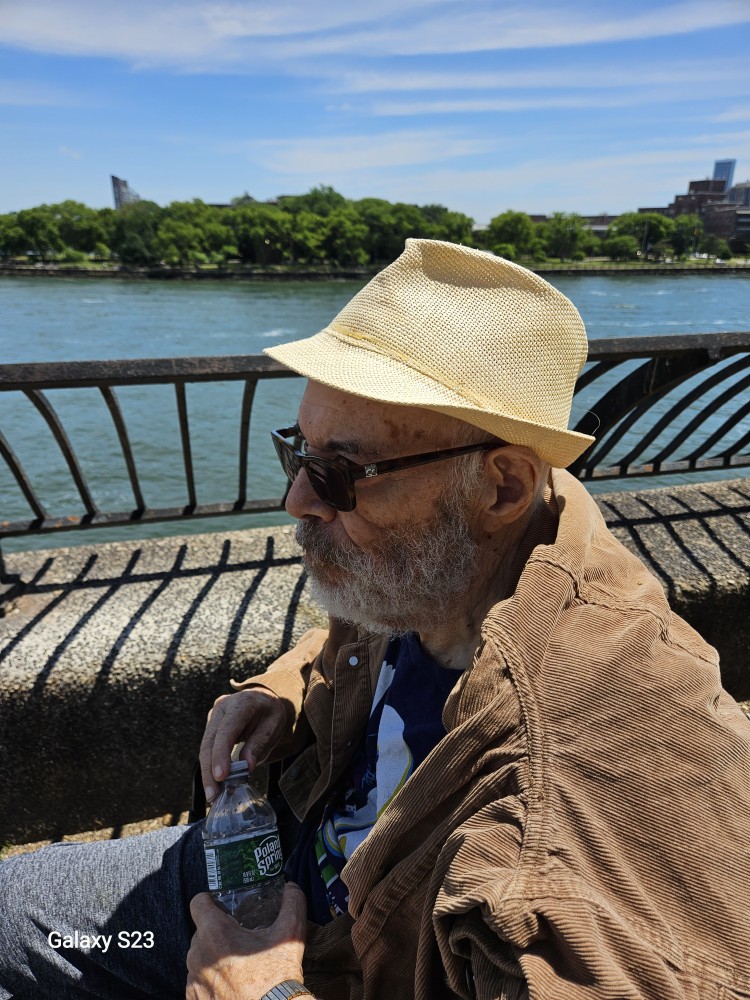
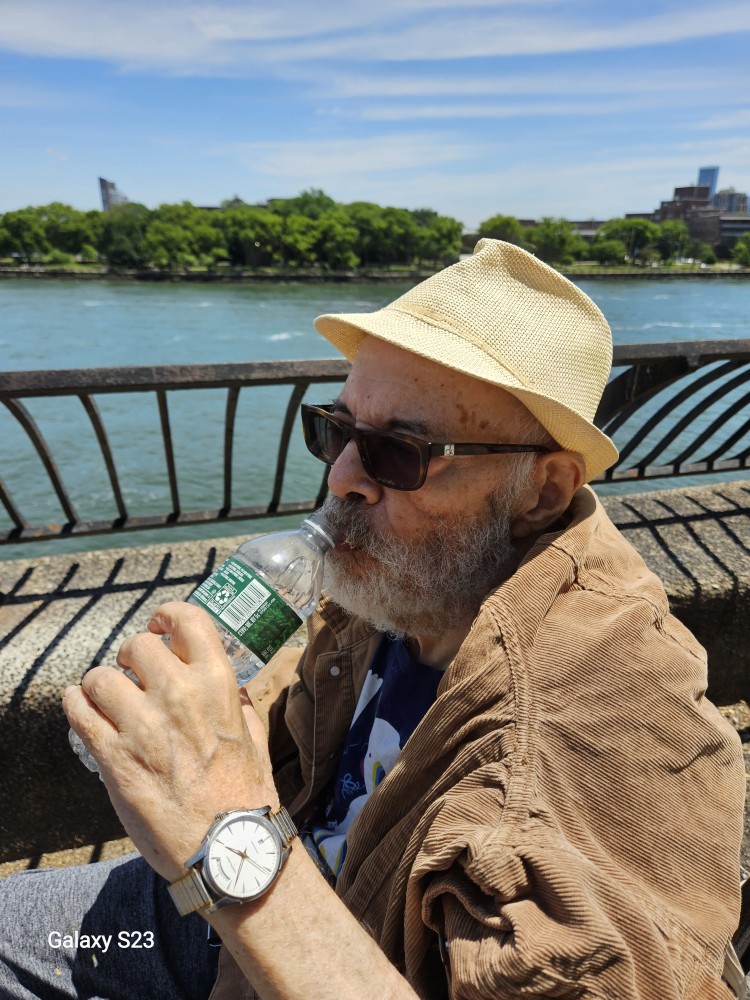
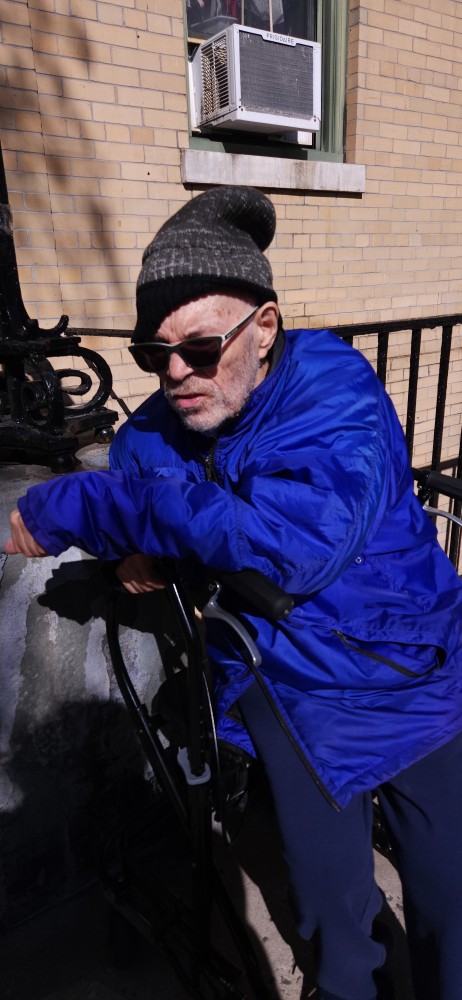
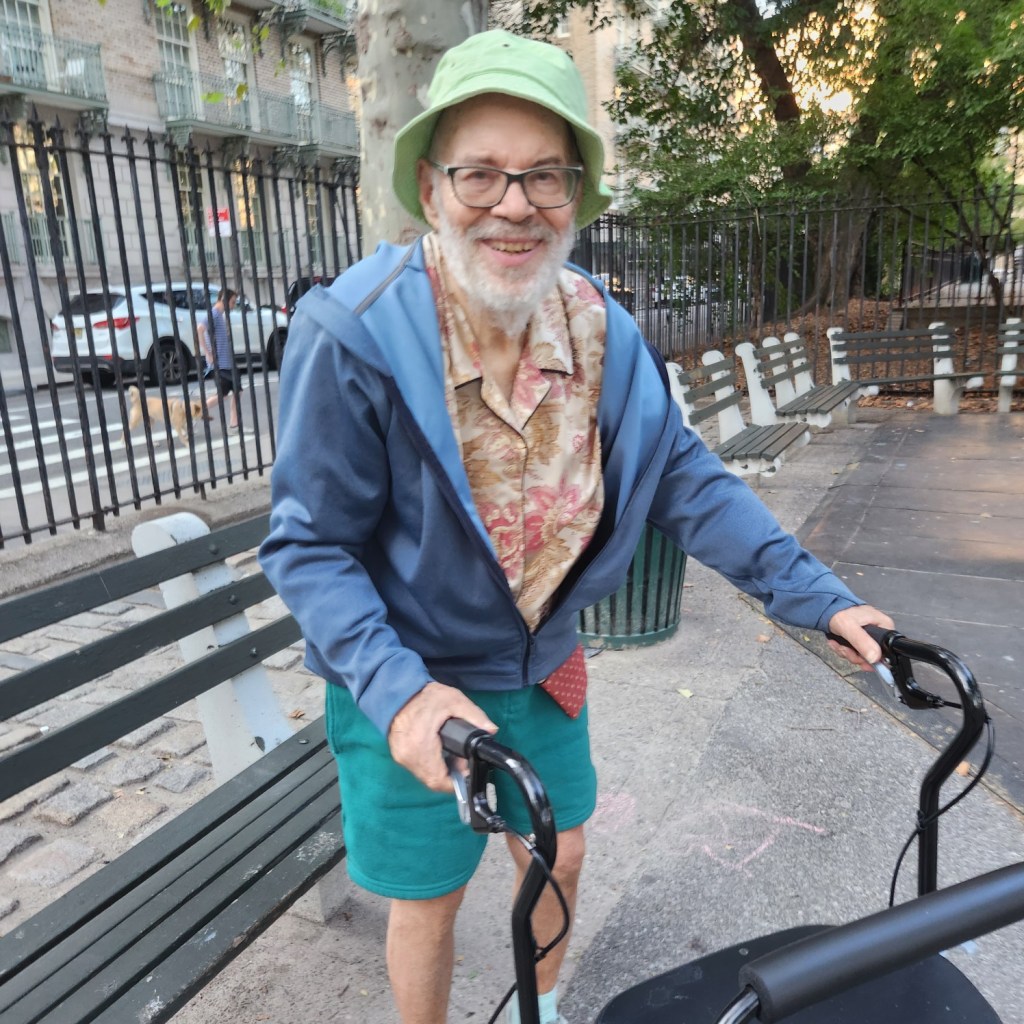
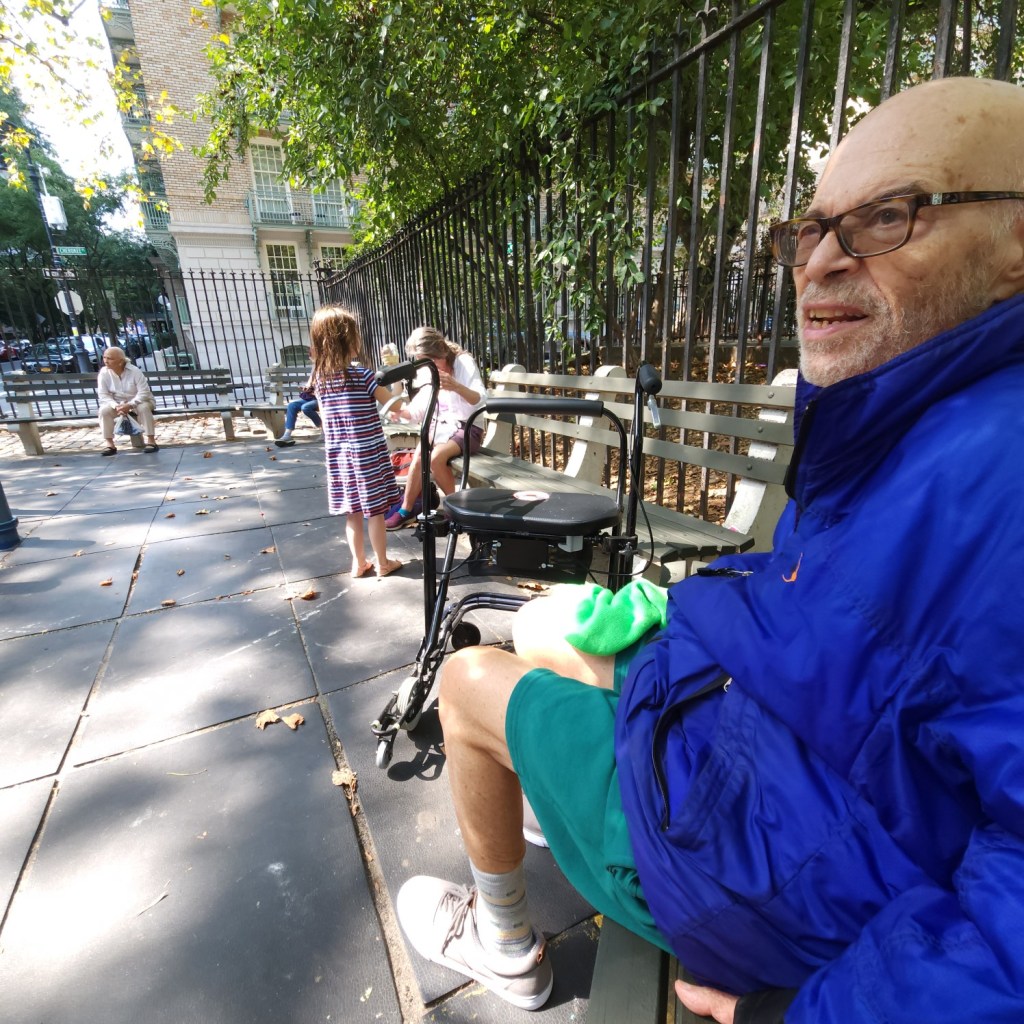
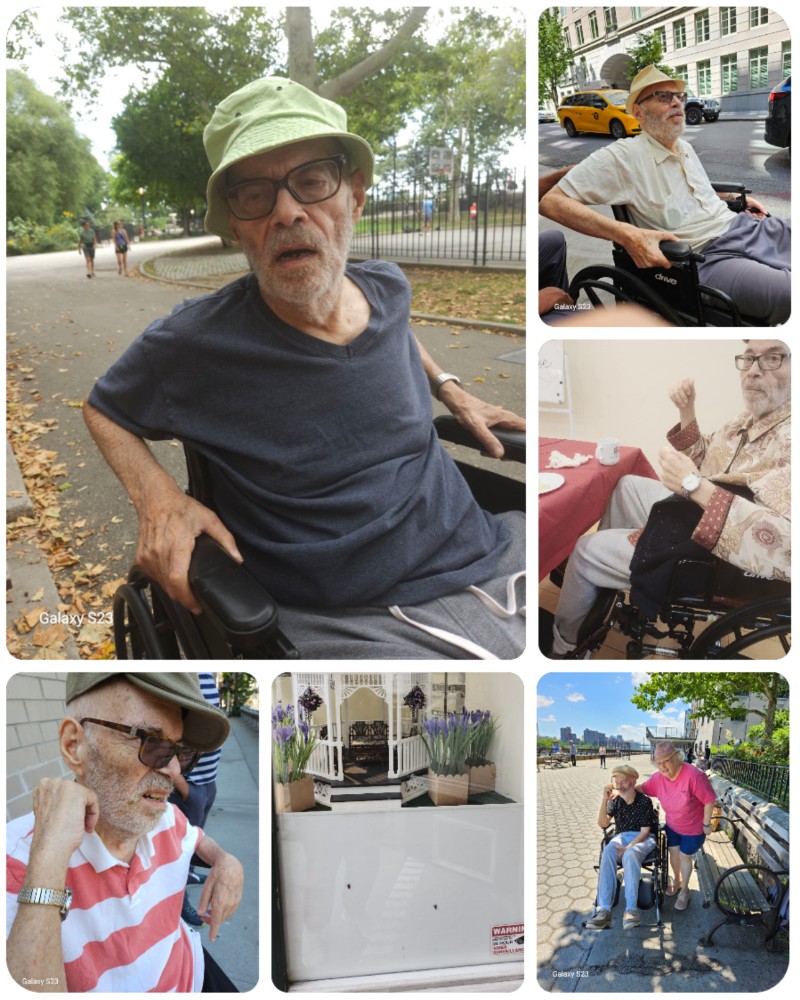
D and I made plans to take a walk today. The weather’s been mild. Maybe we’ll cross the bridge that goes over the FDR to the Riverwalk. Burt and I used to walk there all the time. I mean, before he got sick, too. For a while, when he was still walking, we would go there to sit and watch the river.

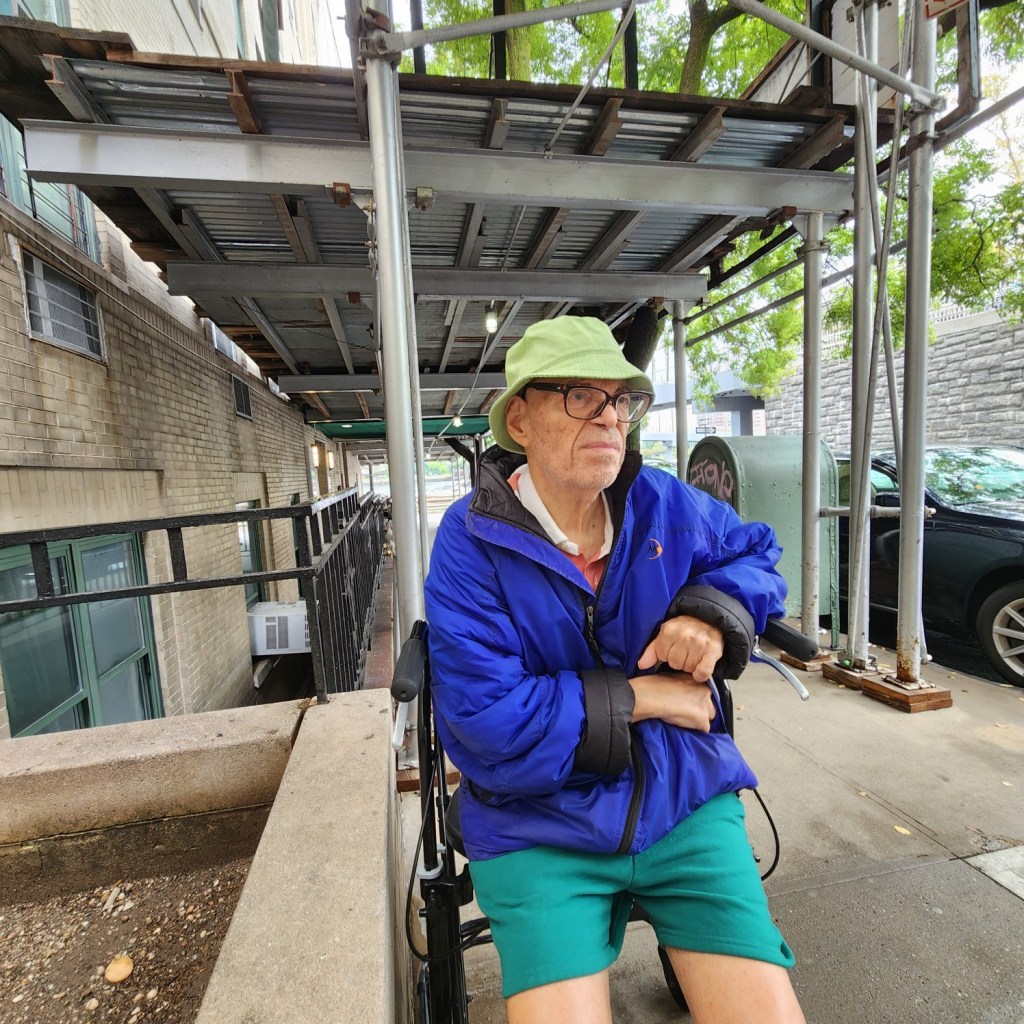
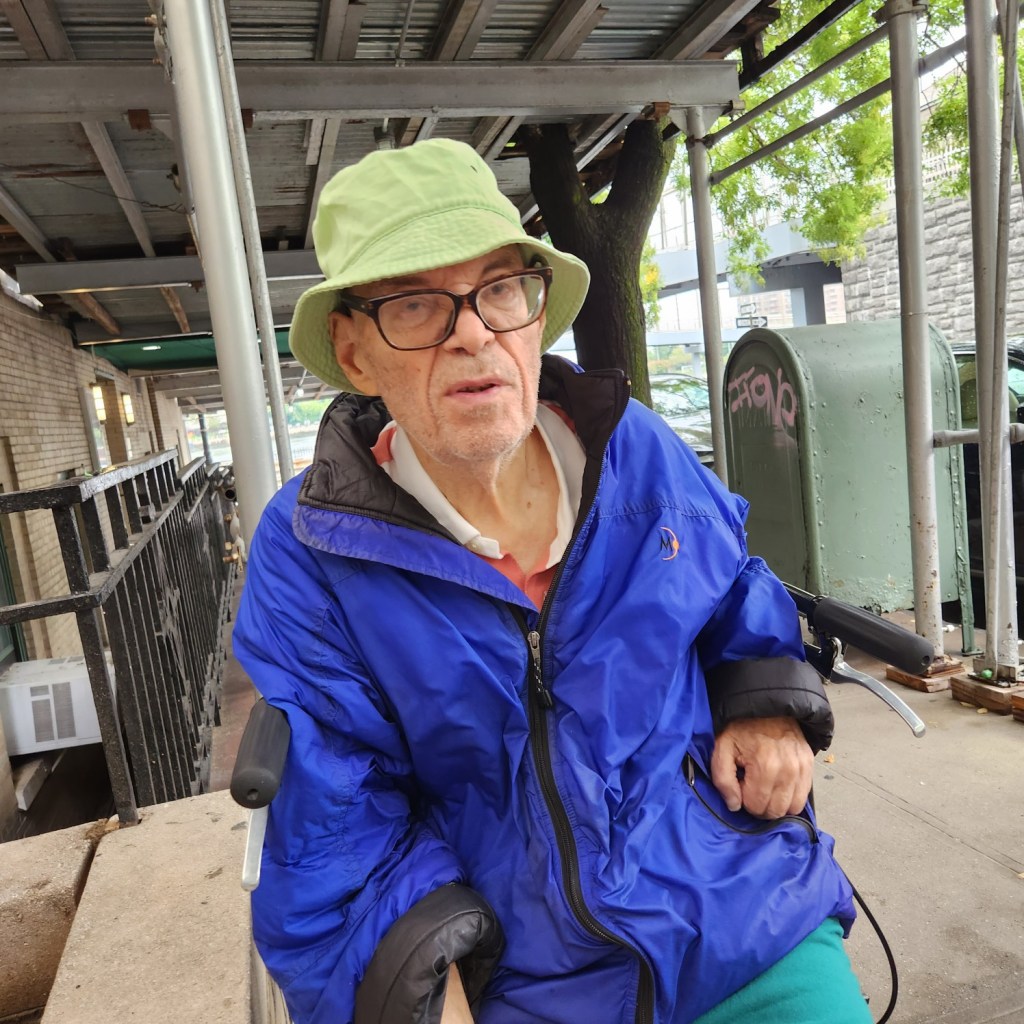
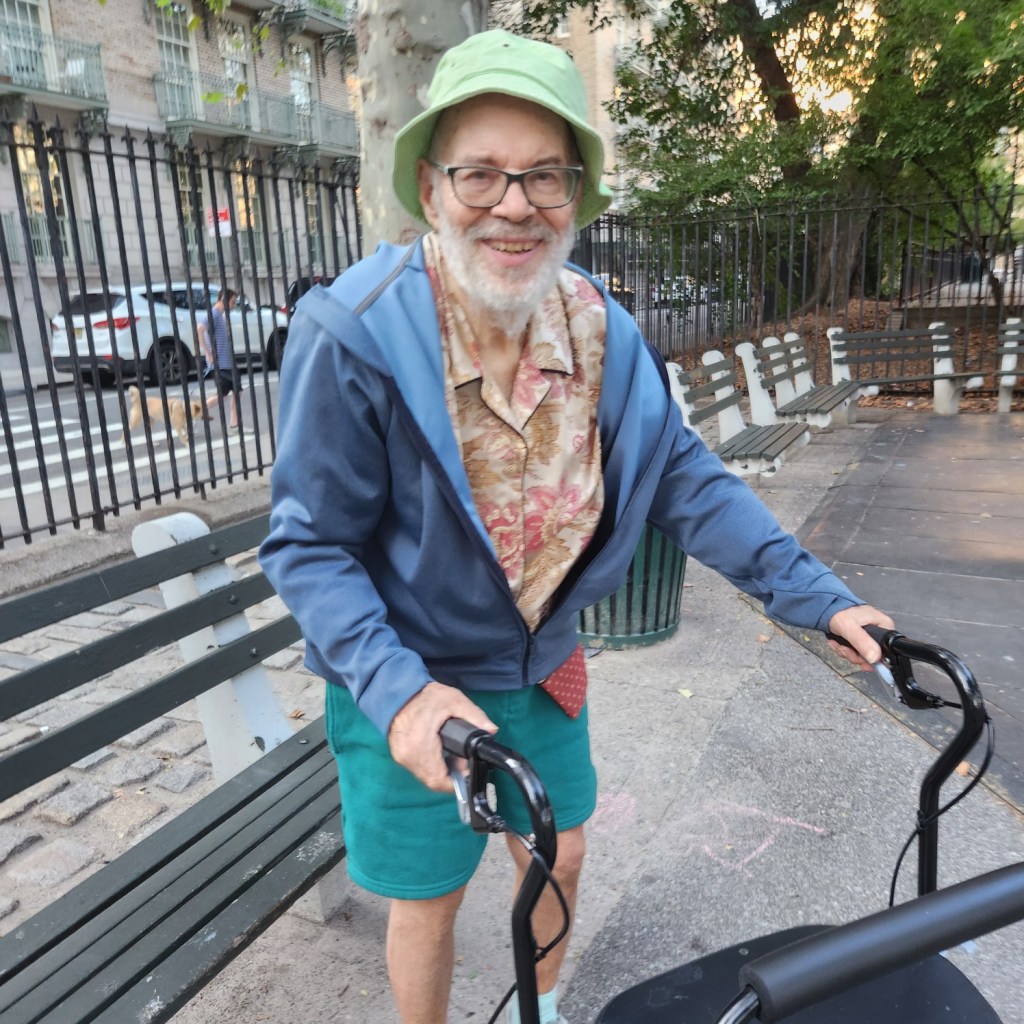
From 2017, Burt, on the ramp

I hadn’t taken that route in a very long time.

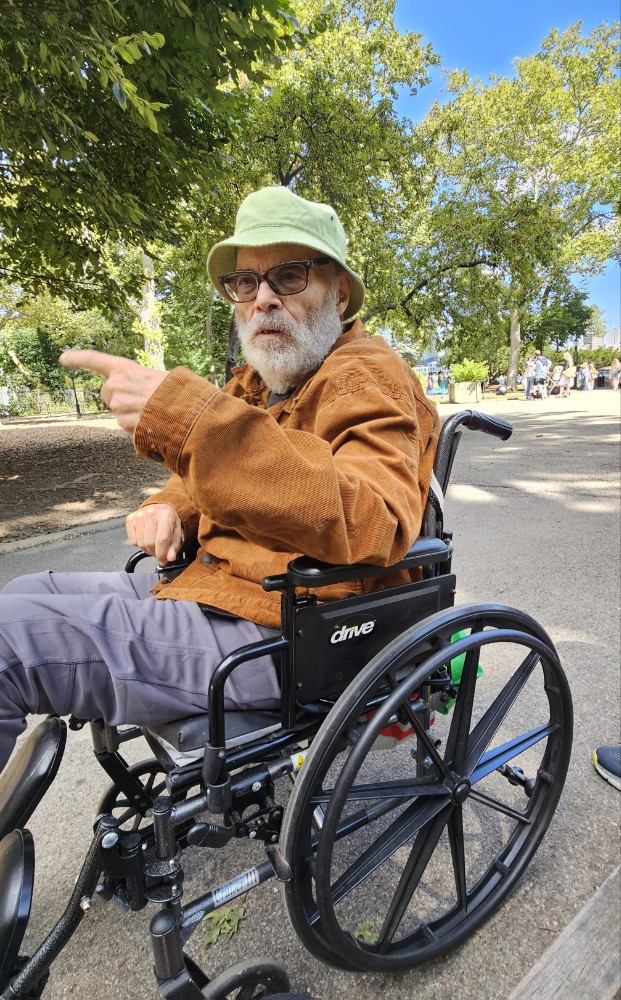
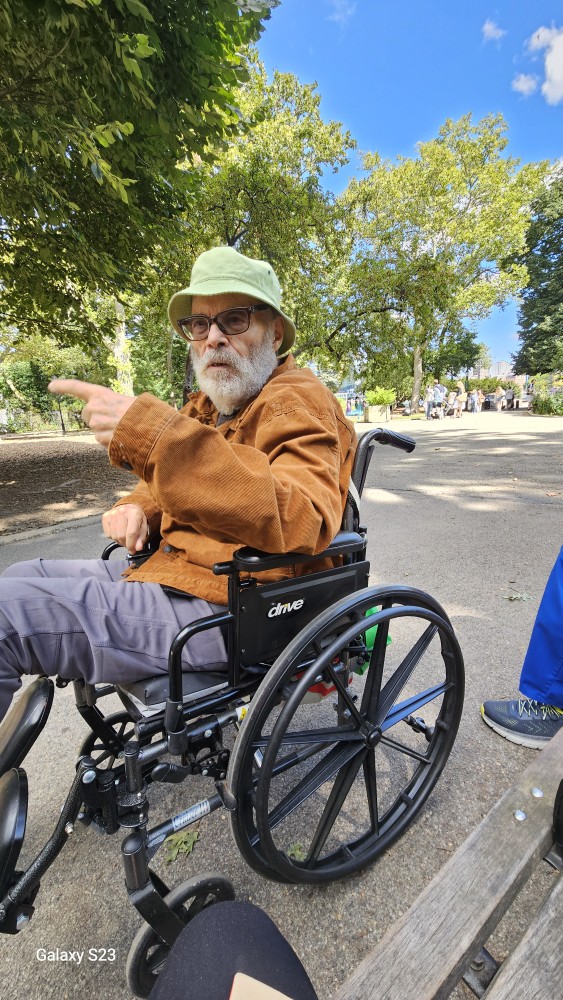
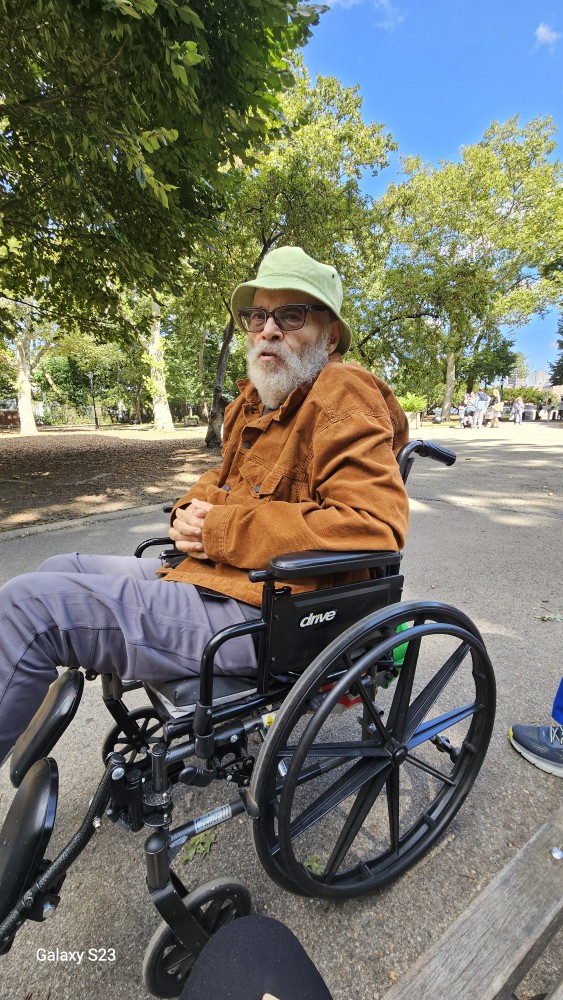
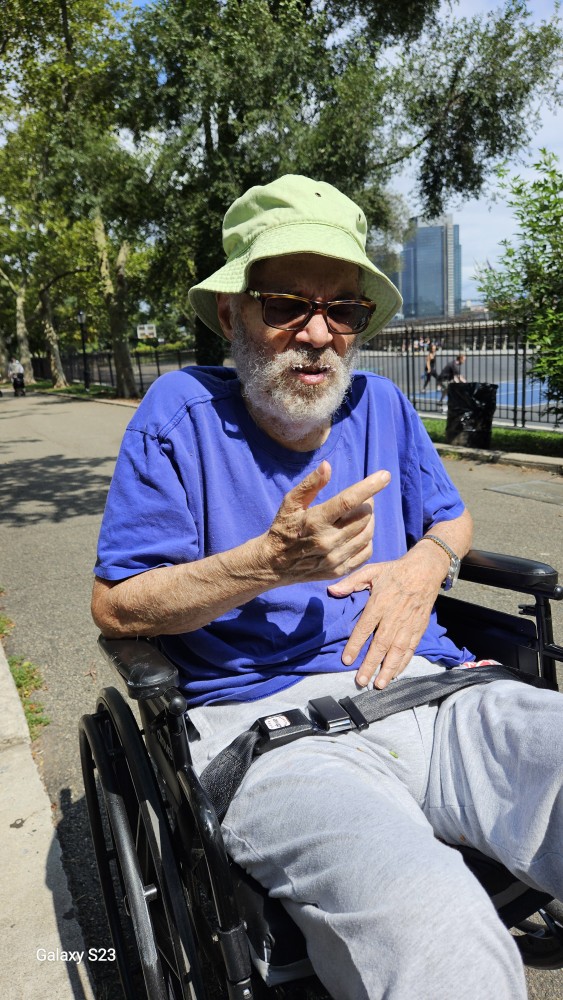
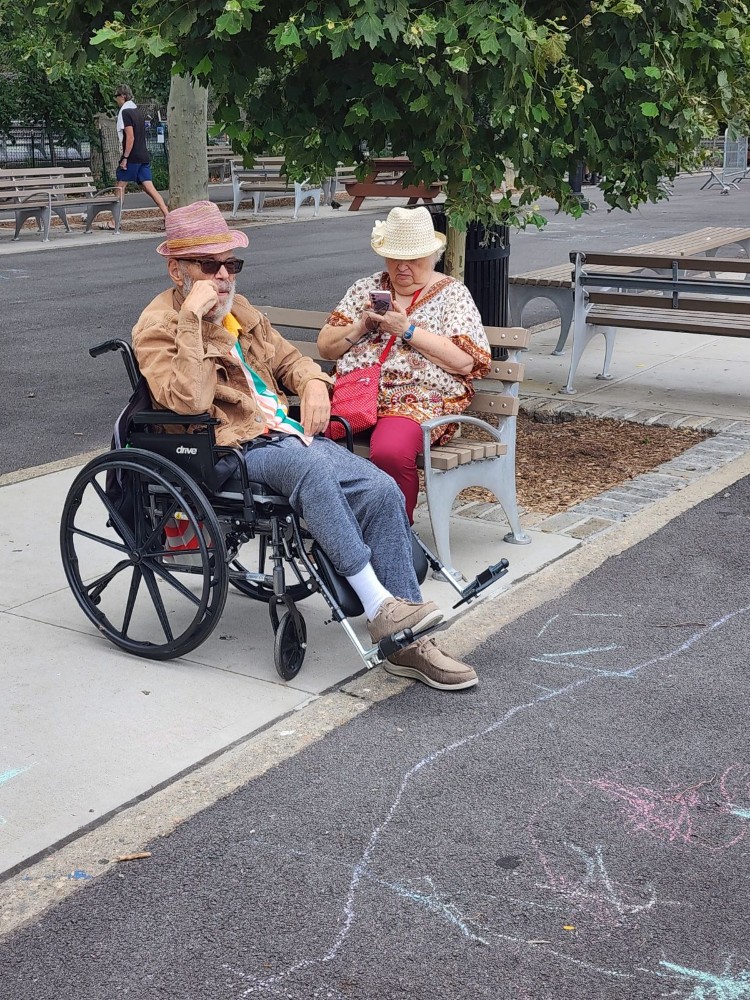
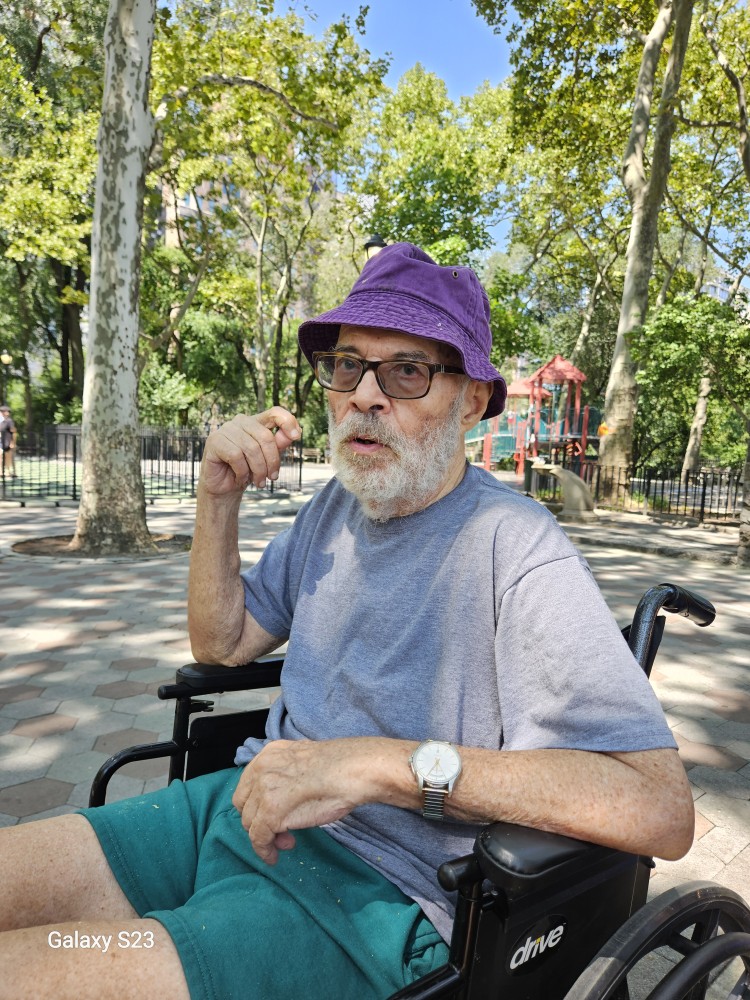
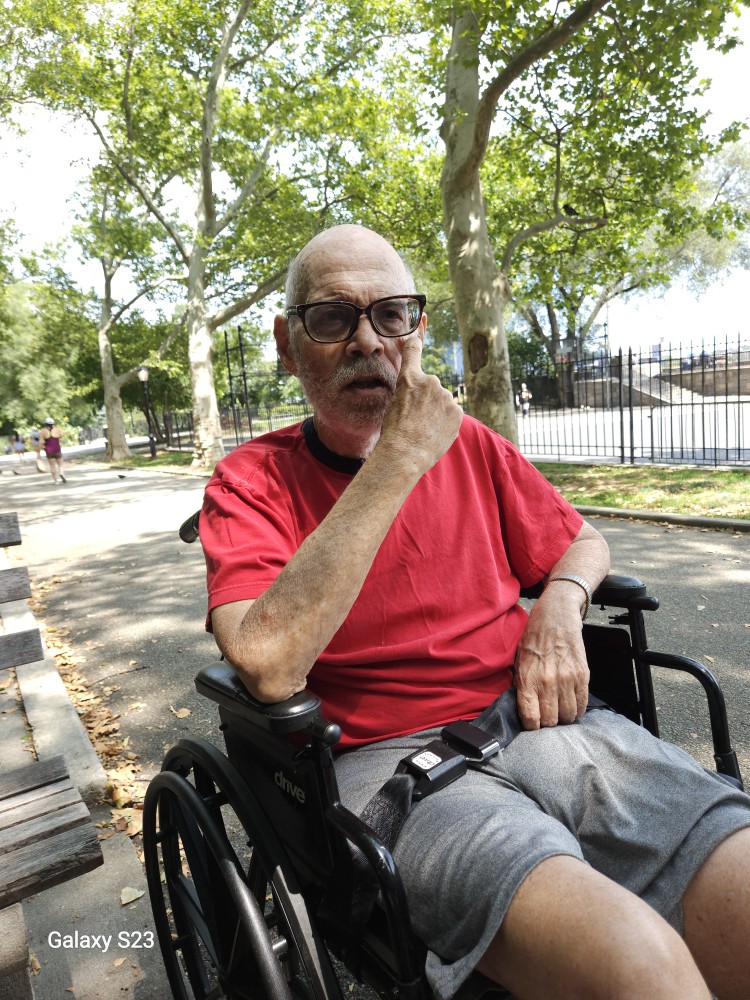
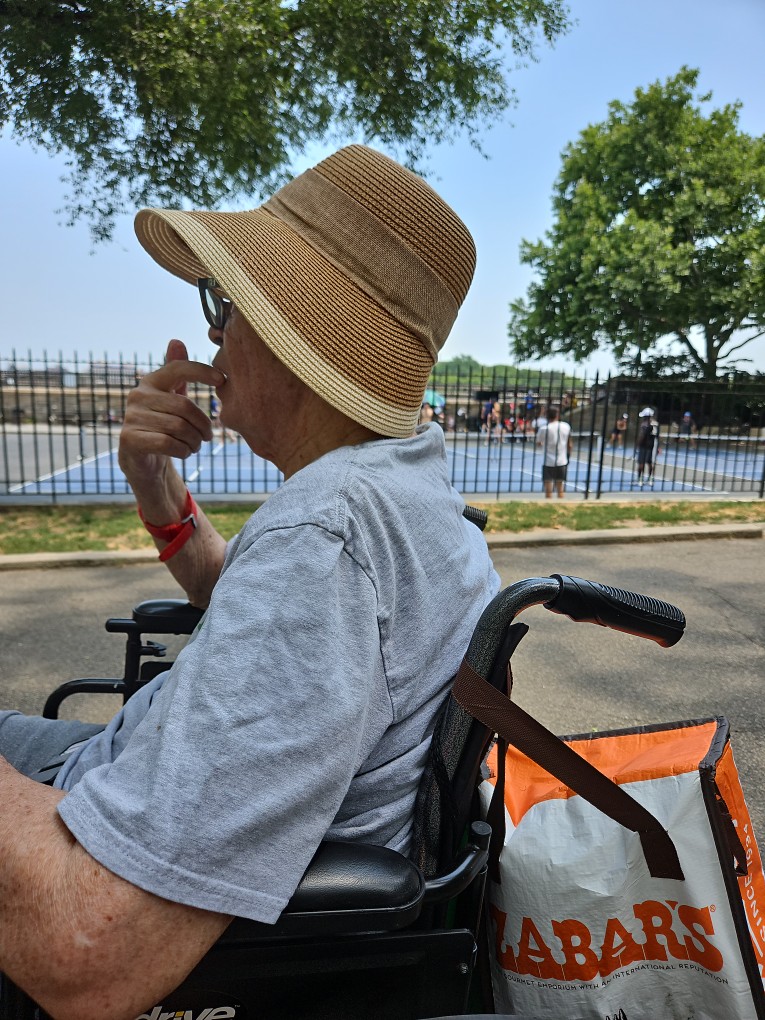
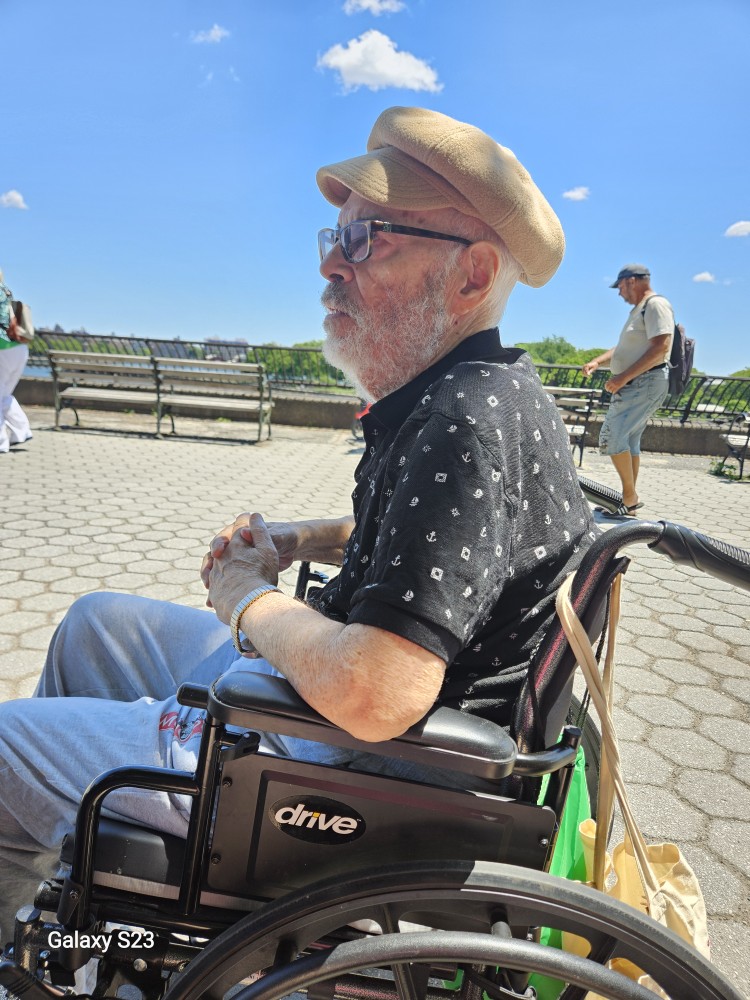
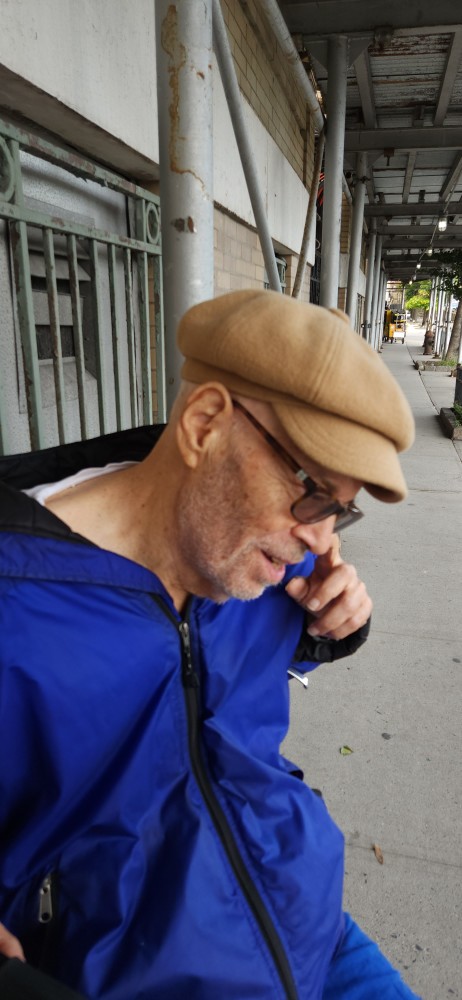
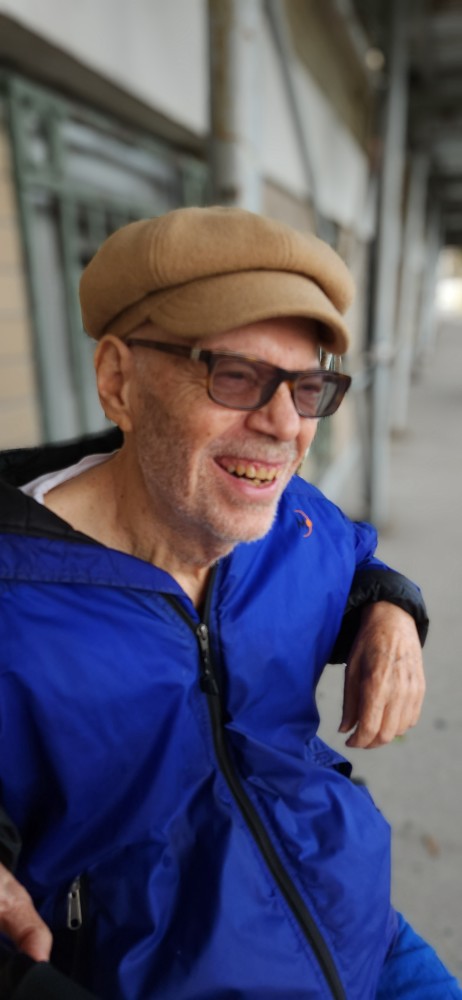
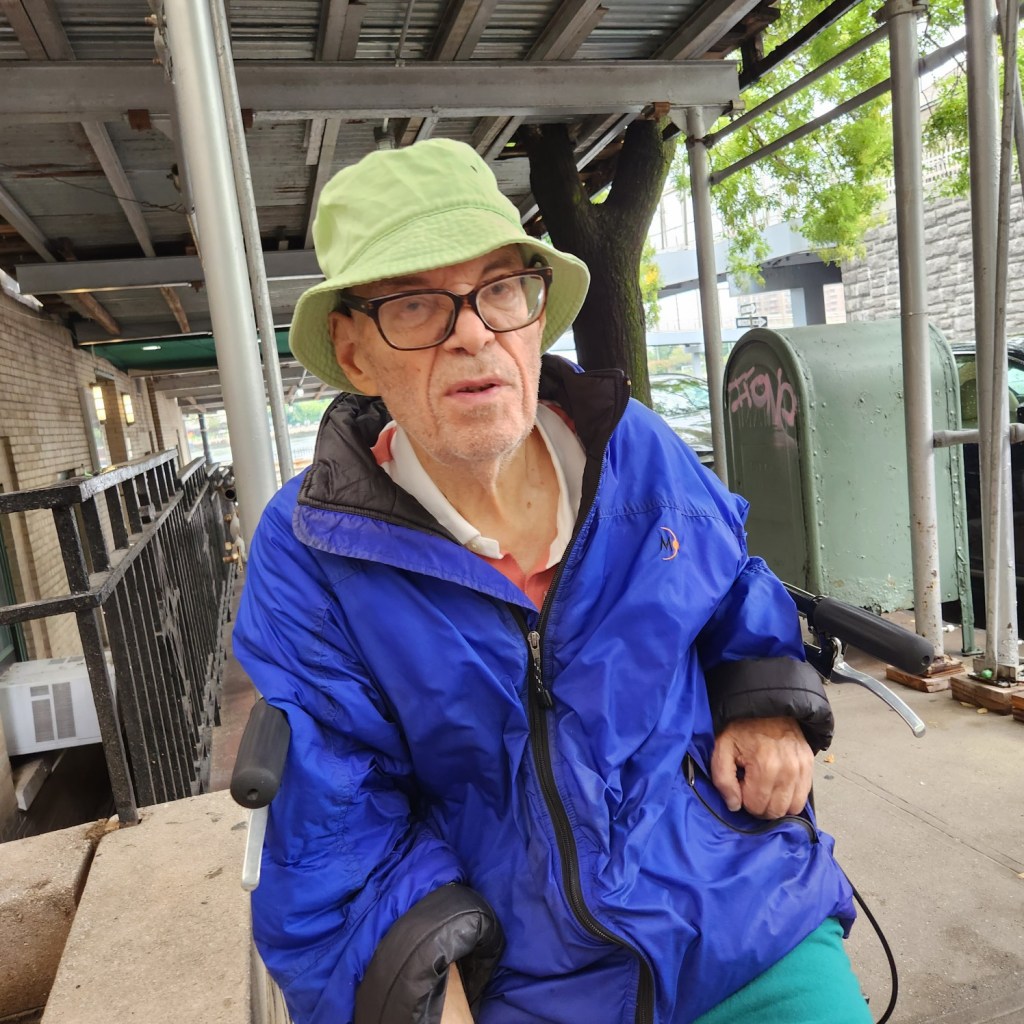
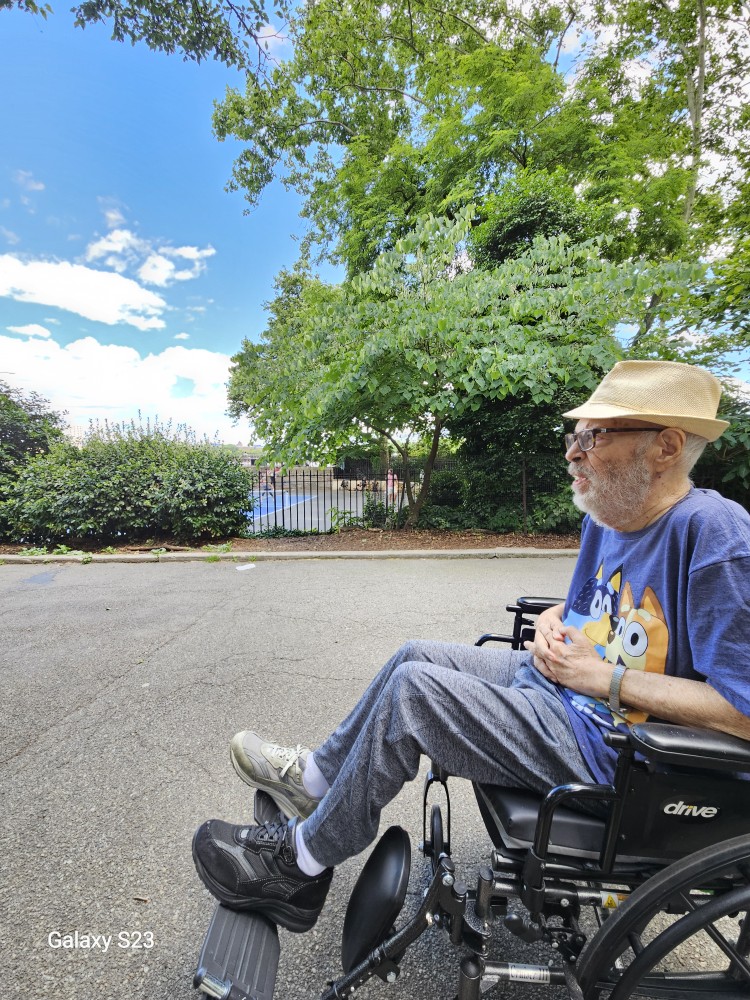
The ramp was too steep to trust the walker wouldn’t fly off; one Sunday, his weekend aide and I did take him to the bench in his wheelchair. I hadn’t walked there myself in a very long time.

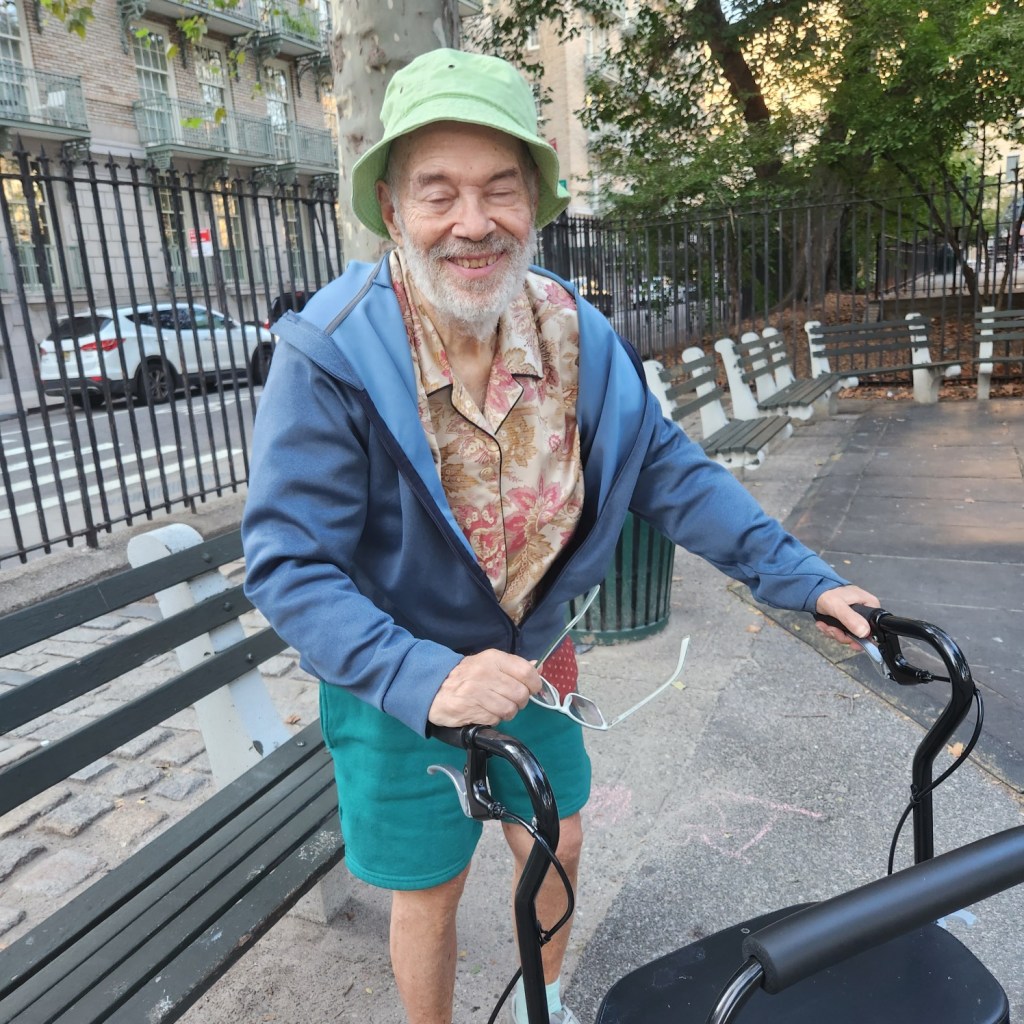
Walking by the river with Burt – that had just been what we did for years. Then, when he got sick, and walking got harder, sitting by the river to enjoy the calm of watching water became a pleasant pastime for us.

I remember seeing him often, leaning on a companions’ arm, in an intense conversation, walking back over the bridge just as I returned from the gym.

That bridge, access to the East River Esplanade, had been one of the selling points on living in this building.

The neighbors who have become friends and who watched over us all these years were the building’s hidden assets.

Burt chose this place for us.

Design a site like this with WordPress.com
Get started