Windmills

It might have been prescient anticipation of the advent of Lewy into our home, but I never had the forbearance to enjoy the saga of Quixote.

His delusional tilting at windmills always annoyed me. The musical rendition of his story does offer some gorgeous musical flights, however.

One New Year’s Eve, Burt bought tickets for us to see The Man of LaMancha.

It opened on December 5, 2002, and played the Martin Beck [then the Al Hirschfeld].

Brian Stokes Mitchell, an actor we had come to appreciate in a variety of roles, sang the rousing I, Don Quixote and, of course The Impossible Dream.

His lovesong to his lady love, Aldonza, is called Dulcinea. It is languid and soulful.

Aldonza, the excellent Mary Elizabeth Mastrantonio, mystified by his renaming her, reprises the song, as down to earth as he is flighty.

Hers is a measured, sensible, and proportionate response to Don Quixote’s confusion.

Little did I know that there would come the day when my practical and reasonable husband saw his own windmills to conquer.

A day off

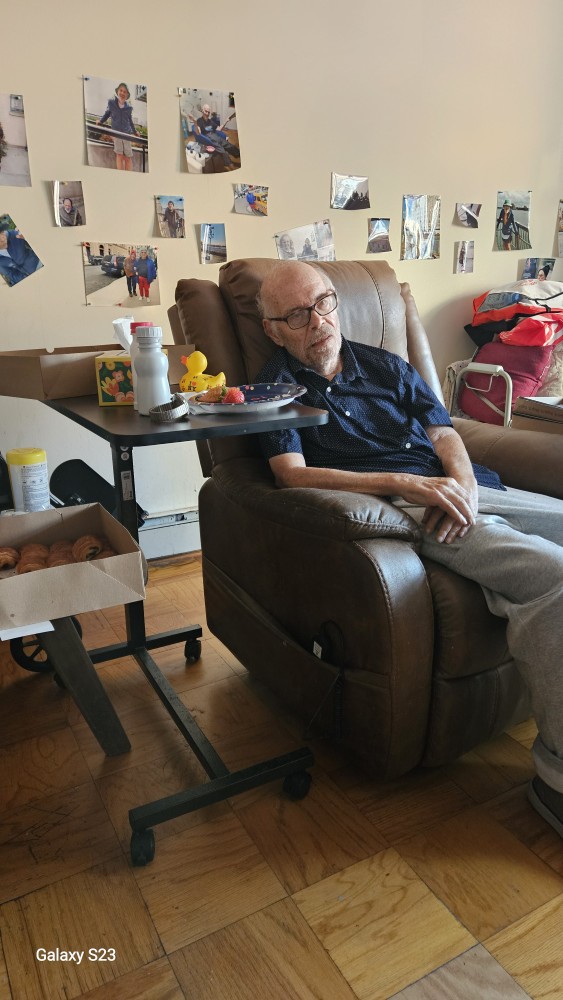
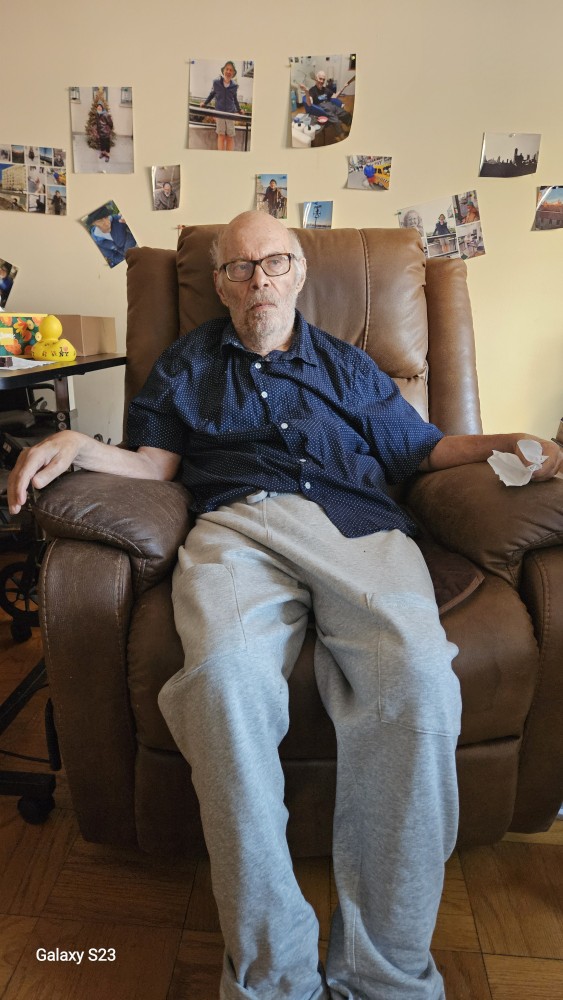
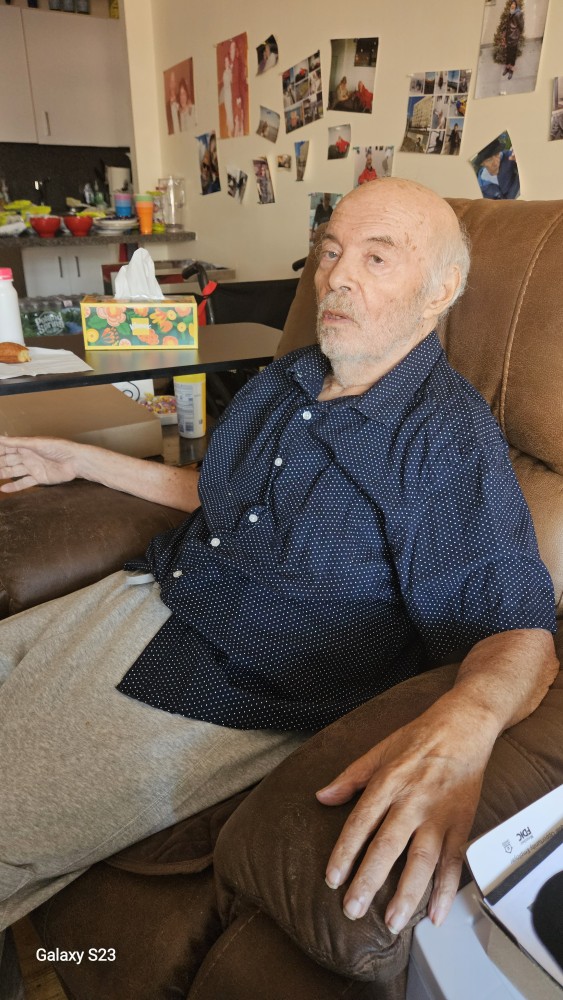
Burt was asleep all morning and now all day. His aide and I shared the space, texting and reading on our phones. After an hour and ½ trying to stir him, I decided to make Sunday a respite afternoon.

I went to cast my ballot. Called some of my peeps, enjoyed the crispness of the fall day. I also perversely missed taking care of Burt. Perversely, only in so much as I am often exhausted listening to his theories and confusions.

Obviously, I love him, but this felt a little like guilt, my missing him.

I was doing something I don’t do on Sundays. It felt forbidden.

Don’t get me wrong. It was ever so unplanned. And yes, it was relaxing.

It’s the money, honey

Caring for a family member with dementia can be heartbreaking and difficult in so many ways. One of the hardest tasks may be protecting them from ruining their finances as their condition deteriorates. Research shows that those with dementia often show signs of financial trouble years before diagnosis. Left unchecked, their unpaid bills, gratuitous spending or willingness to give away their money whenever asked can drain their savings and push them into debt. Here’s how you can protect a loved one in cognitive decline from financial harm.

CNN 5 Things Newsletter
By Andrew Torgan and Daniel Wine

Caregivers are, and should be, on the lookout for any financial issues that might arise. It’s our “job” to be looking out for our loved ones.

This can be tricky, of course. If your spouse, for instance like mine, was on “Wall Street,” there may be greater resistance.

Fortunately, he used to ask me to do some research.

For us, as for many middle-class folks like us, any risky behavior was just that, a risk. Money is not a limitless commodity in our home.

As a caregiver, you will need to take hold of the reins after the diagnosis; at the very least, you will have to limit your p.w.d.’s access to funds.

It’s hard, not just because he or she may have managed all the household finances.

It’s hard not just because you may not be comfortable doing the managing.

It’s hard because it’s one more area in which they’re losing agency.

Taking away my husband’s access to trading accounts was one of many small heartbreaks early in our journey.

As CNN’s Jeanne Sahadi notes in the article linked above, the trouble might have started long before his diagnosis.

My usually careful, risk-averse and conservative spouse showed signs of financial recklessness.

It was easily checked, but as I look back, it was a warning sign.

Your vigilance over these matters falls under the rubric of taking care of both of you/your family.

Caring while under…

Yesterday, it appears, the combo of an RSV shot on Monday and a Covid booster on Friday made me feel crappie. My body ached, and my temp was slightly elevated. Of course, both my arms hurt at the injection sites.

Mildly unwell as I was, I was hard pressed to show patience; I skimped on prepping food (you-all know how I value Burt eating).

I was just a little under 100% fine; a bit under the weather.

This brought me to reflect on those caregivers who somehow still give care while incapcitated.

Kudos to you. Please also take care of yourself!

A deep dive

In the abstract, I am fascinated by the mechanisms of Burt’s disease. In reality, the manifestations of Lewy Body are overwhelmingly sad.

Trying to deduce patterns is part of my close study into all things Burt. I want to see what prompts his irrational conclusions and how his fantasies develop.

There probably is no pattern, just a bunch of synapses misfiring. It’s random like the twists and turns of this slalom course we’re on.

Management

Most nights, I’ve been going to bed at 8 o’clock since I can never be sure if Burt will awake in the middle of the night. We’ve had several 4am chatfests. I am generally bone tired by 8 from keeping farmer’s hours.

I awake early, thanks to going to bed early. It’s a cycle.

Sleep is important, and usually, we’re both  getting our adequate alotment. He’s sleeping more or at least hanging out in bed.

Our aide says when she first came, Burt told her his bed was his safe place.

Walking him to and from has required vigilance. He’s been a little unsteady.

Some evenings it requires two of us to get him to his “safe place” safely.

We have our dinner in there so that Burt eats enough food each day. He has an idiosyncrancy about waiting to eat til his wife gets home. He’s lightened up on this rule; he likes his aide. (To see why I find the “wife” thing funny, check in on his Capgras issues.)

Burt’s early-to-bed has also given  me opportunities to see some TV on my phone. I drop in on Grace and Frankie periodically. Saw the whole The Marvelous Mrs Maisel and the full season of A League of Their Own. I even caught up on a couple of movies.

It’s a time management thing, taking care of both of us.

Oranges

They brought us oranges today. The “they” are the lovely people who cater our Meals on Wheels. 

I love oranges, but they’re work to prepare.

This evening, as I looked at the orange in anticipation of cutting and peeling, I remembered that my mother always prepared my oranges for me.

Years ago, when I shared that with Burt, he took over orange chores.

He always gave us quarters to chew on. I called it the “smile” solution.

In the public eye

This occurred to me today:

It is not fair that I have violated Burt’s privacy in describing our journey. 

I have shared his delusions with you; I have lamented his decline; I have exposed his hallucinations; I have described his terrors and his joys.

It should be enough that his Lewy Body Dementia diminishes him.

I should not be laying bare how  his pernicious disease steals who he is.

Yet I am compelled to do so.

In part, it’s because the writing serves me well. The caregiver has to matter, too. I don’t mean that in a glib way.

Our journey, as I describe it, is entirely from my perspective. I hope that is of help to others on this side of the experience.

Burt has, alas, lost agency in his life.

He also lost the self-knowledge he once had about his plight. I am grateful he is no longer aware of Lewy.

His innocence over his confusion adds a blissful improvement to his quality of life.

I think if he knew, if he understood that he would want to participate in sharing just a bit too much.

News? Not much

My love thinks he met yet one more new wife. Today, this gave him qualms. Briefly.

Can I have more than one wife at a time?

I said you’re the exception to the rule. It’s ok for you.

He is very happy with this one. She’s mostly nice to him; an exception to that was when I said no. “We’re not going down 68th Street.”

We went all the way down to the 60th Street play area overlooking the river. The Friends of the East River Esplanade had a party with music and ice cream. Salsa and the river view appealed to me. I wondered if it would appeal to Burt. He was content.

This was the way we joined in to virtually walk with CaringKind.  Thank you all for helping our fundraising hit the $545 mark.

It was a beautiful day for it, as I’ve heard the Brits put it.

The things we still share

Much is lost as LBD progresses. That doesn’t mean we’ve lost everything to this disease.

We still exchange affection in words and deeds. We kiss. We hold hands.

We express how very very much we love each other. Often.

He still says thank you when he wants to show appreciation. More importantly, Burt still knows how to be appreciative.

There are glimmers of the man he was.

We connect verbally. Burt talks a lot. He loves to talk.

Even when what he’s saying is confused, I am grateful that he’s still communicating.

Often, what he says is funny. He likes the sound of our laughter. Making people laugh makes him feel good.

“I like to talk to people,” he’s telling me now. “I really do.”

Design a site like this with WordPress.com
Get started