Everything nearby can be a trigger for memories and the sadness they evoke.
When I passed the cafe at Sotheby’s today, I was mildly cheered that it no longer occupied the top floor. Burt and I had eaten on the rooftop terrace for years. I miss being able to do that with him.
Of course, since they relocated the restaurant to the ground floor, it’s not an indulgence we could enjoy now.
No longer are we hanging out at Mighty Quinn ordering fries and realizing neither of us had a wallet.
Music and ballet and drama were such a big part of us as a couple. Burt, given to extravagant gestures, got us tickets for 12 ballets in one season because I loved the ballet.
Catching performances on tv is a hit or miss experience. One day, he responded to a concert with “Oh, that’s pretty” only to suggest he’d rather I shut it off a few minutes later.
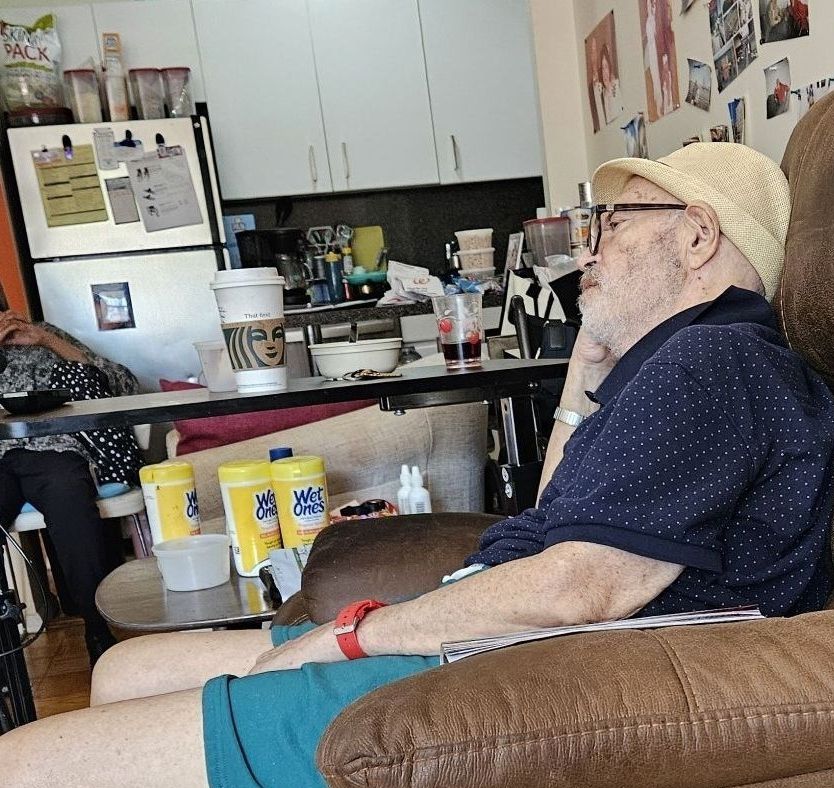
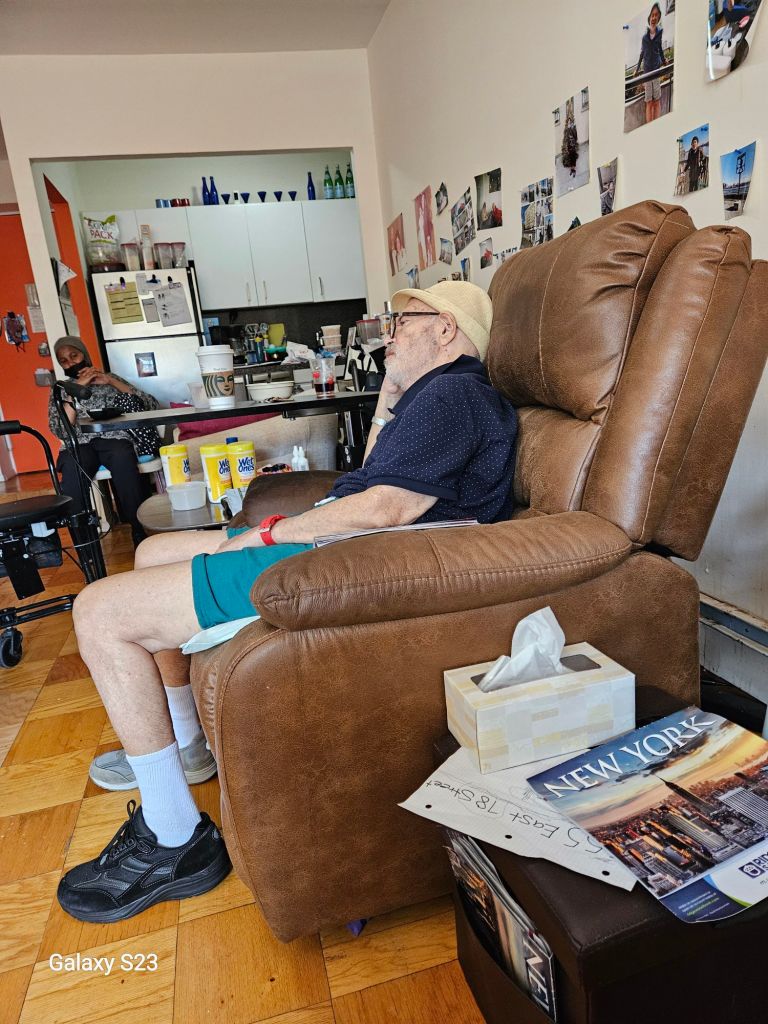
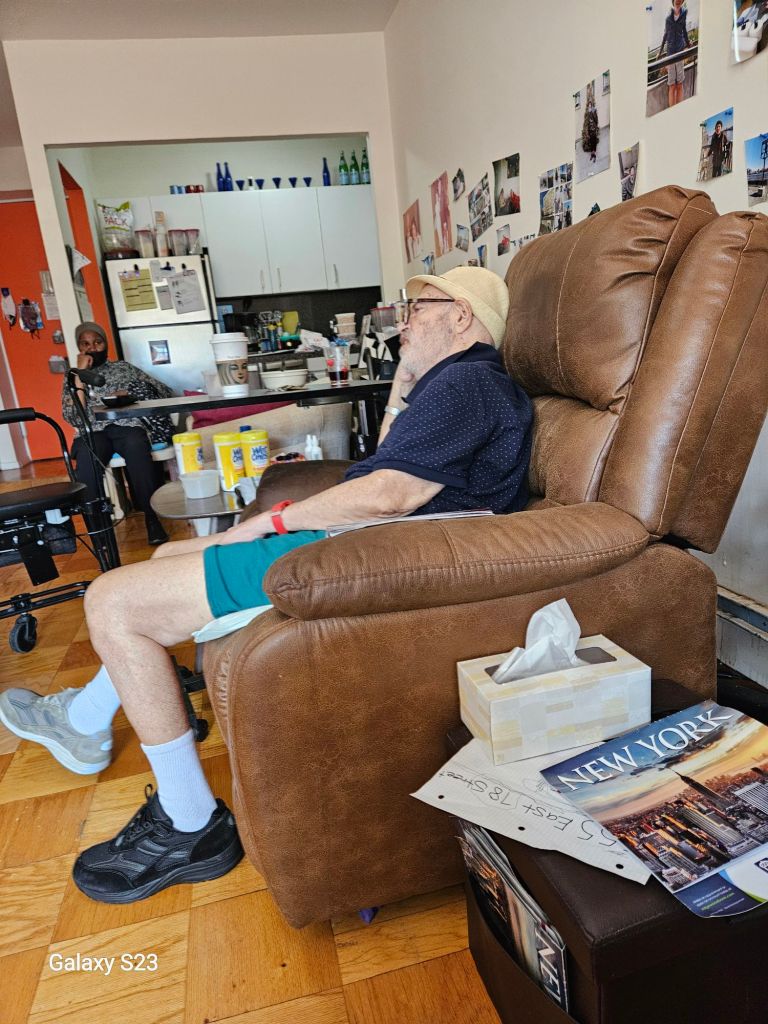
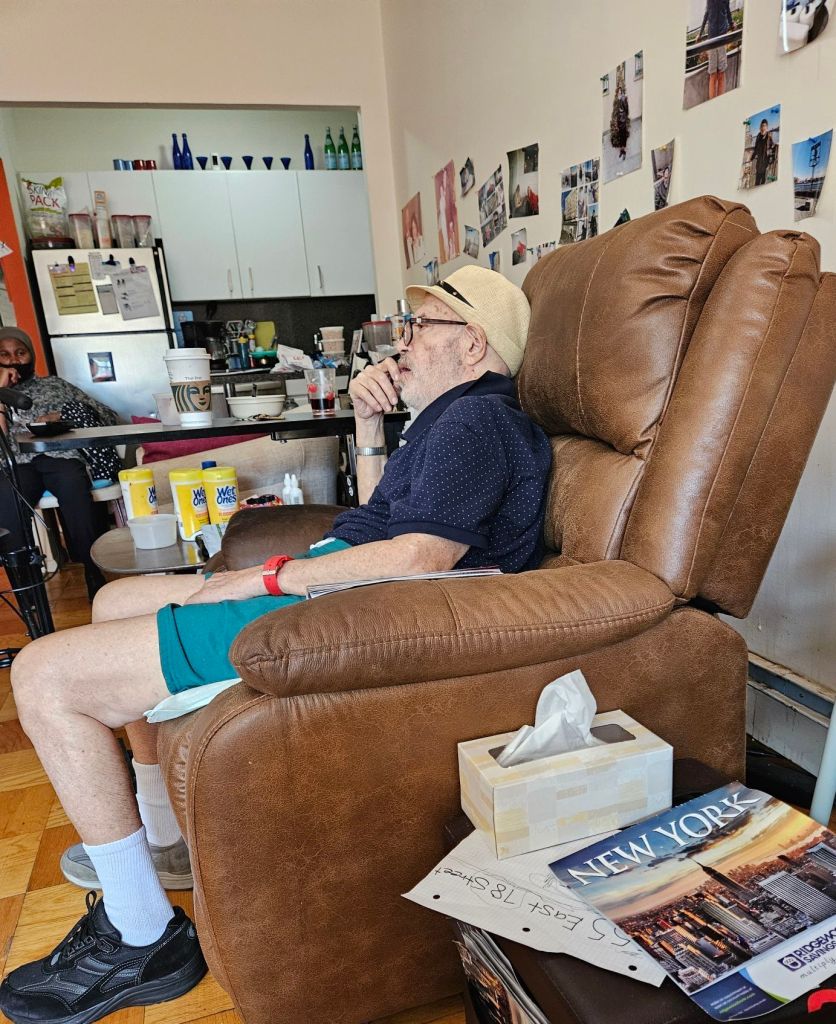
Our walls are covered with photos I pinned up from our past. I look at some with a little twinge of regret.
The exception to the touch of regret? Our wedding photos. It’s been a good ride by Burt’s side.
Bette Midler as my jam today was in contradiction to the pity party I was engaging in.
Burt tends to make less sense than ever of late. He still expects me to fill in all the blanks.
He’ll cite a destination for an activity of an unspecified type.
I am charged with knowing both where and what. It’s an unrewarding remit.
Burt’s hostility to being helped has more than once turned into nastiness and aggression. It can be directed even at me. (I am not surprised, but the emphasis underlines today’s tone of dismay.)
Burt’s evident mental decline is in tandem with greater physical weakness. I am sad. For me, yes, and distraught for him.
Anxiety is a huge factor in Lewy Body Dementia. I presume that those who were calm and composed prior to dx experience bouts of this distress once they enter Lewy-land.
Burt had more than his share for years before any symptoms. In fact, he was plagued by lifelong panic attacks.
His illness has made the cry “I’m scared” more frequent. Its poignancy is underscored by my other sadnesses and frustrations over his disease.
No, it’s not all about me. The caregiver is not alone in suffering the issues.
Figuring out what “I am scared” actually means is just part of the puzzle. That was never easy.
It took me years to realize that Burt’s fear of receiving a diagnosis when he first presented with what looked like LBD had to do with anxiety.
He was worried that a neurologist would be able to put him in jail. In retrospect, he must have felt he was losing his grip on his mind, and that was why we battled the question of his being “locked up.”
It’s a realization that saddens me.
Wouldn’t it be nice if my observations of his behaviors and motives made it easier to deal? And came to me more quickly?
Seriously, and any dementia is a serious illness, there are positives to caregiving. [See also here]
In the midst of declines and the unpredictability of what I am experiencing, staying clear of depression is a necessity. Holding onto the one reason I am here is too.
So reassuring him and me with a stream of “I love you so much” becomes a tool for the best. It helps keep me focused.
I have talked about how emotional Burt has been. Lewy Body Dementia is often described as a roller coaster (hate ’em) because of fluctuating symptoms and variable every thing.
It’s also a roller coaster of moods that can shift in a minute or a heartbeat or an hour. For him, I would think those changes must add to the confusion bubbling in him all the time.
I want to acknowledge that he is not the only one suffering those ups and downs. Oh, of course, a beloved’s mood swings take a toll on the caregiver.
That aside, I am a bundle of quick changing feelings under an unusually placid facade. (Give or take an occasional outburst of impatience.)
Grief, as I documented in a poem and a post here is prominent.
Any exchange can bring on the sadness. Anger is always lurking, some of the time, I am ashamed to admit, addressed at him. There’s plenty of boredom as well, and empathy and fear of what tomorrow might look like.
I went into the living room to write a poem of mourning.. about mourning about ambiguous loss and though it presented as my poems usually do with patterns of words I could not or would not write it or allow it to write itself.
That sense that we have lost someone who is still alive is very disturbing. Guilt mixes into it. Love resists its reality. Yet mourning is what we do for the loss we experience and for the lost loved one living in a diminishing state.
Expressing my grief here has freed me to let that poem that’s simmering form into its own as well.
From pretty much day one of Burt’s symptoms, I looked to getting help. Initially, it was because I needed my time.
I wanted to get 3 or 4 hours several times a week to get out. It seemed an existential need for me.
In the parlance of our dementia communities, it’s deemed “self-care.”
Some of us frequently express our annoyance at the exhortation to “take care of” ourselves. We also recognize the necessity.
I realized I had to go on with some small portion of my regular life in order to get on with our new life.
My time was for chores (like trips to the pharmacy) and for enjoyments (like time with my friends for lunch or coffee or walking around solo taking pictures).
It was to keep up the habit of exercise or to keep appointments (for my health or our financial oversight).
Over the last several months, I saw gaps in my plan.
I needed not just that essential me time, but also more assistance with Burt.
Our battles over food, for instance, could use another hand.
His caregiver would be able to help defray the fraught in this aspect of our relationship.
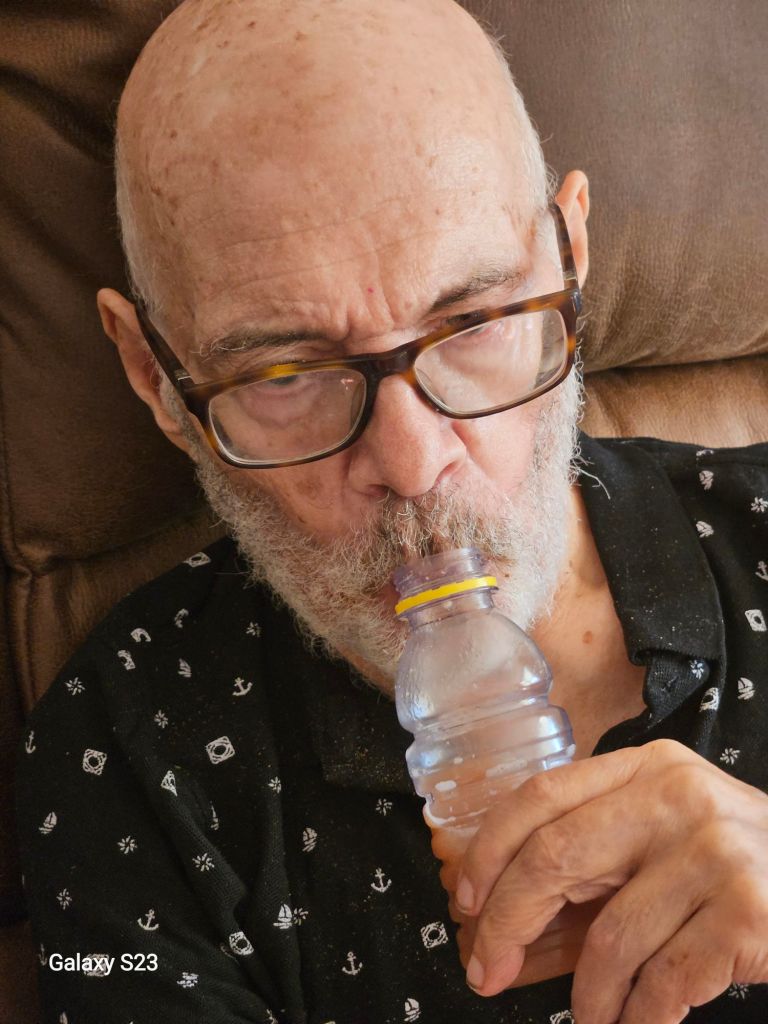
Another hand to feed him seemed like a simple idea. It took me a while to mull over, but I decided to implement time for both of us to get Burt eating.
An added hour at home with the caregiver here so we work as a team has been very helpful.
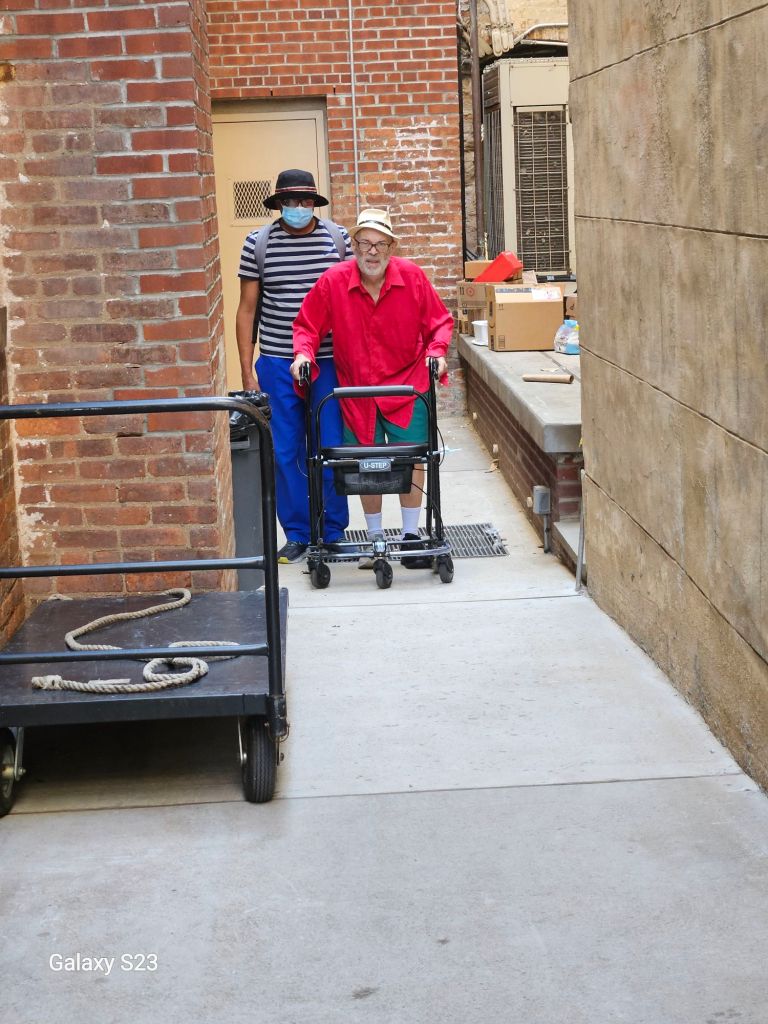
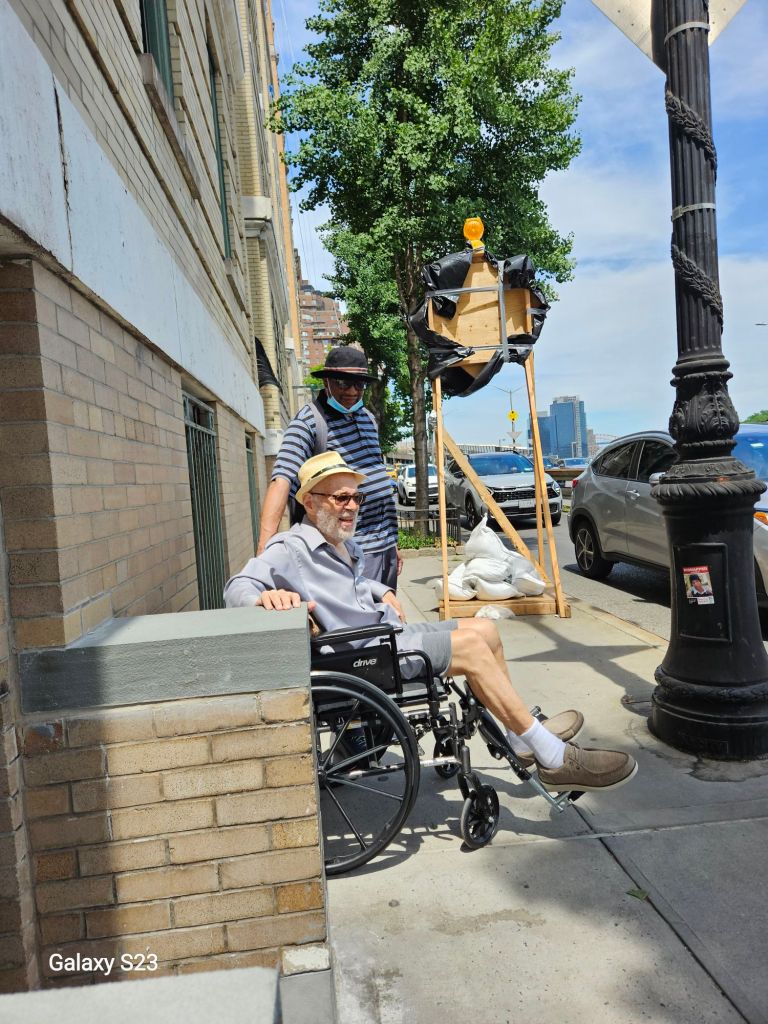
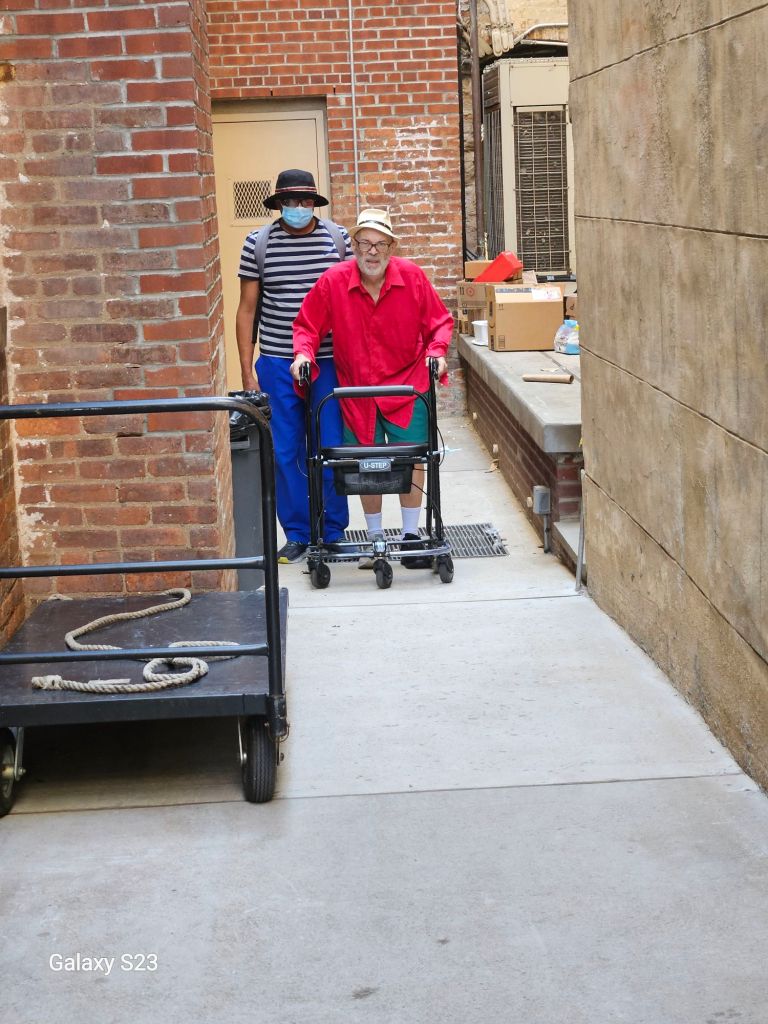
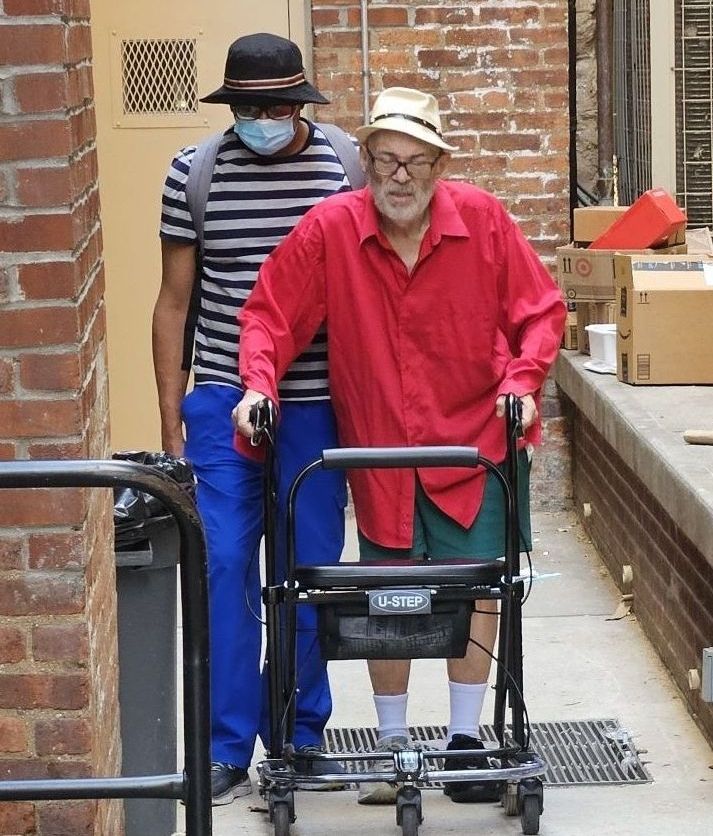
Burt’s recent decline both physically and in terms of erratic behaviors has made taking him outside on weekends an iffy proposition.
One Saturday, despite his eagerness to go out, Burt became agitated once we were on our way. He started banging his walker into a low wall near the door of our building. Until he toppled over.
The fall was not devastating. He was unhurt. Neighbors by the numbers came to our aid. They pulled him onto the seat of his walker; one escorted us all the way into our apartment.
This is the moment for gratitude, so I pause.
The devastating effect was on my confidence in dealing with Burt on my own.
Time for weekend help. Burt’s regular aide took a week off, and the sub is now our weekend guy.
Day one was yesterday. The goal was to deal with a steady pattern of meals for Burt and to get some outdoor activity in our schedule.
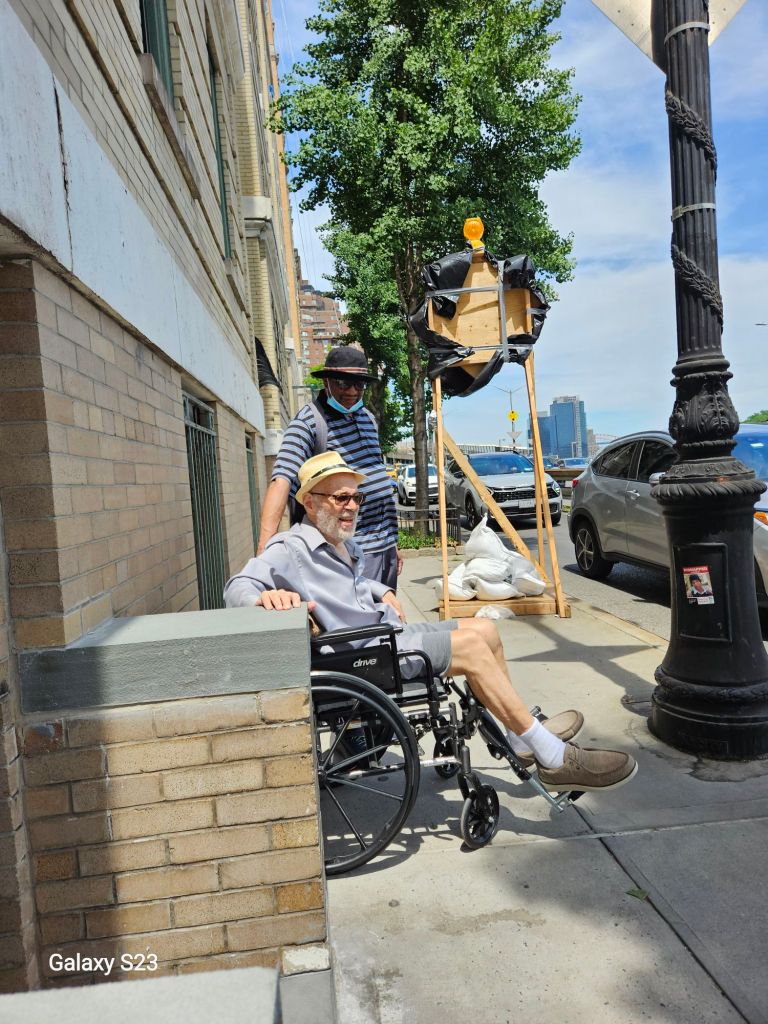
I am exhausted from all the doing, but this is the right thing for us. We are looking forward to our Sunday. Burt is talking about breakfast and lunch. I am saying we’ll go out to sit to watch the river.
On our outing today, Burt kept threatening to fall and was pretty convincing. The last leg of our trip was actually very nerve-wracking, and we pulled him seated on the walker to the door. His new aide helped keep him from falling when he finally got up by the door. Even Burt acknowledged that he’d helped. We put Burt in the bedroom so he could rest.
Burt suggested I “get rid of the guy,” but when he was in the other room, he asked for him.