Perhaps my tolerance for Burt’s more difficult side stems from my affection for the bad boy.
Some of his outbursts are angry and defensive, but others have a touch of the mischievous.
My boy has a wild streak. Still.

Perhaps my tolerance for Burt’s more difficult side stems from my affection for the bad boy.
Some of his outbursts are angry and defensive, but others have a touch of the mischievous.
My boy has a wild streak. Still.
The balance between giving your beloved directions and oversharing expectations is just another fulcrum of care.
You never told me is a frequent complaint whether I did or not.
I will plead guilty and mutter a oh I thought I mentioned and that old standby sorry.
Tell him about an upcoming event or activity too early, and he’s raring to go. Wait closer to the time and his timing will drag it out until it’s too late.
The latter could happen anyway, even if he was forewarned.
I hate to admit it. When apparently healthy couples of a certain age stroll by hand in hand, I am envious.
The recent outings facilitated by our new weekend aide take some of the sting of my jealousy away. I can get out with my guy. That’s a nice feeling.
We both enjoy being out, and Burt’s memory has been jogged by some of the [once familiar] sights.
That’s gratifying.
Fresh air offers a mood boost, too.
We can both use that!
This morning, I realized that the name of my poetry blog has a correlation with our journey with dementia.
Burt has a regular delusion [mostly in early morning or at evening into night](pardon the digression). I am one of several wives, his Capgras syndrome tells me. Often, I am not sure which one he is addressing.
I have taken to calling myself Number 1 as in Tamara #1. We were all named Tamara, but now this pattern has diverged. I don’t know where he gets Dorothy from, but there she is, too.
I named my poetry site Tamara, really. Lewy Body had nothing to do with that choice then. Now, I cling to it as a way of preserving the identity Burt’s Lewy is stripping from me.





Early on, I lamented not being able to argue with my husband.
Now, when I scream at him out of exasperation from another room, he thinks there are two crazy women in his life.
That’s not fair to him and must be a tad terrifying.
His demonstrations of anger seem to be a way of asserting his control. When he’s out of control, he feels the power of his temper.
Those tantrums are now more comical than terrible except for concerns over his safety as he jams his walker into a wall. He no longer has the ability to organize his fury, but he certainly gives it maximum effort.
My yelling at him is my venting after repeated attempts to quiet him fail me or rather when more attempts than my patience will sustain are needed.
It’s ultimately ineffective and truly dangerous to the frailty of our relationship. He doesn’t know which wife is soothing him or which one is shouting. My being consistently nice goes further towards keeping him from distress than any quirk of my temper.
I know all this, and yet my better self doesn’t always rise to the trial. Keep trying. It’s all I can do.
Holding onto our mental health is not just taking interventions to keep depression at bay. As we get older, we worry about dementia.
Forgetfulness sparks fear. Intervening for cognitive health seems like a good idea.
I blog to keep my mind going. I do puzzles, albeit the Easy Sudoku and a mini crossword are my max. speed.
Then I worry a little deeper. The more visible sufferers from dementia are/ were actors. Actors use memory and creativity in their craft; it’s a huge component of who and how they are.
What chance have the rest of us?
Well, I think chance is just the ticket to the preservation or loss of our mental acuity.
By chance, Burt is afflicted. By chance, I am not.
Doesn’t mean I’ll stop challenging myself to try to stay sharp. It does mean I will treasure what health I can preserve.
Among those caring for the Lewy- afflicted, LBD is referred to as a roller-coaster.
I hated those before embarking on our Lewy journey. As you can guess, I am not a fan of the wild ride now.
Lewy Body Dementia is unpredictable. Lows can be followed by some highs. Or at least some regained ground.
This was what today’s adventure with Burt looked like. A little regained ground.
He was still less than coherent, but he got out of the house on his own steam. His aide said he refused to go in the wheelchair and there he was when I met them, sitting on his walker.
This was his biggest outing in a while. Just before I caught up with Burt, I ran into the mailman, who was pleased that Burt had recognized him.
This was a day for that. He called neighbors by their names; he was engaged; he was in a fairly lively frame of mind.
Will it last? Will it?
Robbed of everything meaningful, the pwd in your life progressively declines a little further. Disease progression is relentless.
Burt is a poor patient. He resists being prodded, guided, and helped. It makes those doing what’s best for him and doing their best feel like giving up. At best, it’s exasperating.
In these instances, remembering who your person was before the dementia crept into your lives will sometimes elude you.
The grind of care will be ever present.
This is when you will (ok might) develop “compassion fatigue.” It’s that feeling of “to hell with it” that comes from a constant strain on your resources.
Explaining everything four or five times as Burt [no doubt struggling with symptoms from his illness but I was at that ‘who cares’ moment] could not get it, I was muttering oh god.
Add to his extreme cognitive decline a huge stubborn streak [also made more intense in response to the Lewy], and I was ripe for a major reversal of empathy. A lack of caring.
It was easier to stay on his side when, even after one of his offensive rebukes, he would sincerely thank his carers. He doesn’t seem to have the awareness that we are looking after and out for him anymore.
As he drifted off to sleep, Burt called me over [why does everything have to be shared as a secret (sigh)?].
“Don’t give up on loving me,” my very sleepy sweetheart said, holding my hand.
Ah. Yes. That’s it. There it is.
I will remember this:






My goal in having weekend help was to get Burt out more.
The first weekend was a bust. An unhappy Burt gave up inside our courtyard. On the second day, he seemed eager but did not like the outing.
Finally, we made it past the grumbles to a nice sit in the sun and air.

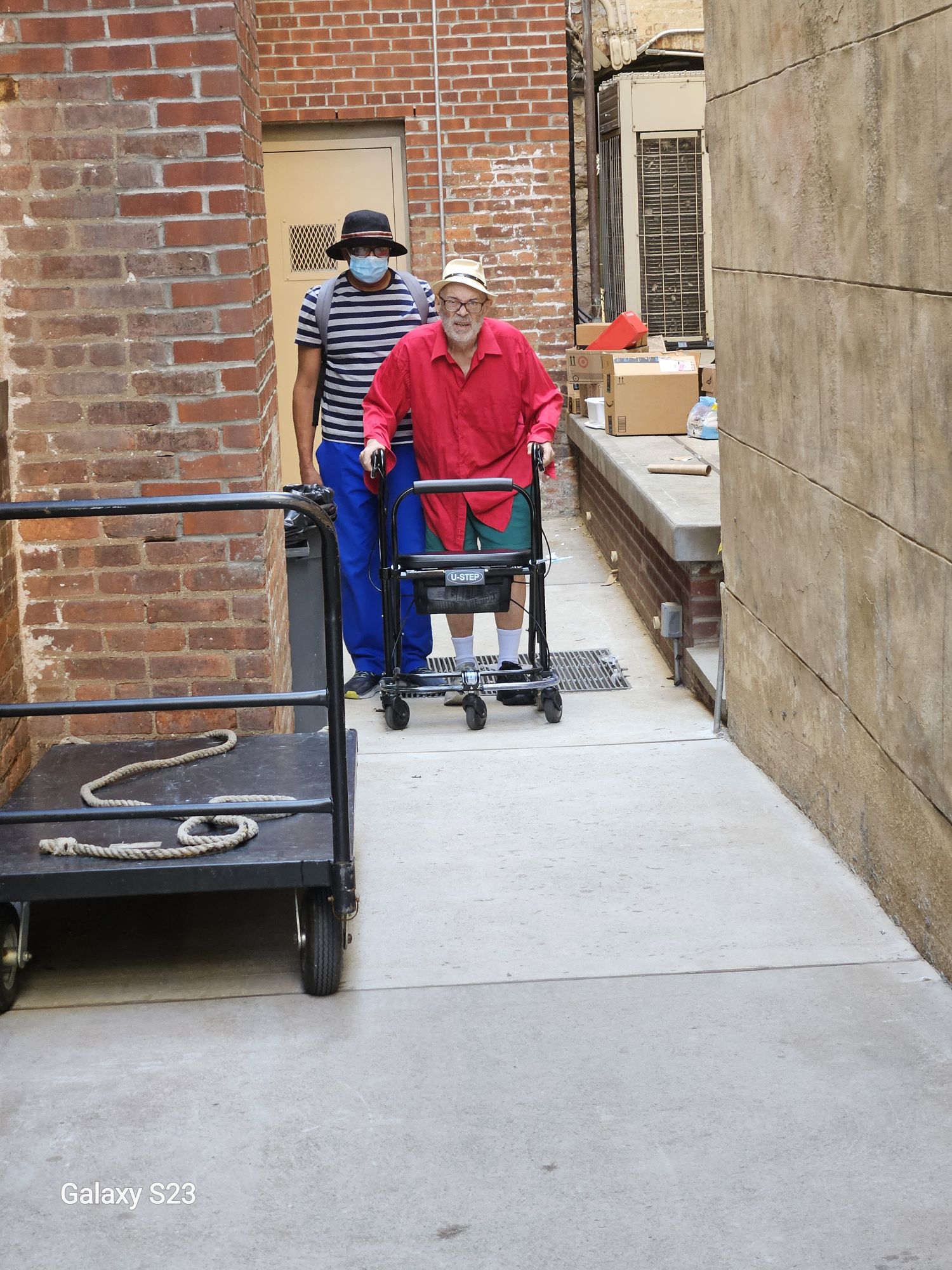
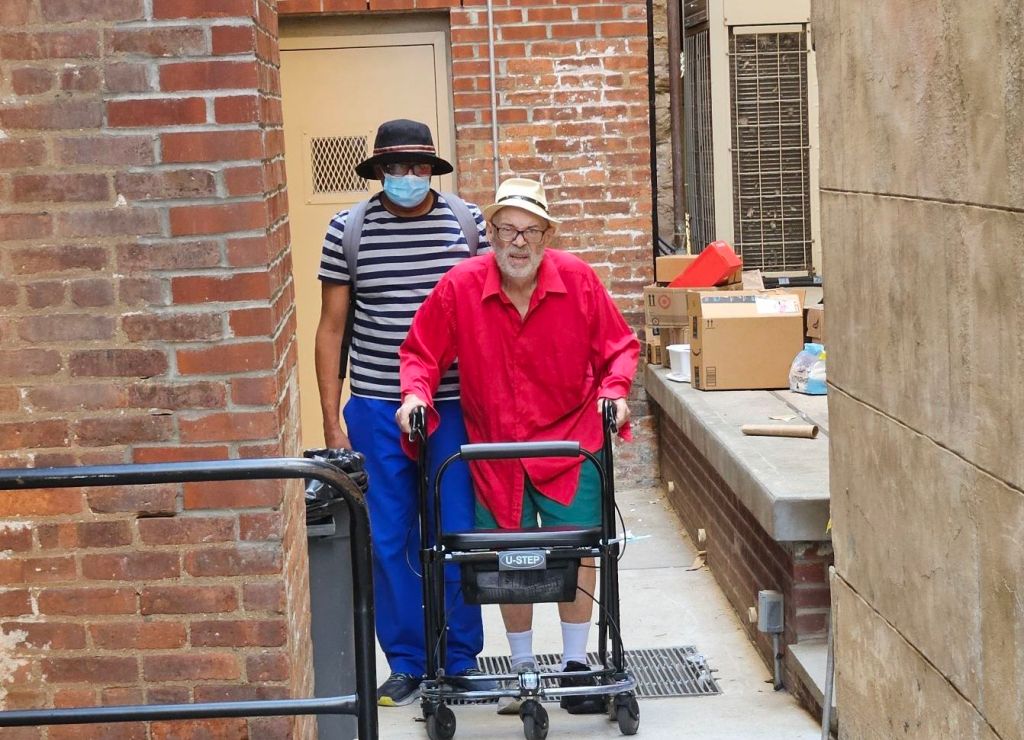
June 4th, we barely made it out, but we did.
Have a WordPress.com account? Log in now.

