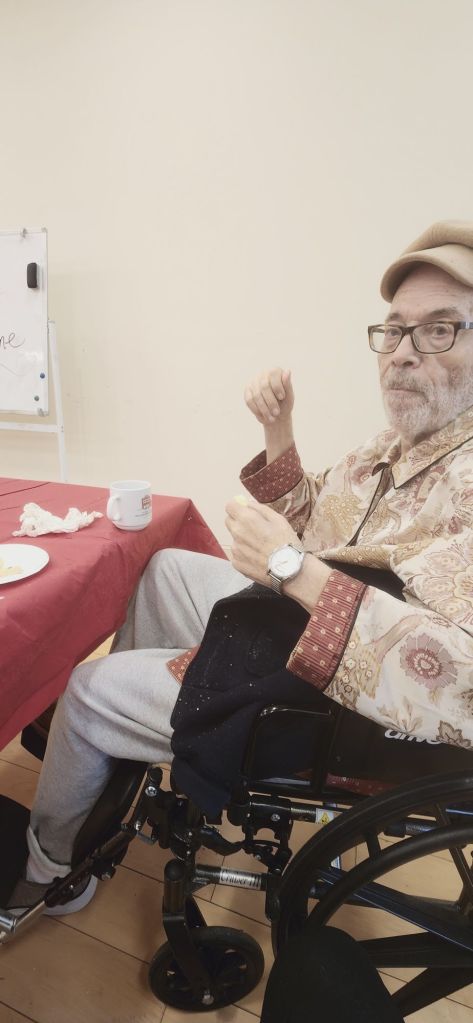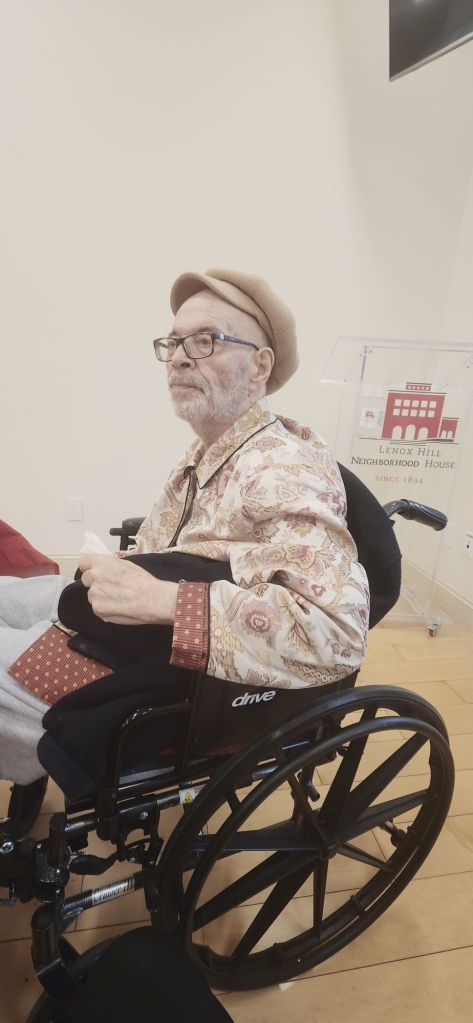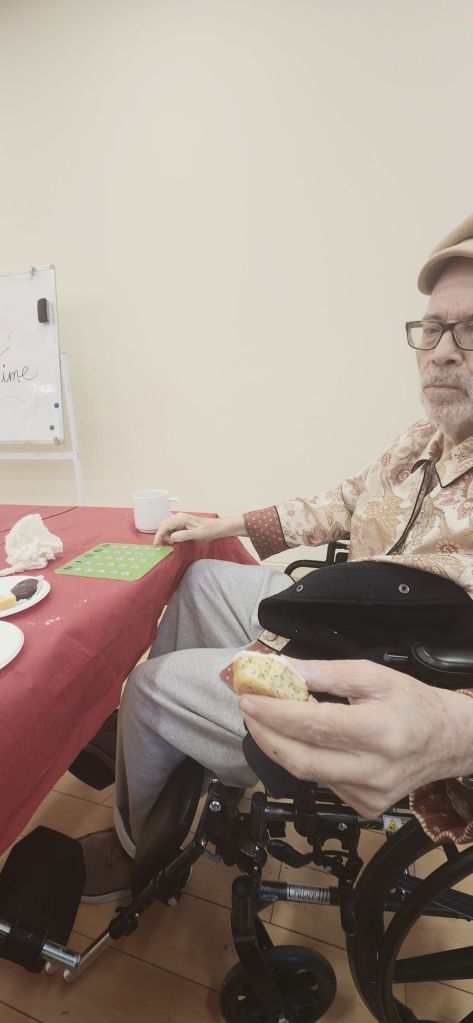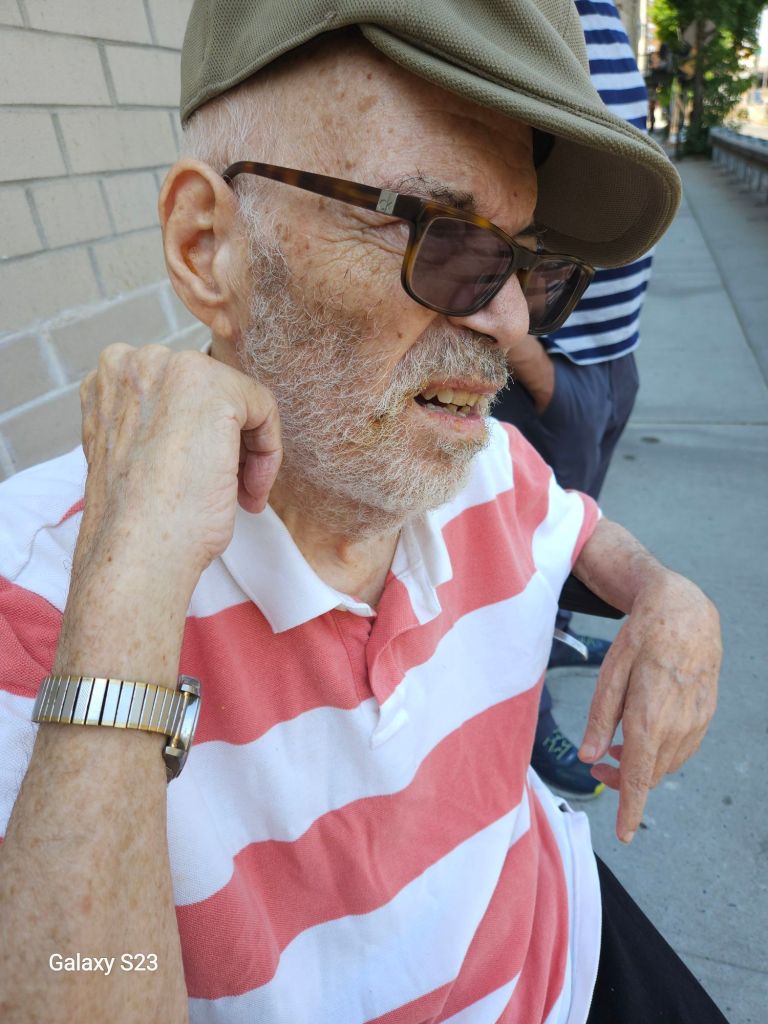
His hand is so much bigger than mine. I feel protected holding his hand, and yet I know it’s my job to protect him.
When he was first diagnosed he denied the diagnosis. I thought if only he knew it would be so much easier. I could justify the decisions I had to make, explain the things he was losing.
Since he is now aware of this awful disease, lamenting it as he explains it to neighbors and friends, I am aware that it is not easier.
He still doesn’t understand his losses. It’s heartbreaking to see him worry over the effects of a “brain disease.”
There are so many things that can overwhelm the caregiver in this journey.
It’s not just the responsibility – both financial and physical – and our loved one’s urgent and ongoing needs, but the long lists of what-to-dos.
There are supplies we have to keep on hand.
Burt just reminded me that we should always have his briefs in the closet. Amazon is frequently the supplier of choice for many of us; this is not a plug, but their subscription program has been helpful.
With Lewy Body Dementia’s havoc to the tastes buds, responding to what Burt will want to eat requires frequent list adjustment.
The financial tasks and watching the money dwindle are not a lot of fun. There are times these are matters that keep me up.
The most daunting to-dos have to do with mortality planning.
We, as caregivers, all know that we might be the first to go. This is not just depressing but also requires juggling the care for our person.
Preparations include having wills and POAs at the ready. (Something that should be on our first post-diagnosis to-do.) We also need to know where our beloved will spend out his days. And under whose care.
Generally, this requires visits to one or another of the most disheartening of our healthcare establishments.
If you find a small group home or similar homey place, you are lucky. Most skilled nursing facilities or nursing homes are not likely to feel inspirational.
As with all things you do for and with our loves, do your best.
Reassurance is important for my person with dementia. I slip and forget sometimes.
I realized this today when I said, “I love you, sweetheart.” He did not respond with an “I love you too,” but with “you didn’t tell me in a long time.”
His remark serves as a reminder to me to say “I love you” often each day.
Saying it aloud helps me stay on the positive side of caregiving. Those 3 little words remind me of what caring means.
I wrote a note to hang up along with my reminders for him of his schedule.
It says, “Burton, I will always love you, Tamara.”
My note can’t replace my declarations of love, so I will keep expressing my feelings. Loudly and proudly.
Burt expects me to deliver my best self. He knows it doesn’t always happen.
“I’m doing the best I can” is often dismissed as not good enough.
Sometimes, it’s met without challenge and accepted. Forgiven or forgotten.
The other day, when we established that no aide would be with us, Burt asked me if I would stay calm. “I’m a good teacher, I found out. I’ll teach you how to stay calm.”
And I guess apropos being able to keep cool but perhaps being overtaxed: “It’s amazing the hard work you did with the party. All that hard work doesn’t just go away.”
Later in the day, when I did indeed lose my composure to yell at him, he wound up apologizing for his long, incessant rant about how badly I had been treating him.
Truth be told, up until my little fit of rage, I had not been anything but patient. The rant against me was due to his anxiety over something else. I knew that.
I could have gone for 100%, but for a moment, I lost it.
My best mimics the rule in Japanesepottery; there is an imperfection, a dent that emphasizes its perfection. I did my best.
It’s hard to resist the urge to say “really? Really, you don’t know that your first wife was named Susan?”
Just one of a series of “really’s” that his infliction brings to the fore.
As we’re on a high of successes, his confusion is more unwelcome. I feel it like the contradiction pulling me down from the top of the roller coaster.
We pulled off a successful birthday party for me. Burt’s anxiety about it extended to the event itself when he took a long time preparing; once he showed up, he seemed in his social element. He called me out of the party before he was ready to participate to make sure I offered food and drink. Ever the thoughtful host.
The next day, he initiated a trip to a restaurant. This was only the fourth time we dined out since his diagnosis. He ordered scrambled eggs, mashed potatoes, and barely ate, but we had a pleasant time.
The walk to the restaurant, like our trip last weekend to a Starbucks, was challenging for Burt. He is always cold, and that was a factor in his complaint, as was wondering where we were headed and how much longer it would take.
Seeing him do so well and recognizing the impairment of his dementia are two thoughts I wish I didn’t have to juggle.
You get some great, amazingly fantastic news. What’s the first thing you do?
You share it with the one you love. Right?
After that “point of pain,” I also need to share something wonderful.
Shortly after we got Burt’s diagnosis, I was rummaging through a closet and found some of the extravagantly sentimental cards Burt had given me over the years. I burst into tears.
He was so confused at that point in our journey that I was sure I would never get another birthday or Valentines greeting from him again.
The contrarian proved me wrong.
He sent his aide to buy me a card, and it was as sentimental as any of the ones I received in the past.
Also, he had enjoyed his surprise birthday party so much that he insisted I give myself one as well.
You get some great, amazingly fantastic news. What’s the first thing you do?
This prompt [above] hits a nerve in our situation. Good news would be something to share with your spouse. As would, of course, fantastic news and alas bad. The first person I would turn to would be Burt.
In his fluctuating state of confusion, sharing might be limited. Of course, problems and bad news are out of the frame. Fantastic news can only get so far.
Naturally, being a contrarian with a contrarian disease, my Burt is apt to surprise.
I got a call from his younger daughter with whom he is pretty much estranged.
When Burt spoke with her, the deceptive aspect of his memory made for a strained conversation between them.
Nonetheless, he welcomed the relationship (for me), although he remained skeptical about his relationship with her. “I’m happy for you” was his blessing to me.