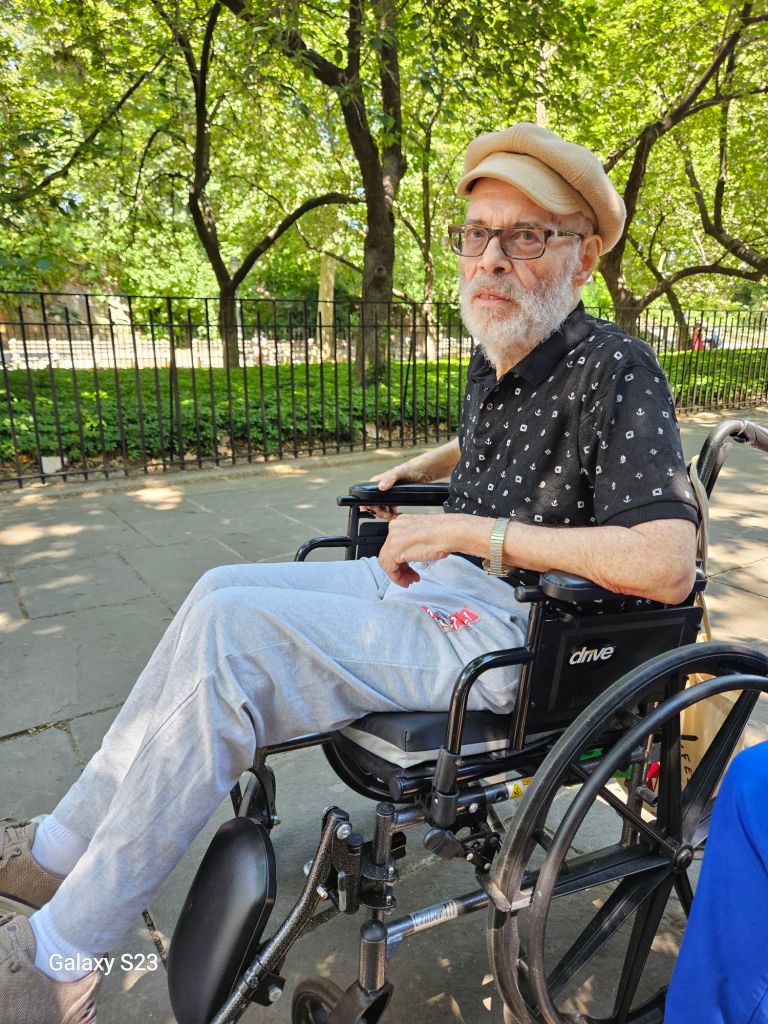
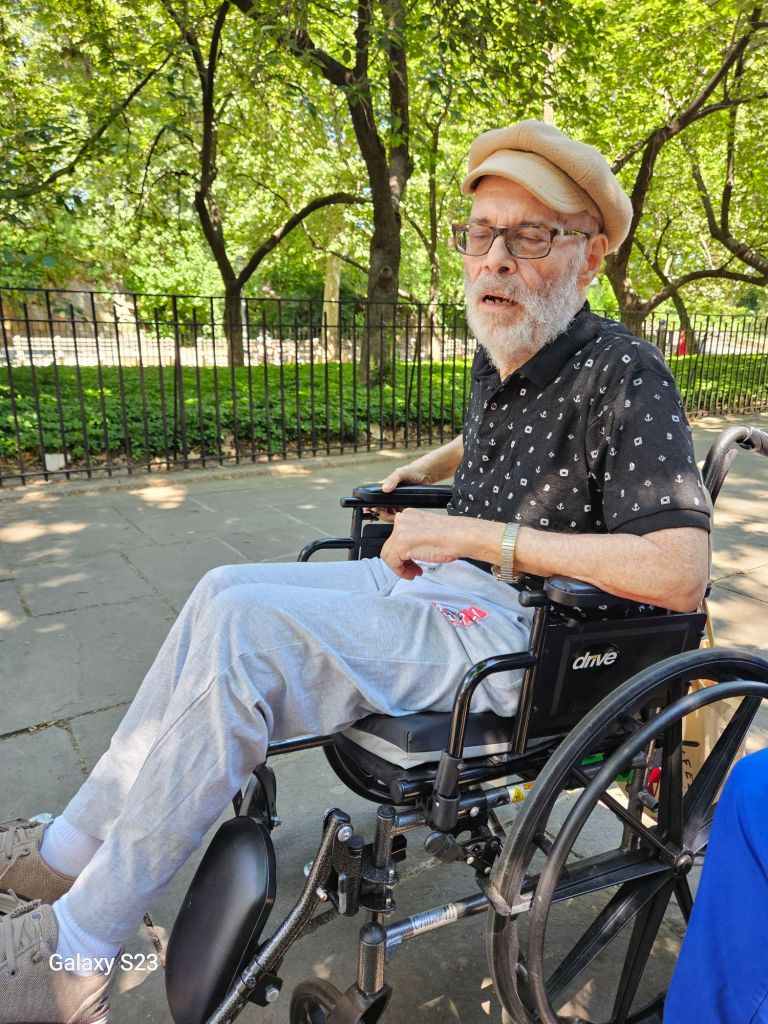
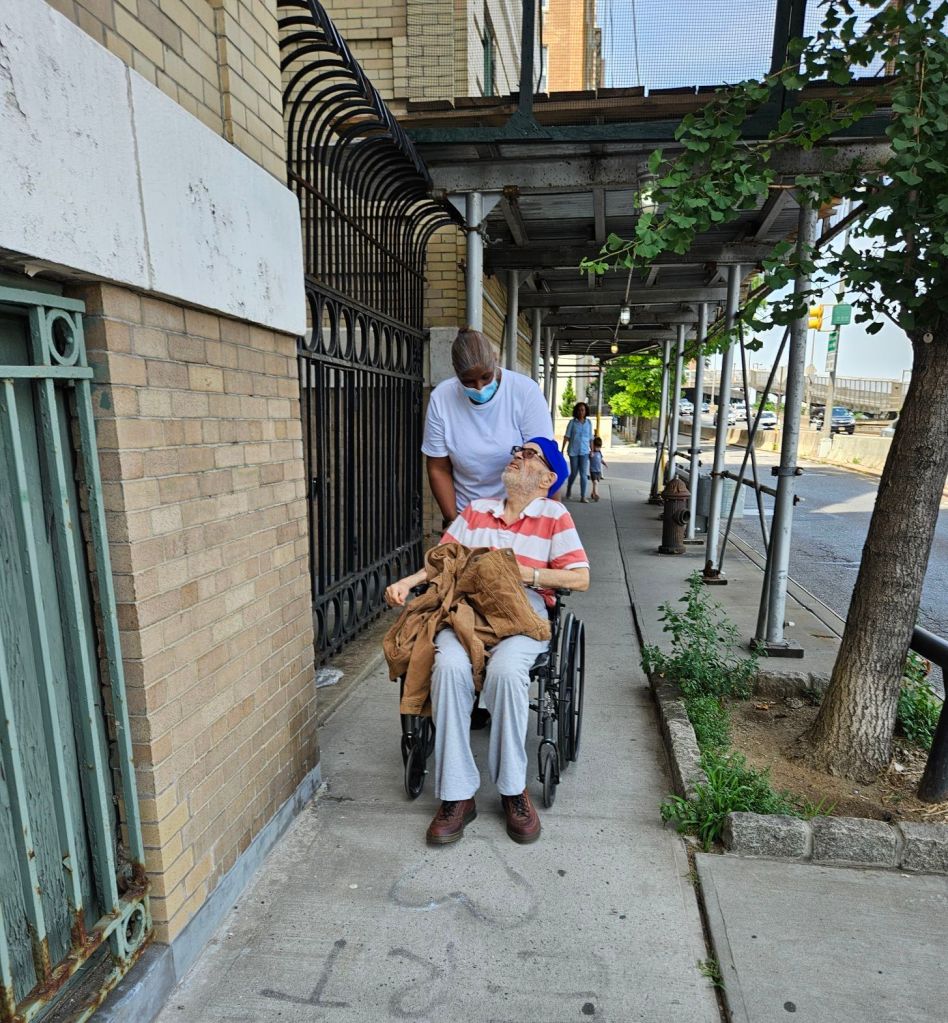
My journey alongside Burt

Thank you for those of you sincerely concerned about me as I struggle. I am processing all that this journey entails.

The sadness. The anger. The worry. The disappointments. The tedium and the unpredictability.

The sheer physicality of the challenges of care tell me I have to train harder to meet this particular Everest.

I know I can.

The emotional is in many ways harder and more omnipresent. Writing about the experience is my training for that aspect.

I hit the gym to stay fit for the other aspects. And get help to keep him steady and moving.

When in doubt or crisis

throw some love at it

Seriously, and any dementia is a serious illness, there are positives to caregiving. [See also here]

In the midst of declines and the unpredictability of what I am experiencing, staying clear of depression is a necessity. Holding onto the one reason I am here is too.

So reassuring him and me with a stream of “I love you so much” becomes a tool for the best. It helps keep me focused.

Emotions

I have talked about how emotional Burt has been. Lewy Body Dementia is often described as a roller coaster (hate ’em) because of fluctuating symptoms and variable every thing.

It’s also a roller coaster of moods that can shift in a minute or a heartbeat or an hour. For him, I would think those changes must add to the confusion bubbling in him all the time.

I want to acknowledge that he is not the only one suffering those ups and downs. Oh, of course, a beloved’s mood swings take a toll on the caregiver.

That aside, I am a bundle of quick changing feelings under an unusually placid facade. (Give or take an occasional outburst of impatience.)

Grief, as I documented in a poem and a post here is prominent.

Any exchange can bring on the sadness. Anger is always lurking, some of the time, I am ashamed to admit, addressed at him. There’s plenty of boredom as well, and empathy and fear of what tomorrow might look like.

Loss

I went into the living room to write
a poem of mourning.. about mourning about ambiguous loss and though it presented as my poems usually do with patterns of words I could not or would not write it or allow it to write itself.

That sense that we have lost someone who is still alive is very disturbing. Guilt mixes into it. Love resists its reality. Yet mourning is what we do for the loss we experience and for the lost loved one living in a diminishing state.

Expressing my grief here has freed me to let that poem that’s simmering form into its own as well.

There’s a lot to be said

From pretty much day one of Burt’s symptoms, I looked to getting help. Initially, it was because I needed my time.

I wanted to get 3 or 4 hours several times a week to get out. It seemed an existential need for me.

In the parlance of our dementia communities, it’s deemed “self-care.”

Some of us frequently express our annoyance at the exhortation to “take care of” ourselves. We also recognize the necessity.

I realized I had to go on with some small portion of my regular life in order to get on with our new life.

My time was for chores (like trips to the pharmacy) and for enjoyments (like time with my friends for lunch or coffee or walking around solo taking pictures).

It was to keep up the habit of exercise or to keep appointments (for my health or our financial oversight).

Over the last several months, I saw gaps in my plan.

I needed not just that essential me time, but also more assistance with Burt.

Our battles over food, for instance, could use another hand.

His caregiver would be able to help defray the fraught in this aspect of our relationship.

Another hand to feed him seemed like a simple idea. It took me a while to mull over, but I decided to implement time for both of us to get Burt eating.

An added hour at home with the caregiver here so we work as a team has been very helpful.

Burt’s recent decline both physically and in terms of erratic behaviors has made taking him outside on weekends an iffy proposition.

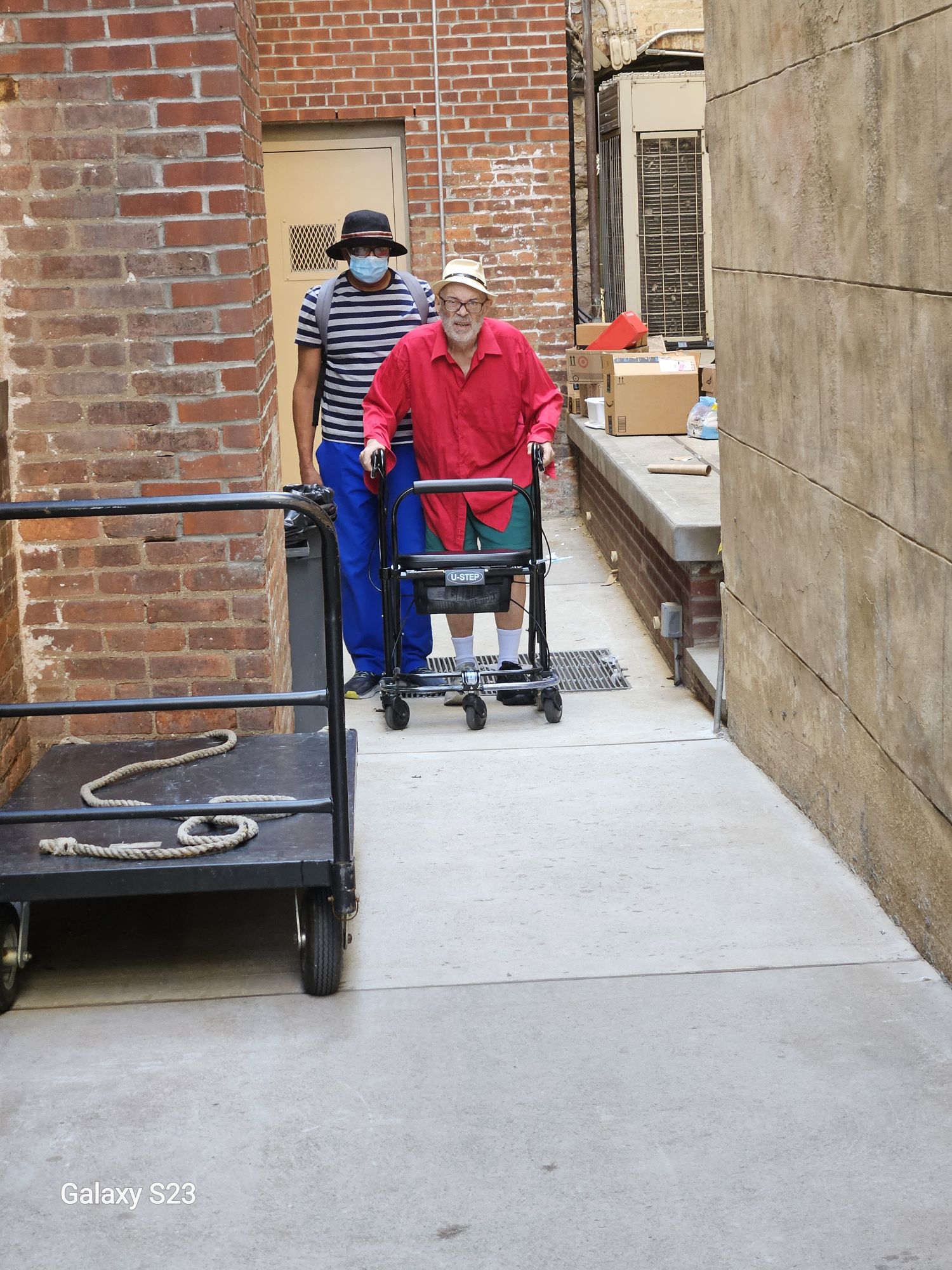
One Saturday, despite his eagerness to go out, Burt became agitated once we were on our way. He started banging his walker into a low wall near the door of our building. Until he toppled over.

The fall was not devastating. He was unhurt. Neighbors by the numbers came to our aid. They pulled him onto the seat of his walker; one escorted us all the way into our apartment.


This is the moment for gratitude, so I pause.


The devastating effect was on my confidence in dealing with Burt on my own.

Time for weekend help. Burt’s regular aide took a week off, and the sub is now our weekend guy.

Day one was yesterday. The goal was to deal with a steady pattern of meals for Burt and to get some outdoor activity in our schedule.

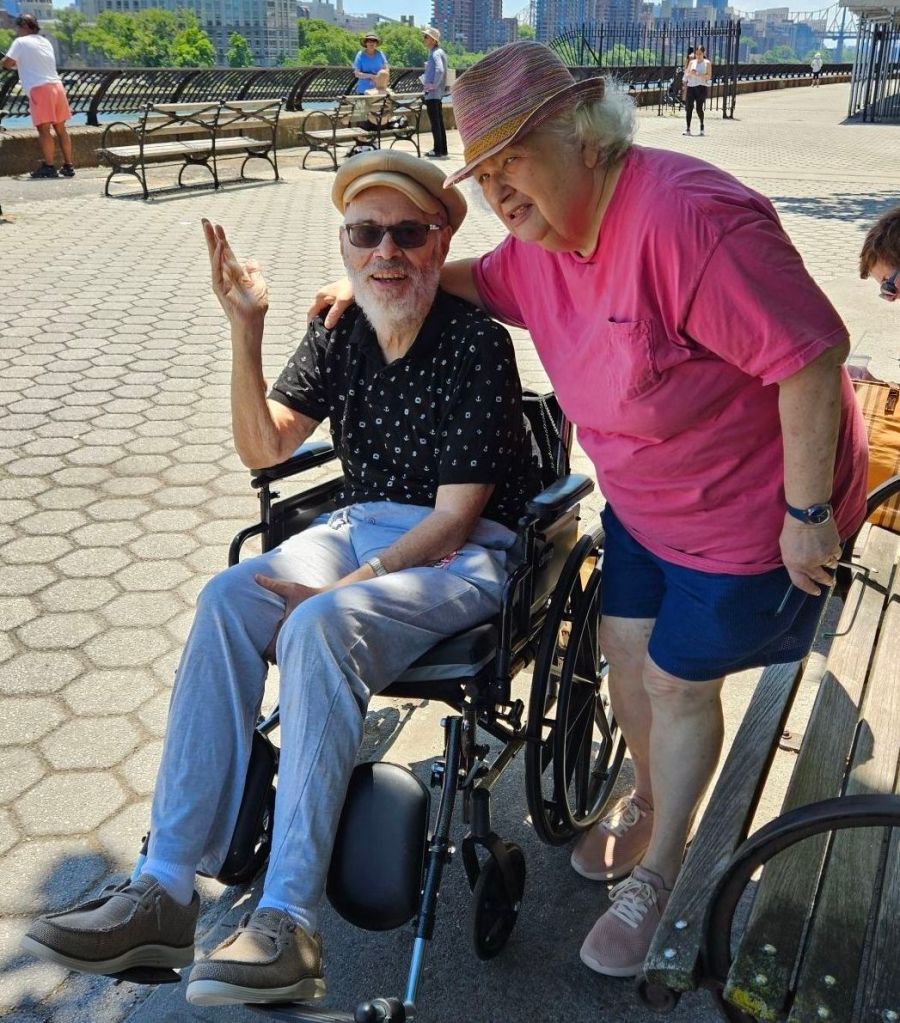
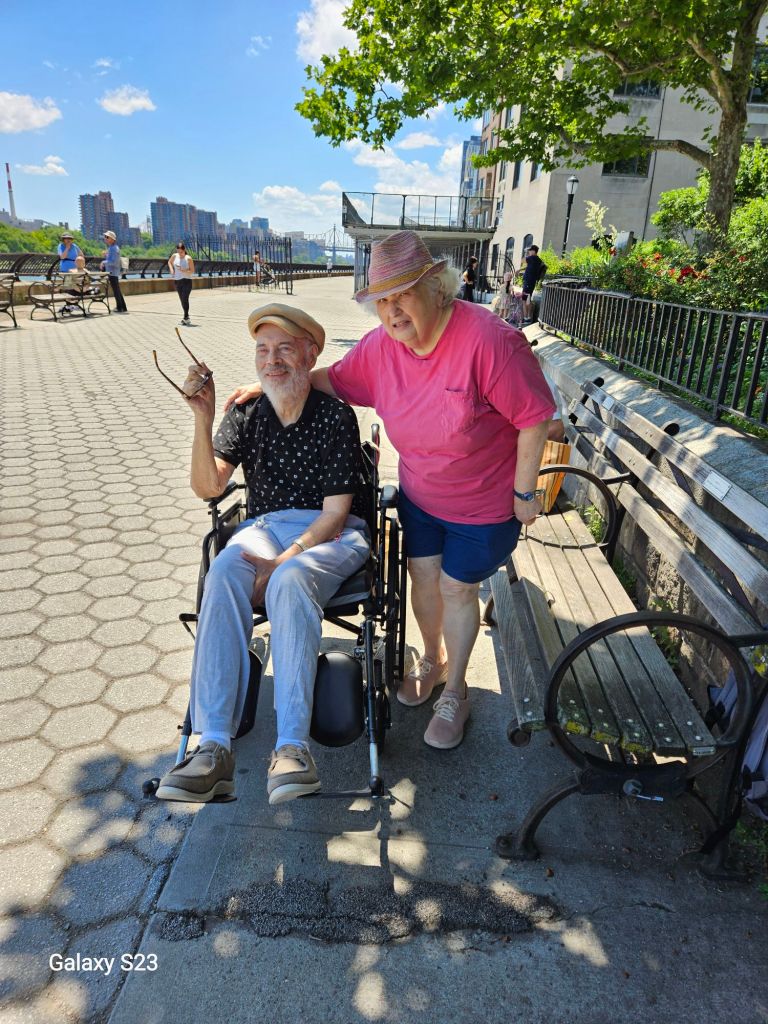
I am exhausted from all the doing, but this is the right thing for us. We are looking forward to our Sunday. Burt is talking about breakfast and lunch. I am saying we’ll go out to sit to watch the river.

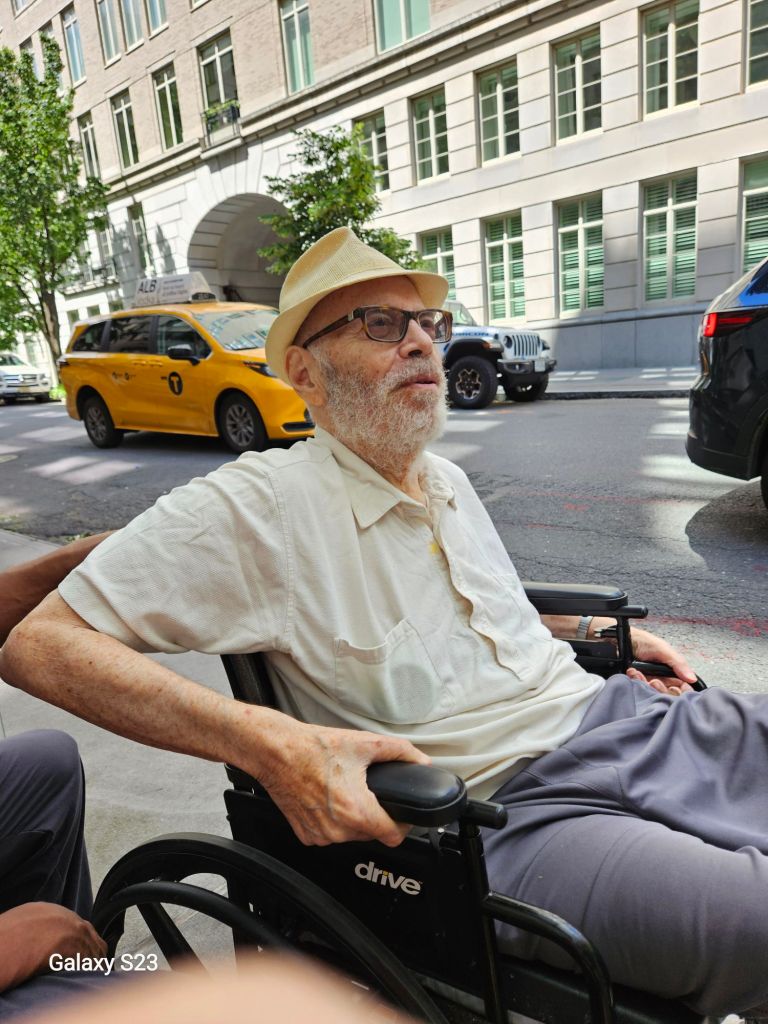
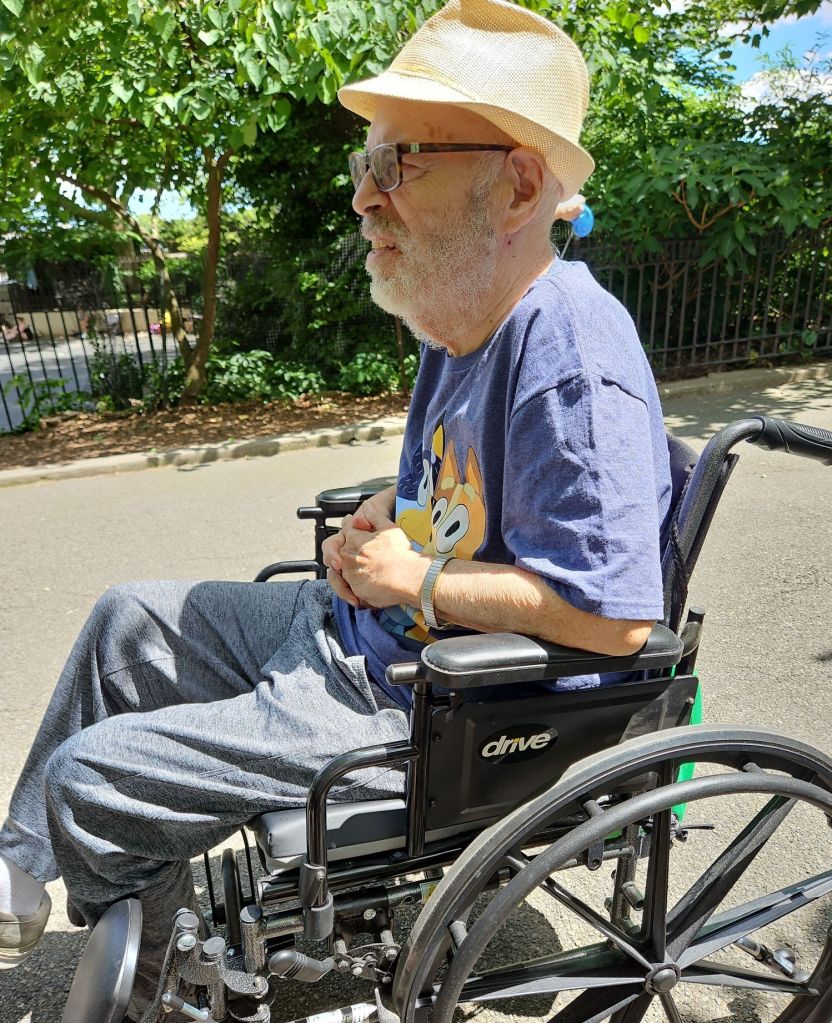
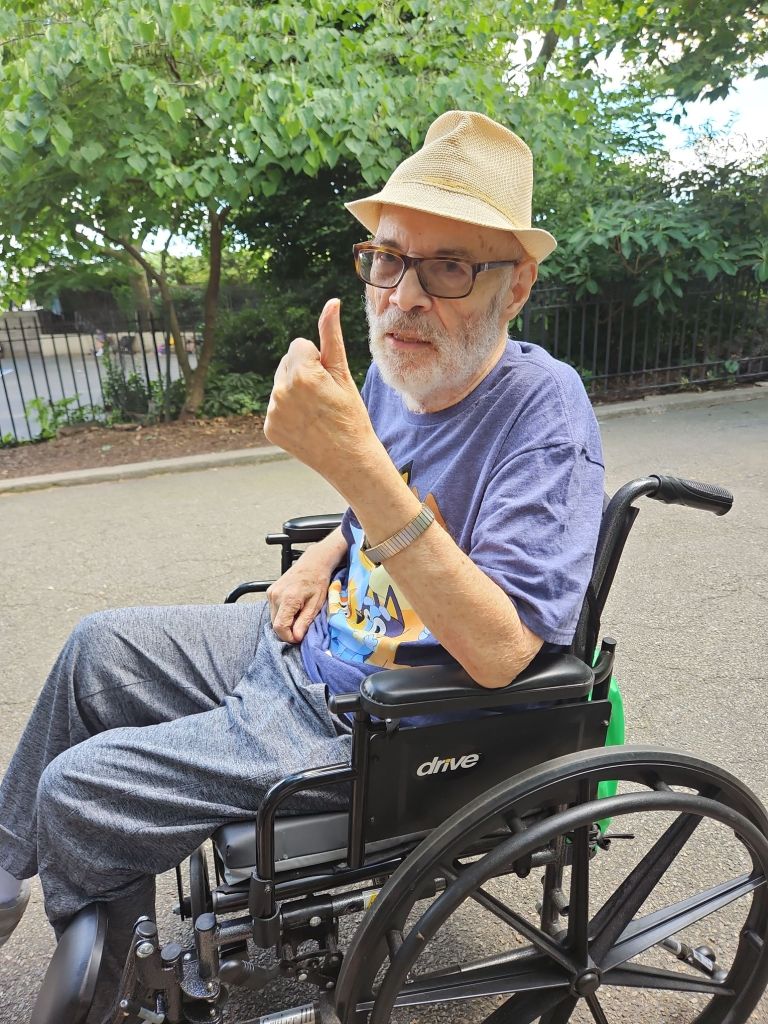
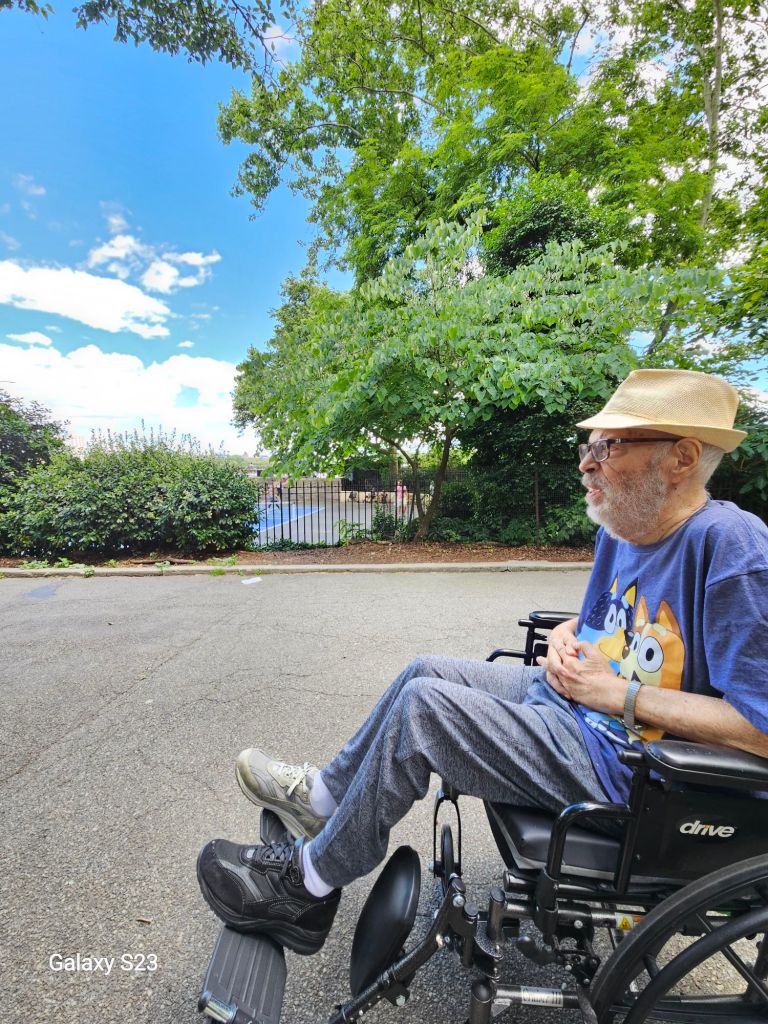
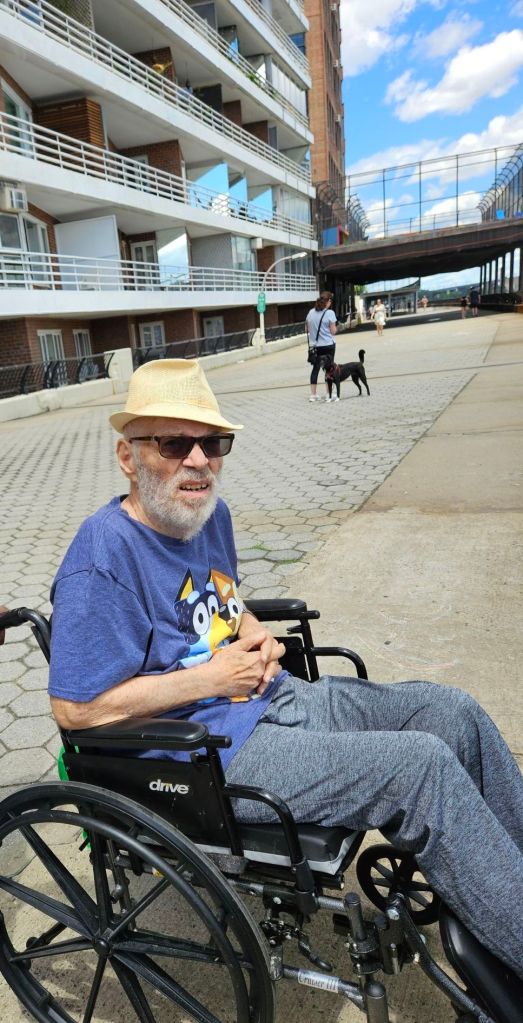
On our outing today, Burt kept threatening to fall and was pretty convincing. The last leg of our trip was actually very nerve-wracking, and we pulled him seated on the walker to the door. His new aide helped keep him from falling when he finally got up by the door. Even Burt acknowledged that he’d helped. We put Burt in the bedroom so he could rest.

Burt suggested I “get rid of the guy,” but when he was in the other room, he asked for him.

All in all, a great first start.

For some good news

I have mentioned Burt’s enjoying people as a highlight of his disease. He has grown more outgoing over most of the course of his dementia.

During the first phase of his recent dip, he stopped engaging as he had. Part of this is because he doesn’t recognize the neighbors as he used.

Lately, he’s back to wanting more connection. On our trip to the doctor, he spoke to passersby and had a long chat with the fellow who always helps transport us to appointments.

One of our recent outings was a Teatime for Caregivers that we went to. He flirted with our social worker and loved the lemon squares. We both had a good time.

My good time was enhanced by seeing glimmers of Burt in good form.

Showtime

It’s a great phrase and describes pretty well what it’s like when our loved ones rise to an occasion. They will interact with old friends as they might have before their disease came into our lives.

I am not sure it’s really play acting as the term implies, however.

I think it is a way for our loves to meet an old self. Somewhere in there is the person he was before the dementia. He [or she] has an awareness of that persona; social settings offer an opportunity to bring back some of who she [or he] was.

You’ve set the stage for that persona to come forward and shine. It’s a huge effort. It exhausts most of our beloved ones so much that they need a few days for a recovery.

My theory is just a poetical stab at describing the magic of showtime, especially for anyone who is seeing it for the first time. No science.

The battle continues

Here are some of the things Burt’s lost along the road our journey has taken:

The construct of time. It is a made-up thing. He was right about that early on. He would say, “Why is it day or night?” Well, not so much right on that point.

Time is a man-imposed measure, but nature brings the light of day or the dark of night.

The hours and the minutes just help us keep track so we know when our wife is coming home or if it’s time for our favorite TV show. Yes, he’s kind of demanding “on demand” all the time. Why didn’t I think of that!

The inability to keep track of time has serious consequences. It messed with his sleep cycle in the beginning of our travels with this disease. I think it also added [and still adds] to his anxiety.

There’s another battle Burt has lost; he suffered from anxiety and was prone to panic attacks before his illness. The presence of Lewy Body Dementia has heightened those health issues.

No doubt living with confusion has to increase feelings of anxiety.

Often, the confusion veers off into an uncertainty about who he’s talking to. Hence, the “What’s your name, little girl?” queries.

The presumed encounter with a stranger is most usually a benign one for him.

Impulse control, never a strength, is gone. He’s quick to lose it but also quick to subside after (for instance) tossing a therapy ball across the room.

To recap, from the top, the losses are any sense of time; mental peace and comfort from fears; security and certainty; freedom from tantrums.

Of course, there are the also poignant diminishments of logic, understanding and judgment. The complete inability to determine cause and effect.

As he was prone to explain, “it’s a brain disease.” I have to be thankful that as the disease has progressed, he seems to have lost the knowledge of its most devastating effect.

Another party

When we went to the neighborhood settlement house (as they used to be called) at Thanksgiving, Burt had an amazing time.

Today, although he’s said he wants to go to every event there, Burt resisted going. We got ourselves organized for a good start by noon. He enjoyed the tea and tea cakes. He had enough of the fun by mid 3rd bingo round.

So glad we went!

Design a site like this with WordPress.com
Get started