Ms. Fix It

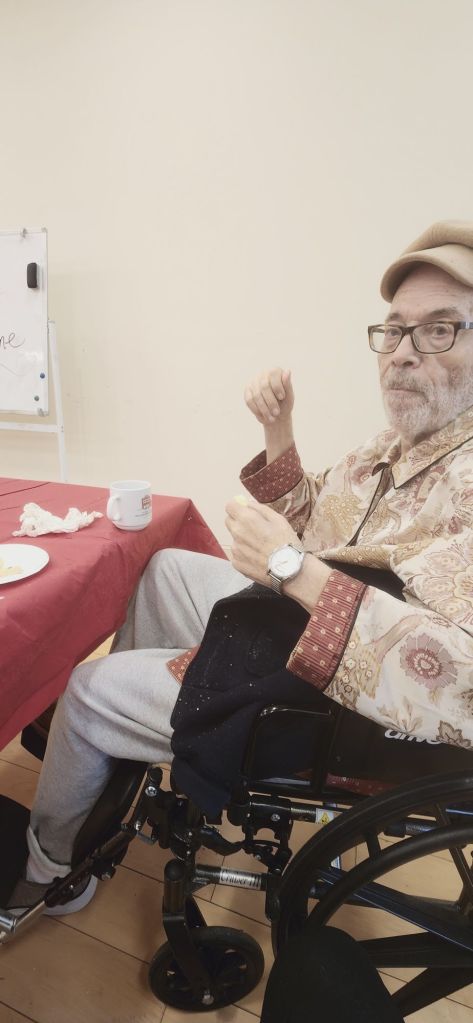
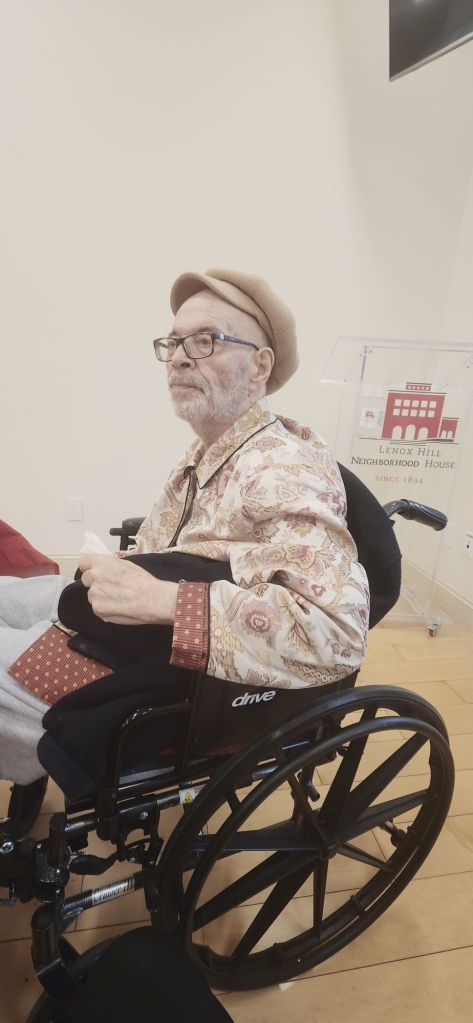
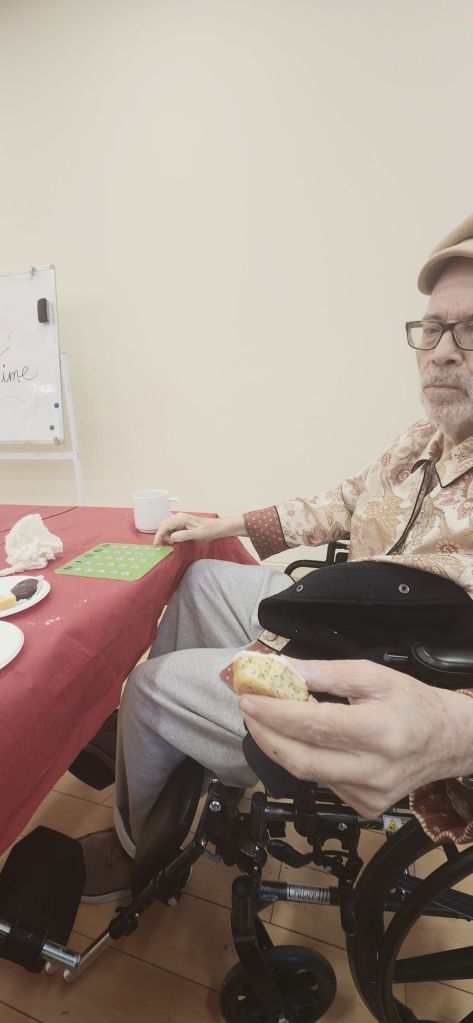
I am a fixer. I feel it as a plus and a negative. My husband’s dementia is leaving him more broken each day.

I can’t fix that. How can I help? How can I avoid doing harm.

I am out of the house, joining an aerobics class or having coffee with a friend. He calls or these days has his aide dial for him.

With each sweet sad call I receive from him I see how much he is breaking, reason and sense falling away.

He plays with time (and each call has a focus on time) as if it were a toy and a mystery. Running the winder on his beautiful Hamilton watch as if it were a rag doll. He calls to ask what time it is.

He asks when I am coming home and when his aide is leaving, or that is what he means although he asks when she’s coming.

He calls to find out “just one more time” when “they,” his lone PT who has Capgrased into a couple of guys, are coming. Each time he asks he receives the answer with the same astonishment, “at 4pm,” he repeats, voice rising in surprise.

Like me Burt’s OT likes to fix things. It’s in her job description but it’s also in her modus operandi.

Our apartment and Burt’s equipment for daily living have benefited from her interventions.

She can’t fix his dementia or make his diagnosis go away.

She can  implement small changes that add comfort to his care.

I can gather inspiration from that.

Cognitive decline

The way in which Burt’s reasoning works these days is odd and irregular. Much of his thought processes take him in divergent directions. He sees no contradiction.

If I weren’t so stricken by his illogical theorizing, I would find it all quite fascinating.

As it is, his decline (euphemistically and paradoxically called disease progression) just brings me sorrow and sadness.

Burdens. Joys.

Gratitude is a “thing” for the 2020s Era, but it is also a very powerful tool.

This way of seeing and being opens us up to joy and enjoyment.

I feel free to be grateful even for my sadness and my sorrow.

With that, I feel even greater gratitude for pleasures, joys, and enjoyments.

Burt is the one suffering, but he shows gratitude and appreciation.

The journey is hard, but I experience it upright and [for the most part] standing steady.

I am grateful to have outlets; I also appreciate the others in my support groups who work to understand their journey in caring.

I write, I journal, I try to make sense and keep perspective on our journey.

I am also grateful for the gift that my skill at writing has become. I use that gift not just to document our life but in poems and essays beyond that.

This poem belongs in both my worlds. It’s sad, and it brings me joy.

Your memories

He told me all his stories, so
That when this day came, I’d
Be the one who remembered.

This older poem touches what  meaning memories play in our lives. They connect us to our shared past, but they are not who we are or were.

remember 

Memories, his,
Mine, and ours,
Overlap neatly,
Sometimes, other
Times the edges
Don’t match, the
Fillings spill
Out, fall away
And crumble, as
Ephemeral as the
Air and passing
Into a jumbled
Past, celebrated
But forgotten.
Remind me when,
Remind me what

Growth

What experiences in life helped you grow the most?

Let’s look at the question in the all- consuming context of caregiving.

Other experiences have contributed to my professional growth. They found a place on my resume.

Falling in love helped me grow in my heart and soul.

Then along came my love’s dementia and I had more opportunities to learn.

I saw my resourcefulness along with his resilience. We were challenged. We met the challenges.

His diagnosis expanded my world in almost as many ways as it constricted it.

I could appreciate my skills, but more fundamentally, I valued my grace in the presence of our adversity.

In appreciation

Burt is still a difficult man.

The diagnosis didn’t change that. He had quirks that irked when he was healthy.

Let’s be honest, if you’re married, then your spouse has an annoying habit or two.

His illness had me step back a little. It put my annoyance in perspective.

The anxiety he’d lived with all his life was now also a symptom of his dementia.

Quirks had to be met with kindness.

His disease has robbed him of so much.

He no longer possesses the  cognitive capacity to make sound decisions nor the agency to act on his own.

He has to accept direction from me.

He hates being bossed. He wants to be in charge.

His abilities no longer meet his ambitions.

Burt may be difficult, but he is also  affectionate. He aims to be helpful. Burt wants to be protective of those he loves.

My job has come to be the protector.

Support

There is a unique and uniquely helpful support group offered by New York alz.org.

I have been participating in this wonderful writers group this past couple of months.

Each session, we are guided by helpful prompts to explore our experiences in the caregiving journey.

We then take some 15 to 20 minutes to write it all down. The focus sheds light on the gamut of feelings encountered as we care for a loved one.

It’s not surprising how much those emotions pivot to the positive.

Understanding

It’s nice when Burt gets the gist of my writing about him. When it contains the promise of my love as in the poem I created for him the other night, he’s a happy audience.

So much of what I say is distorted on its way to meet him that it can be a frustration to communicate.

The mishearing is a dementia thing, but it can rankle. Good thing I truly love him.

Design a site like this with WordPress.com
Get started