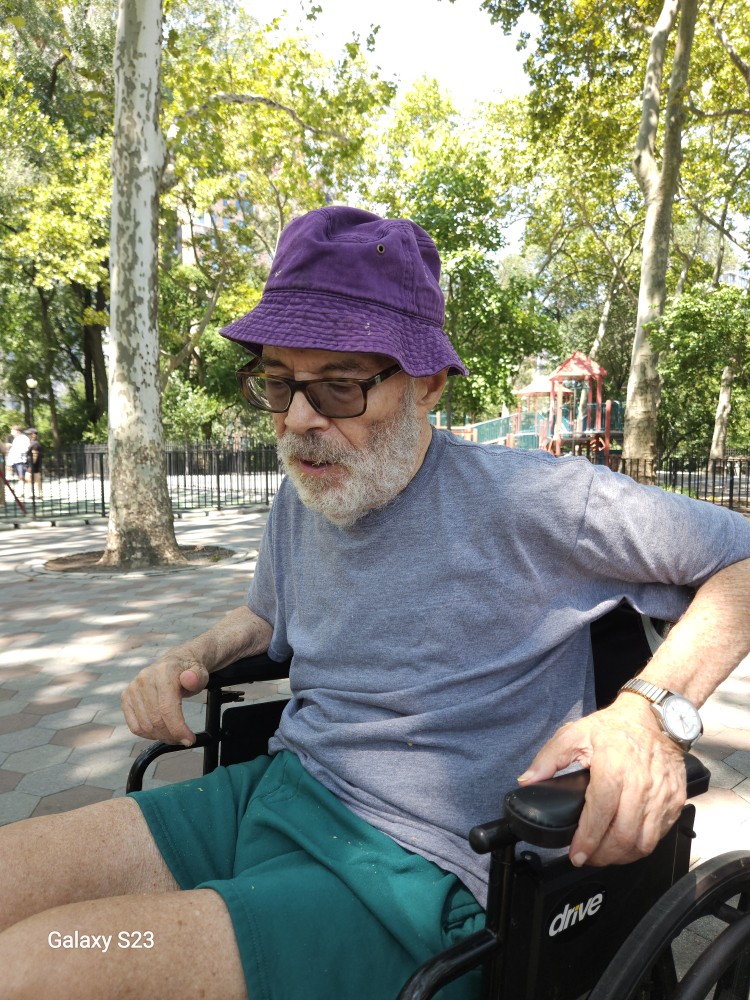
Burt and I was a radio program with a heavily-inflected Maine accent. It was homey. It was smart.
Burt and I was a radio program with a heavily-inflected Maine accent. It was homey. It was smart.
My post on February 25, 2025 speaks of getting closure being dependent upon the funeral parlor taking possession of Burt’s body. That, in the retrospect of half a night’s sleep, is inaccurate and, well, bullshit.
It closed my day and left me able to go downstairs. I wanted to see the doorman who had not had a chance to visit his goodbyes.
I also decided it was time to dispose of my projects of activity boxes. I had wanted to enrich Burt’s diminishing interests with diversions. He wasn’t having it. I had tried hard.
The activities I thought he might undertake were related to his work. He had loved his jobs on Wall Street so ledgers seemed like they could occupy him; I also made counting boxes which might encourage dexterity and brain stimulation. As I said, he showed no intetest in games of any sort.
Burt’s main activity was talking. In the last months, it was chatting with his imagined posse. They were companions alongside me or his aides. Often, when I went to answer a question he posed, I felt as if I were intruding on his conversation. He was engaged with a hallucinatory crew in or near the light fixture.
That is not to say that he did not welcome an equally intense engagement with us. He loved to talk while we fed him. It was a charming and intimate way for us to interact.
There was connection in those moments. He would slowly chew and wrinkle his brow, then ask a question. In those last three or four months, the questions were hard to decipher. They were earnest and part of our bond with him.
When I say our, I mean a bond with me or his aide. Burt had the best care.
I define good (or best) care by the care or caring behind it. Burt was surrounded by caring.
As to the bullshit about closure, I don’t need closure.
Our relatiobship stands on its own, and needs no final ending.
Of course, his death is an ending but my love and the memories of his love need no finality.
As to the necessity that Burt be taken to the funeral home, that was an ending. As I said it was necessary and not expedited in a timely manner.
As time crept closer to four, the urgency of getting the death certificate so the funeral home could proceed struck me. Time of death had been pronounced as 11:29 a.m. Burt had done his part to be timely.
His doctor would need to sign the OME’s paperwork before cob at 5. We had had a parade of EMTs etc since the WCM-NYP crew had made the pronouncement.
We were with the third shift of cops just waiting for the go ahead to call for the mortician’s men.
That go ahead was dependent on the ME. It was about 5:30 when he signalled to the policeman in attendance that I could make the call.
Two hours later, two men made the pick up. As the gurney they opened clattered, my young cop companion said «Don’t worry; they’re professionals.« He and I shook hands just after they carried Burt out the door of his apartment. Never to return. Except in my memories of him.
Fond memories.
Burt’s body remained in the bed room until after 7:30. The ME when my dear S called him on my behalf was very apologetic. The funeral home sent someone from a NJ parlor because they close at 5pm.
He was at rest but 8 hours was a long hard time for me to wait to get a closure for his passing.
Still, he looked peaceful.
We will celebrate his life in May on our anniversary. It will be 35 years from when we met for me to bid a final adieu.
Burt’s temperature was 102.1. I gave him some water which he sputtered over, coughing but swallowing it.
I put a cold wet papertowel on his head. It dropped to 99.1. His arms are shaking. His lips are shaking. He opens his eyes and puts his lips on the bottle to drink. His lips tremble. No words or recognition.
I feel I am actively losing him. I apologized to him this morning for every cross word I ever uttered to him. Ever. He may be actively dying. We may need hospice.
Burt had slept all weekend. No food since a few teaspoons on Sat
He opens his eyes but does not complain nor connect. I think this is the end. I wish him an easy passage. He used to love holding hands. He doesn’t squeeze my hand anymore; his aide, our friend, noticed that when she took his hand first.
Hospice was to come this afternoon to evaluate and set up service. His aide was begging Burt to complain or curse her out!
I am prepared but not ready. Or ready but not prepared. Or neither.
I thought I had been losing him little by little as he fell into his own world. Now it feels as if he were truly gone. And that was before he drew his last breath.
Then he was still here, breathing with a faint wheeze or wimper. Not in pain, just air passing laboriously through. I think of him as brave in this last stage. He was often anxious and scared but he always owned those feelings (or in a macho world some would say failings.)
He is showing courage and again I wish him a safe and easy passage.
His difficult breathing has brought my inner spiritualism to the fore. I repeatedly tell him I love him as if each breath were speaking a new truth to me.
I told him I hadn’t had the chance to say goodbye. Tears well as I write that.
Perhaps the truth is that I never wanted or intended to say goodbye. I have given him my apologies for a sharp tongue but I know he knew I had a soft heart.
That heart is breaking now as he slips into a skeletal form from days of fasting. His heart and soul seem absorbed in the process of inhaling and exhaling.
He takes each breath with a fierce concentration like it is all he can think of and can not be distracted.
I will not sit vigil over him but my thoughts will be at his bedside. I will go about doing my usual exercises, at the gym, on the street. I do want to be with him at the end. As his world unwinds, and the immense loss of him tears at me, I want to be able to recall his last moments as minutely as I can recall some of his best.
I honor the full life of this man, the one I love so wholeheartedly. The man I know is the love of my life. And lucky I am at that.
I wrote to those his life had touched: I wanted to let you know. We’re going on hospice this week. Another sharp decline over the weekend. All sleep no eat or drink. He seems comfortable but is not responsive on any level. I am not ready. I am not prepared. I knew it would happen but….
And then on the morning of Tuesday, February 25th, he took his last breath.
The EMTs pronounced at 11:29 a.m. Many long hours later, his wonderful aide and I are still waiting for the last batch of officials to give us the death certificate.
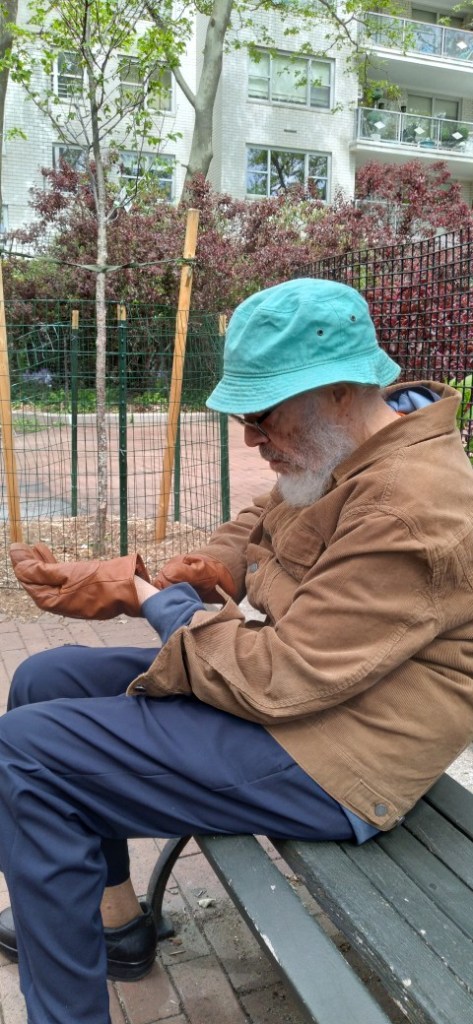
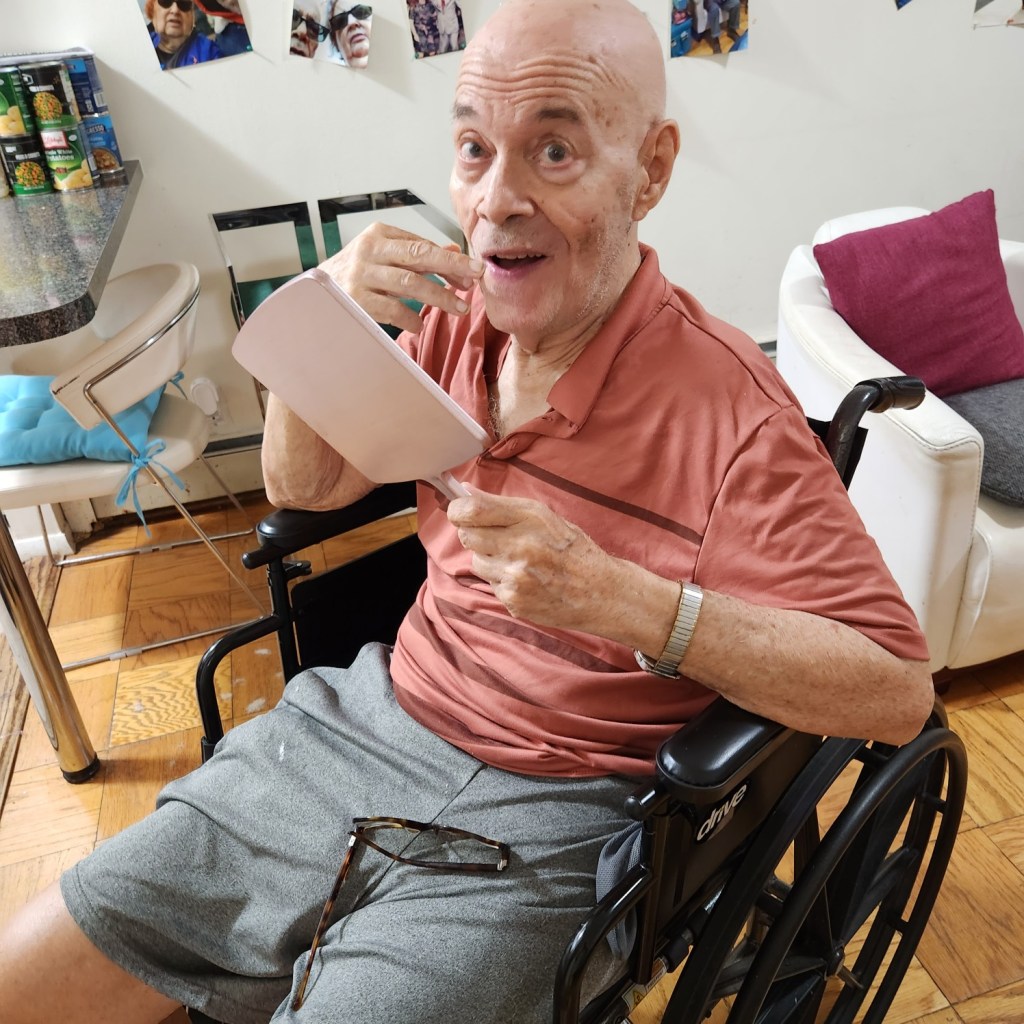
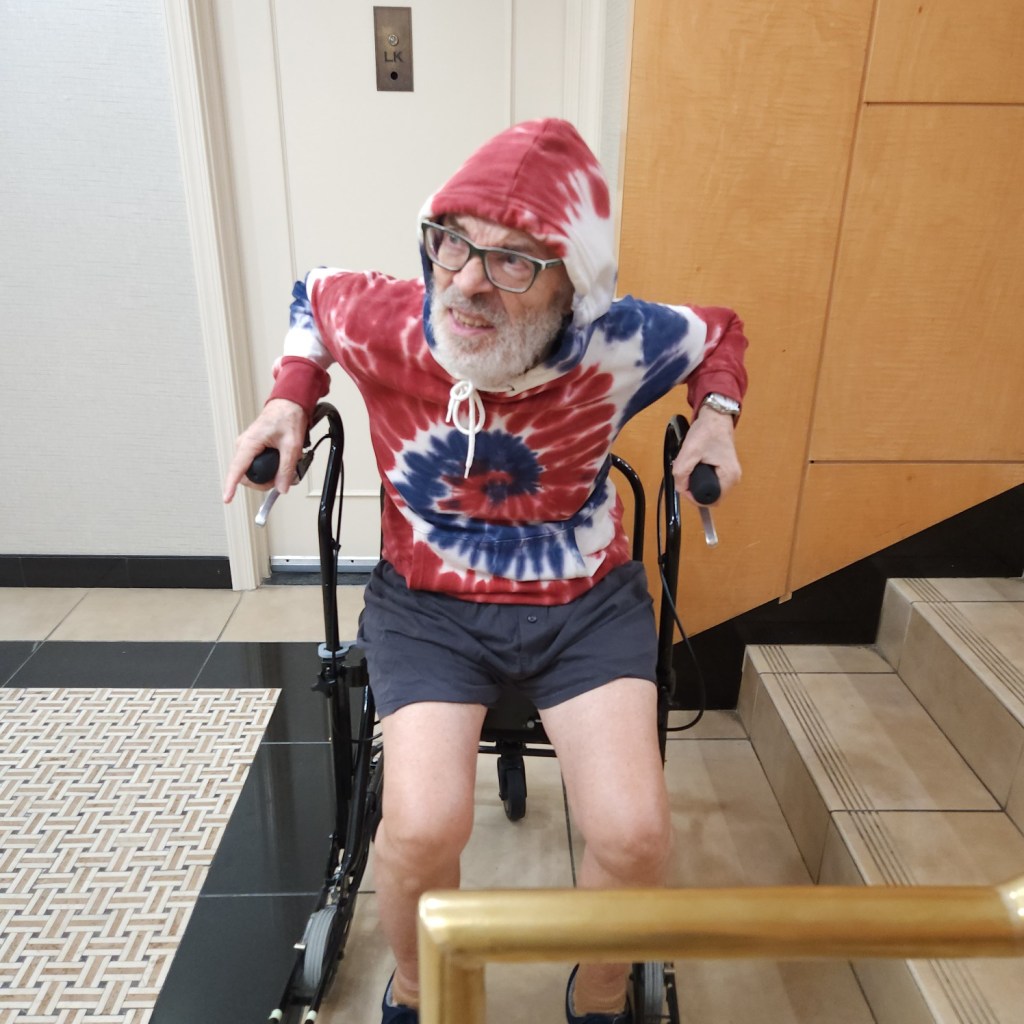
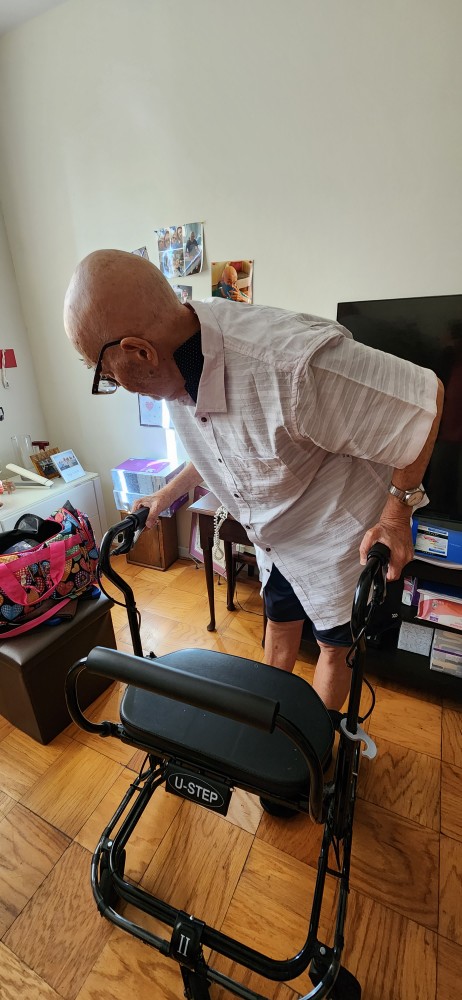
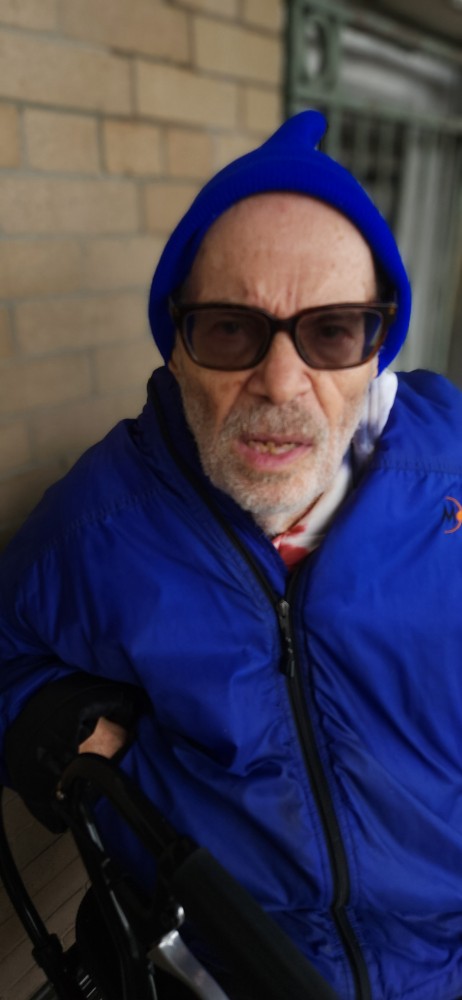
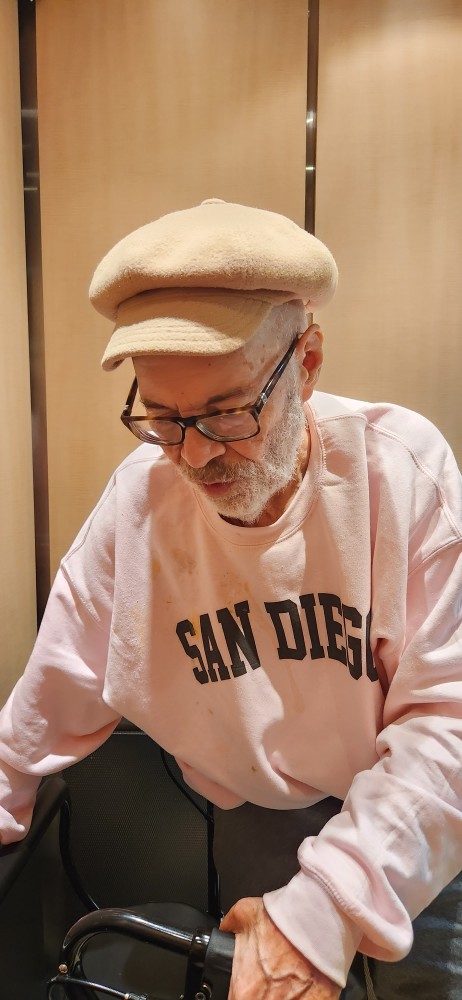
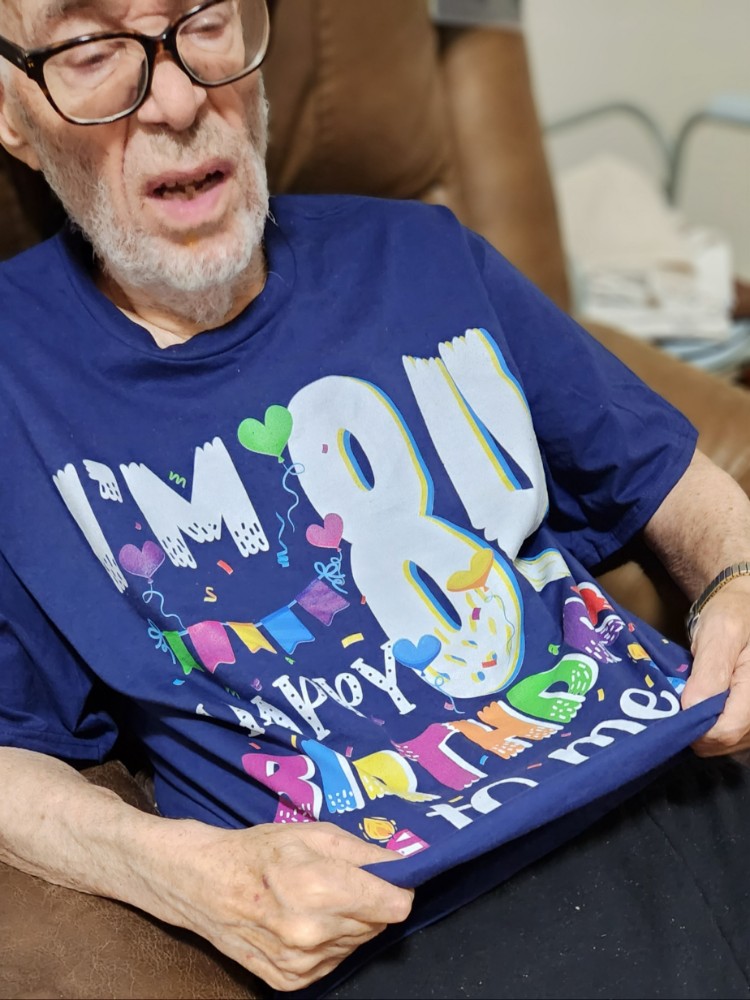
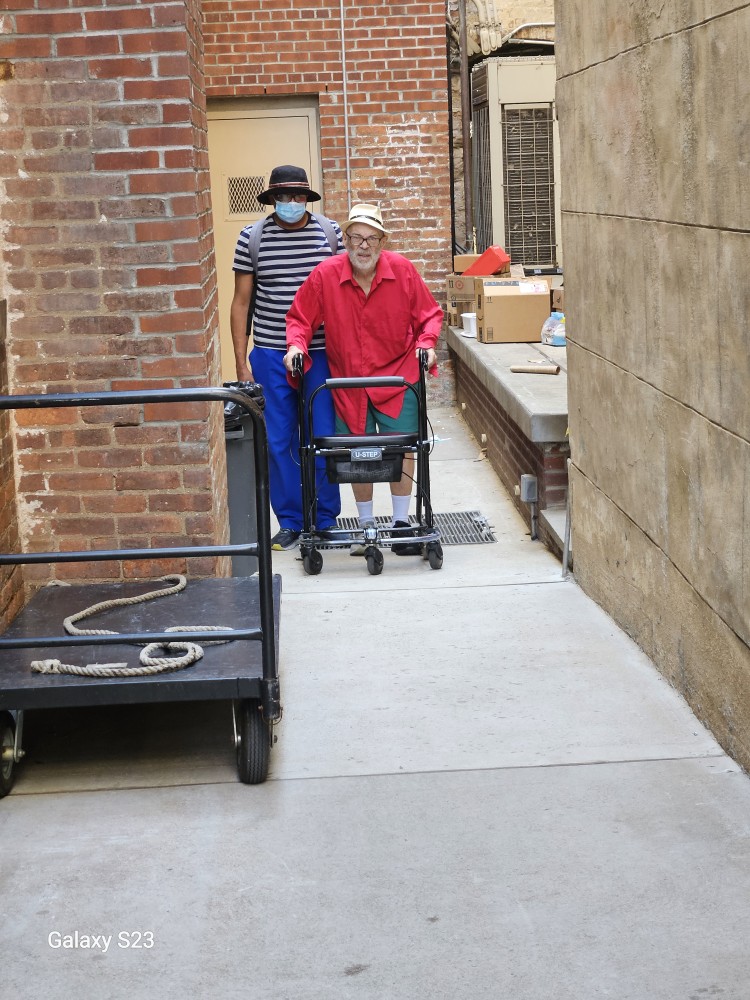
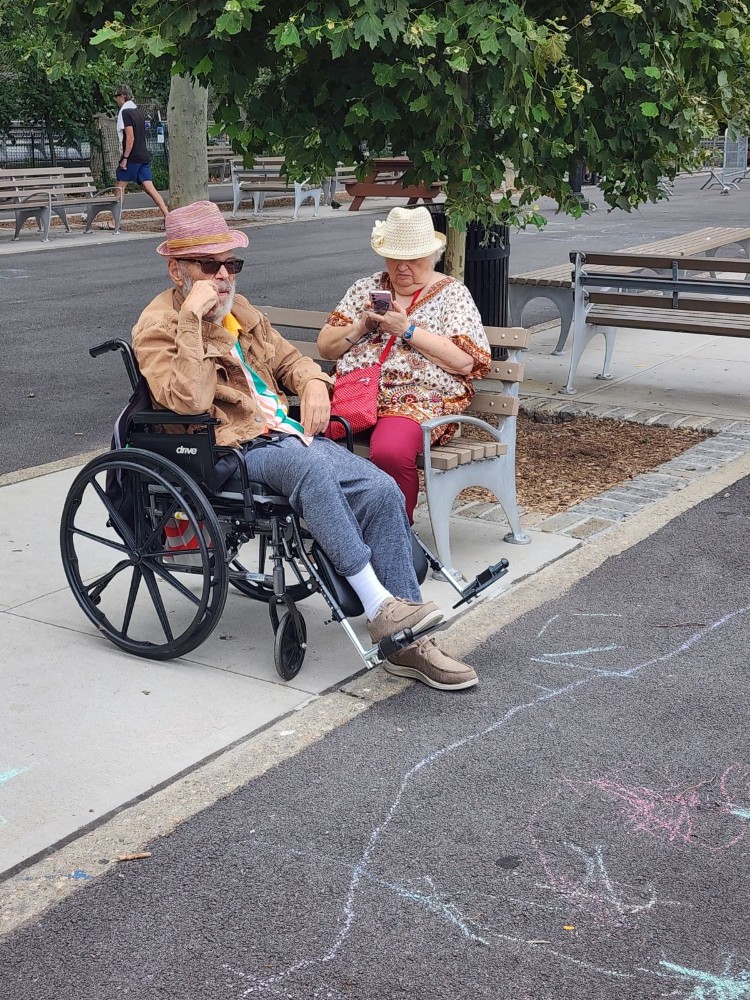
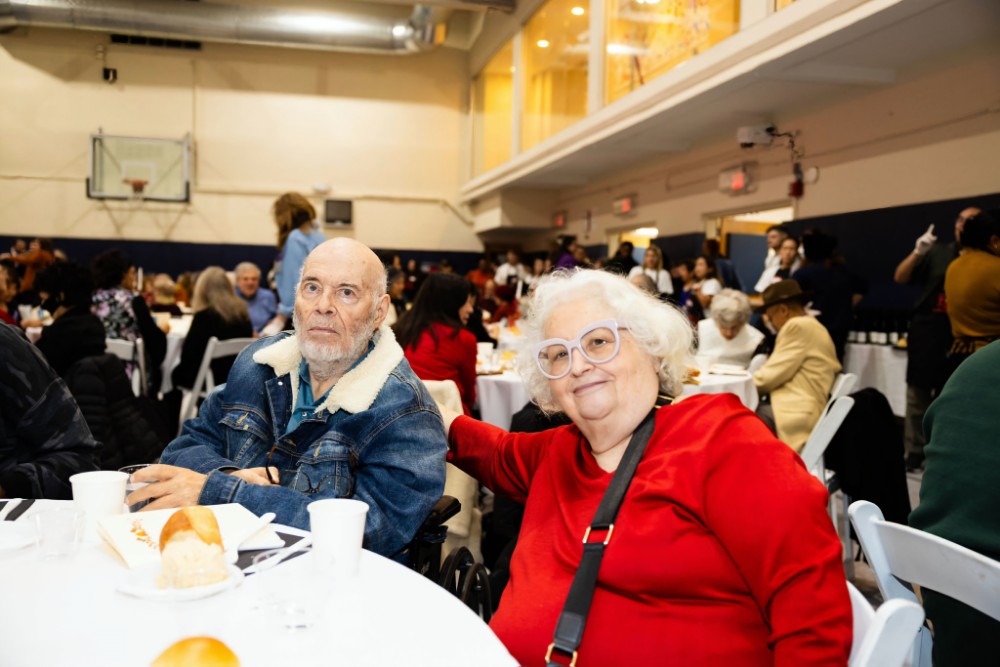
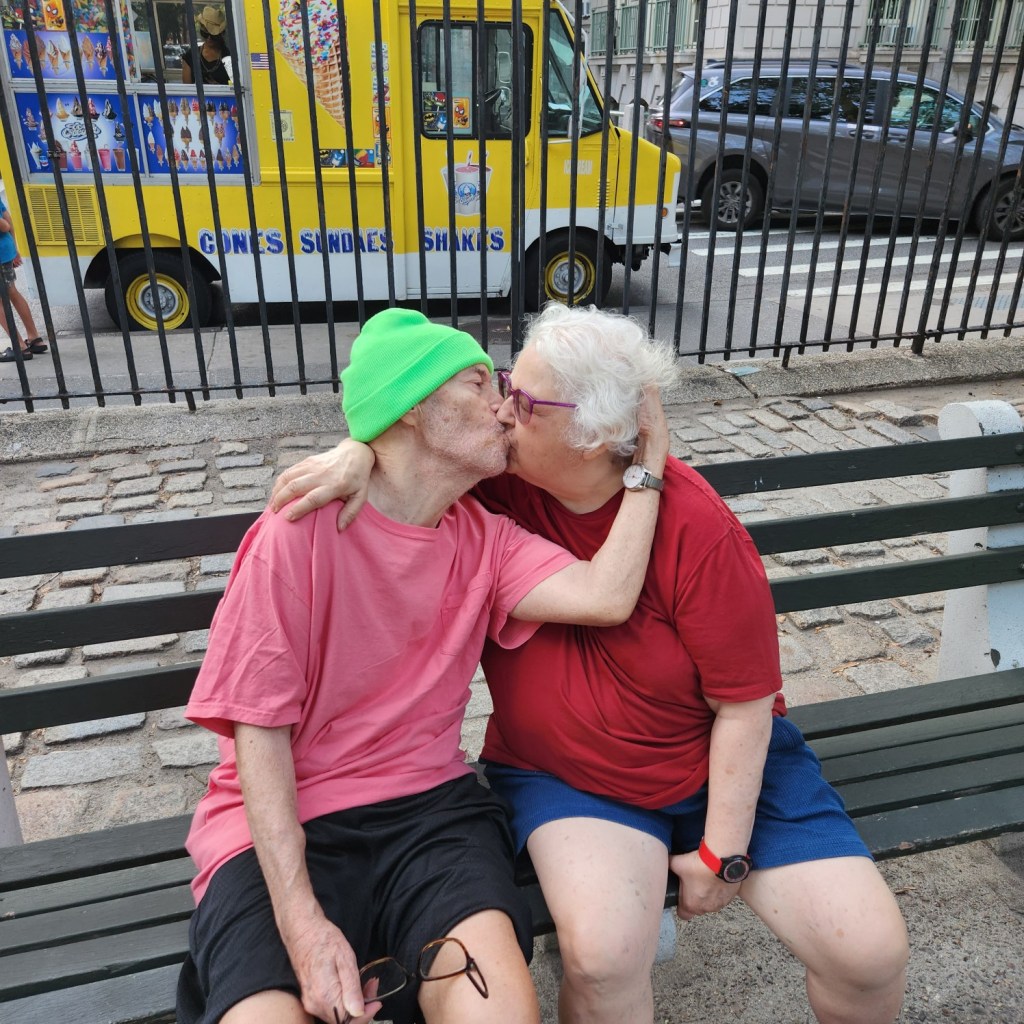
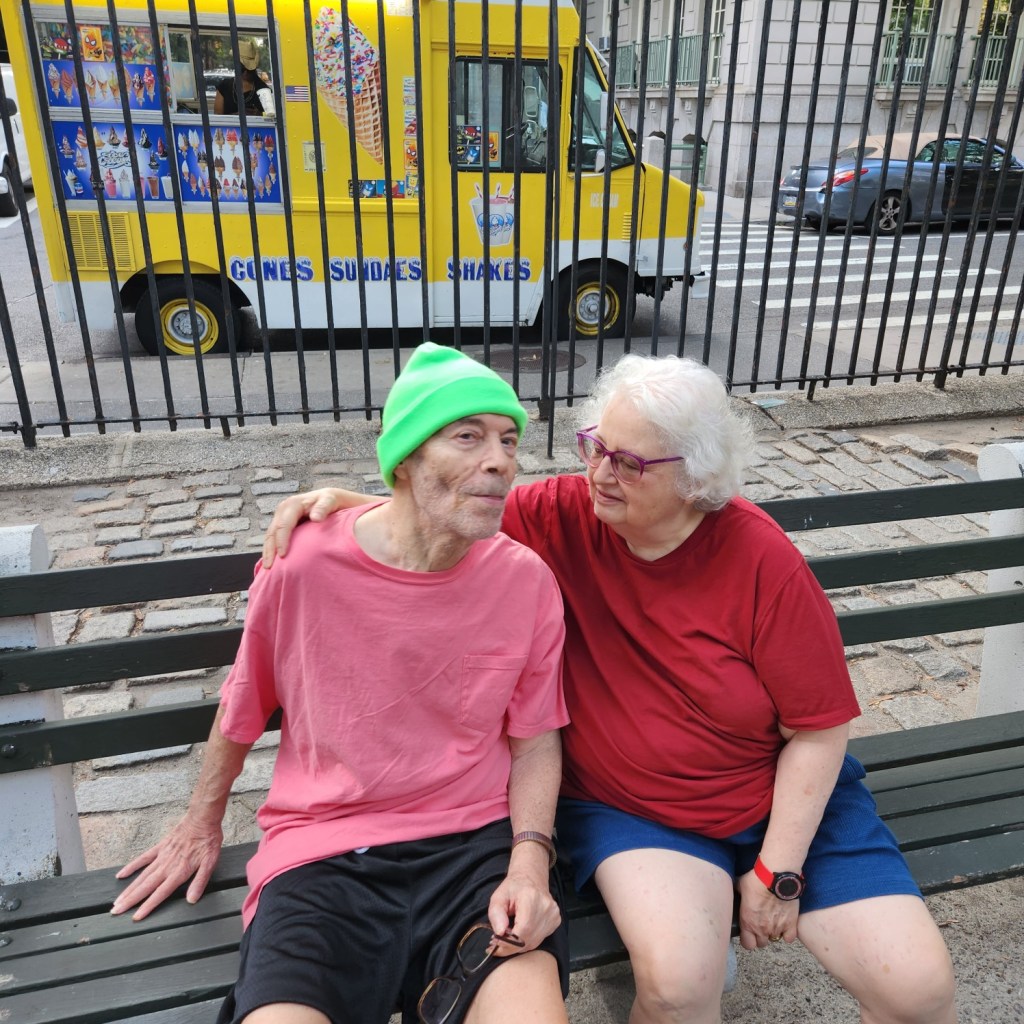


Memories are a way of reliving the past. Memories are also a way to bring good feelings back.
I spend more time with that past now. In my present, I also spend time living a heavy sorrow.


From time to time, events and occasions trigger both memory and sorrow. We did this thing, checking out The Gates in their first iteration years ago. My smile at the poster today was wry, my eyes watering.
There is a trick I have taught myself recently to reframe my grief and sadness.
It wasn’t the first time I had noticed the announcement for a The Gates exhibit. This time I decided it would be helpful to look for that picture of us; to reframe my shock at the return of the art in the park as a good memory.
Here it is. It had been one ofww re r many nice days we’d spent.
He’s been several people over the past many months.
Well, this is not at all unexpected; aren’t we all many people over a lifespan.
I look at him sleeping now and regret that I can’t recall with any confidence what he was like two months ago or four years ago.
I know who he is most days these days. He falls asleep at the drop of a spoon; when he’s awake, he stares and makes noises.
Burt seems to be talking, quietly to himself. He does communicate. His aide coaxed a big smile out of him the other morning. That was delightful.
Burt is living in two dimensions; his life seems flattened out.
I want to remember the Burt of a couple of months ago. He was lively; he was mobile and social. We communicated amicably then.
I want to recall our life 20 years past when we came home from a show at a downtown theater or across town at the ballet.
My memory of what he was like is vague. I want it to be more vivid.
It will be, I am sure, when I need it to be.
When Burt was newly diagnosed, he was feisty. He was difficult. He was contrary.
His willfulness made it hard to divert and redirect him. He would argue, fight, and dispute my plans for his care.
I would say (or think about) all those stories I had heard of dementia patients who were sweet and docile. Why hadn’t my spouse become an easygoing guy? Why wouldn’t he just sweetly go along?
Since his months’ long decline, he has been sooo much easier. He doesn’t complain and only reacts with a little anger when our shifting him in bed scares him. Generally, these days, it’s only a cry of fear. Once upon a time, we could count on his cursing us.
He’s that easygoing guy now. Like many things characteristically Burt, I have come to miss the curses. He’s so sweet that his mild temper makes it easier for us to make loud noises or turn on lights. These things usually no longer annoy him.
He seems content, but he’s seldom as happy as he was when something tickled his fancy or amused him.
I miss Burt’s reactions of annoyance and displeasure. I miss his highs and signals of joy. I miss the tough guy. I miss the laughing guy. I miss the feisty, difficult guy.
I miss Burt.
My mind reverts to the wisdom that warns us who are caregiving that «the cavalry isn’t coming.« It isn’t and we are, surely, on our own.
In fact, if there were a cavalry, we would have to be the one to lead the charge.
We don’t have a cavalry that will save us from the circumstances into which we’ve been thrust.
But I know that there are many helpers on this journey. Lots of support. A plethora of it, in fact.
My network of dependables has recent additions such as the VNS nurses his GP prescribed. It’s very helpful to have their assessment.
A PT from the VNS agency came along for the ride.
The entire crew of VNS help has been calm. They are respectful. They are matter-of-fact and they work without urgency.
The physical therapist gave Burt an excellent work over. I was so happy to see how he exercised Burt’s muscles and eased his joints. Burt was again fast asleep almost as soon as the PT left.
The sleeping is one disturbing new symptom of a continuing decline.
I am fortunate to be able to meet the decline with additional help. Help comes in the form of lots of different services.
My planned 24 hour in home aides come with access to a social worker assigned to us who will make regular check-ins starting with a pre-assignment call and a visit during the first week of the expanded schedule.
We will continue with in home PT/OT from Fox Rehab after VNS finishes their contracted ministrations.
The care coordinator at the home health agency can be a sounding board even before you reach the 24/7 level.
The home health aides are part of your team as well. They watch your loved one and they notice details; they are a part of the cadre of professionals who help me.
I mentioned the at-home dental care that Burt received. That is one decidely helpful service available to the caregiver.
Your neurologist’s office should have social workers to work with the spouse. Perhaps your primary care physician has a social worker on staff as well.
CaringKind and the Alzheimer’s Association, LBDA and LBD Resource Center are supportive agencies offering classes, support groups, and social workers you can talk to.
You have questions; if you’re akin to me, you panic, are uncertain. Build your village. It’s a team, not a cavalry.
It’s people who understand your need for a cavalry. Connect with them; they’re your team.

 this is our life